
Braces are an orthodontic appliance that guides the teeth and the bite toward a planned position. They can be used for crowding, gaps between teeth and certain bite problems.
Brackets and the archwire apply controlled force to the teeth. The tissues and bone around the tooth roots adapt to that force and remodel. Whether treatment is needed is decided after a clinical examination.
What Do Braces Do and When Are They Fitted?
Braces are not used only to change how teeth look. In suitable cases they can help correct alignment problems that affect chewing, speech and oral hygiene.
- Crowded or rotated teeth
- Noticeable gaps between the teeth
- Upper teeth that cover the lower teeth more than normal
- Lower teeth that close in front of the upper teeth
- An open bite at the front or the back
- A mismatch in the way the jaws and teeth bite together
Not every irregularity calls for braces. The cause of the problem, the stage of growth and the health of the supporting tissues must be assessed together.
How Are You Assessed Before Braces?
The examination looks at tooth alignment, the relationship between the jaws, the gums and oral hygiene. Photographs, digital scans, impressions or radiographs are used where needed.
Active decay and gum problems should be brought under control before treatment. Tooth extraction is not needed in every patient; it is planned according to the lack of space and your facial structure.
Orthodontic treatment is not only for children. Tooth movement can also be planned for adults whose teeth and supporting tissues are suitable.
Types of Braces
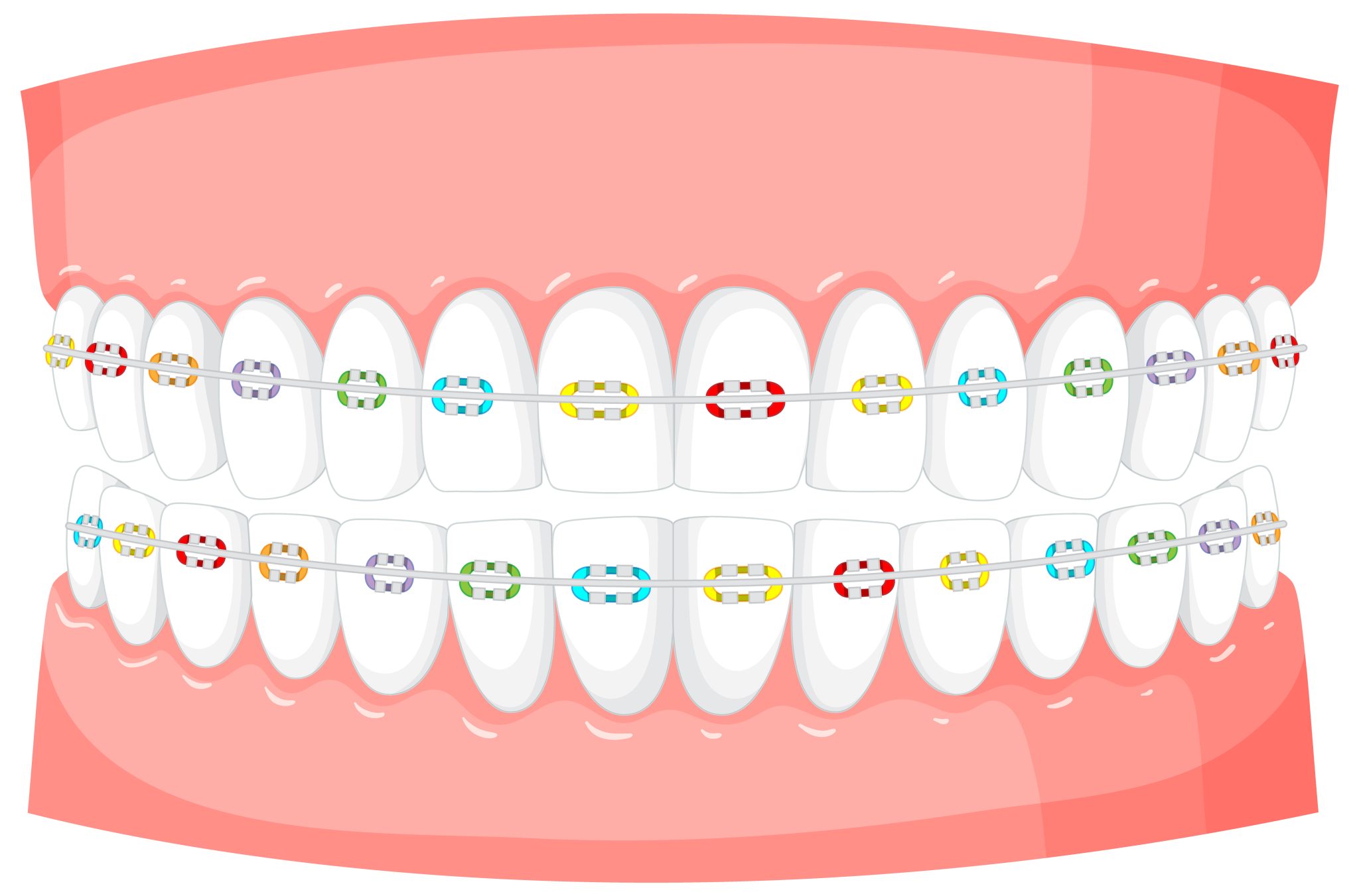
The right appliance is chosen according to the type of bite problem, your age, your oral hygiene and the tooth movements the treatment aims to achieve.
| Type | Structure | Key Feature |
|---|---|---|
| Metal braces | Made up of metal brackets and an archwire. | A fixed appliance that can be used for a wide range of tooth movements. |
| Ceramic braces | Use ceramic brackets close to the color of the teeth. | A less noticeable fixed appliance option. |
| Lingual braces | Brackets are placed on the inner surfaces of the teeth. | May not suit every case or every mouth. |
| Clear aligners | A series of removable, custom-made aligners. | No wires; can be an orthodontic alternative in suitable cases. |
| Removable or functional appliance | Includes parts that can be taken in and out. | Can be used for certain growth and bite problems. |
Ceramic brackets are sometimes called “porcelain braces”. A band is not a type of wire; it is a supporting component used on some back teeth.
A “bridge brace” is not a type of orthodontic appliance. A dental bridge is a prosthetic treatment used to replace missing teeth.
Which Teeth Do Braces Go On, Including the Back Teeth?
Braces do not have to be applied to the front teeth only. The plan may cover the upper jaw, the lower jaw, both jaws or specific groups of teeth.
Are Braces Fitted to the Back Teeth?
Yes. The back molars often provide anchorage support. Brackets, tubes or, where needed, metal bands can be placed on these teeth.
The very last teeth are not included in every treatment. Whether the tooth has erupted, its position and the planned movement are what matter. Brackets are not routinely fitted to wisdom teeth.
Can Braces Be Fitted to the Upper or Lower Teeth Only?
In some limited cases, treating a single jaw may be considered. However, movement in one jaw can affect how the other jaw bites. For that reason both jaws should be assessed together.
What Are Braces Made Of?
In fixed systems, brackets are mostly made of stainless steel or ceramic. Archwires can be made of nickel-titanium, stainless steel and various titanium alloys.
Elastic or metal ligatures hold the archwire to the brackets. If you have a known metal or nickel sensitivity, you should tell your dentist during the examination.
How Are Braces Fitted?
1. Examination and Diagnosis
Tooth alignment, the relationship between the jaws and the oral tissues are examined. Whether orthodontic treatment is necessary and feasible is assessed.
2. Taking Records
The photographs, impressions, digital scans and any clinically necessary images required for the treatment plan are taken.
3. Preparing Your Oral Health
If there is decay, tartar or an active gum problem, bringing these under control is planned first.
4. Separators, If Needed
Separators may be used for a short time to create space between the back teeth that will receive metal bands.
5. Preparing the Tooth Surfaces
The teeth are cleaned, isolated and dried. The surfaces where the brackets will bond are prepared for the bonding procedure.
6. Placing the Brackets
Each bracket is bonded at its planned position. The bonding material is cured with a special light.
7. Fitting the Back-Tooth Components
Depending on the treatment plan, tubes may be bonded to the molars or metal bands may be placed.
8. Connecting the Archwire
The archwire is threaded through the bracket slots. It is then secured with elastic or metal ligatures.
9. Checking the Bite and Comfort
The ends of the wire are checked. Elastics, springs or other auxiliary components are added where needed.
10. Check-Ups and Retention
At regular check-ups, the wires and auxiliary components are changed according to the treatment plan. After active treatment, a retainer is used.
The First Few Days After Braces Are Fitted
In the first few days you may feel sensitivity in your teeth and pressure when chewing. This usually eases as the teeth get used to the force applied.
Soft, nourishing foods can be a good choice. If a bracket irritates your cheek, you can use the orthodontic wax your dentist recommends.
How Should You Care for Braces?

Plaque building up around the brackets can increase the risk of gum problems and white spots on the enamel. That is why oral hygiene is an important part of treatment.
- Brush your teeth regularly with fluoride toothpaste.
- Clean above, below and around the brackets from different angles.
- Use an interdental brush or a suitable floss threader under the archwire.
- Avoid hard and sticky foods, and anything that could strain the brackets.
- Limit how often you have sugary foods and drinks.
- Keep up your routine dental check-ups alongside your orthodontic appointments.
You can use a manual or an electric toothbrush. What matters is not the type of brush but cleaning every surface regularly and with the right technique.
When Should You Contact a Dentist?
You should contact your dentist without waiting for your next appointment in the following situations:
- A bracket comes off or a wire breaks
- The end of a wire injures your cheek or gum
- Severe pain that does not ease after the first few days
- Marked gum swelling, bleeding or a bad taste
- A blow to the teeth or the jaw
- Swelling in the face or a fever
What Happens After Braces Are Removed?
A fixed or removable retainer can be used to hold the teeth in their new positions. How long retention lasts varies from person to person.
Not wearing the retainer as advised can allow the teeth to move again. No single retention method can be said to be superior for everyone.
Braces Assessment in Bursa, Turkey
One of the questions we hear most often at the clinic is whether braces are only fitted to the visible front teeth. For a healthy bite, the back teeth also need to be assessed.
The Private MFSDENT Oral and Dental Health Polyclinic provides orthodontic care in Yıldırım, Bursa. The right method and timeline are determined individually after a clinical examination.
The cost of braces and a price calculation tool are covered on a separate page. The final fee depends on the type of appliance, the scope of treatment and the examination findings.
Sources
Our Dentists for Braces Treatment

Mehmet Fatih Sever
Dentist
Muhammed Ali Kurmuş
Dentist
İremnur Yıldız
Dentist
Beyzanur Şaşmaz
Dentist
Hasan Köken
DentistFrequently Asked Questions
Fixed braces are also known as a “fixed orthodontic appliance”. The system is made up mainly of brackets, an archwire and connecting components.
Braces and other tooth-movement treatments fall under orthodontics. During the examination, the teeth, the jaws and the way they bite together are assessed as a whole.
Endodontics is a separate specialty dealing with the dental pulp and root canal treatment. Planning braces falls within orthodontics.
They are not always fitted at the first visit. Records may need to be taken, a treatment plan prepared and any existing oral problems brought under control first.
Aesthetic expectations can be taken into account. However, before braces can be fitted, a dentist should review the clinical need, your oral health and your suitability for treatment.
Yes. Back teeth may be included in the system to provide anchorage or to adjust the bite. It is not essential for every back tooth to have a bracket.
As treatment progresses, archwires of different thicknesses and cross-sections may be used. Thicker wires can be chosen to control certain tooth movements and root positions.
If the teeth and supporting tissues are healthy, orthodontic treatment can also be planned for adults. Age alone is not a barrier to wearing braces.
The content on this page is published for informational purposes only. It does not constitute a curative health service. For diagnosis and treatment, please consult your dentist.