
A wisdom tooth is the third molar at the very back of the jaw. It usually erupts between the ages of 17 and 25. A person can have up to four of them. In some people, however, one or several of these teeth never develop.
Wisdom tooth pain can be caused by eruption pressure, lack of space, gum inflammation, decay or an impacted position. Home care may reduce the pain for a while. For lasting relief, the cause of the pain has to be identified with a dental examination.
What Is a Wisdom Tooth?
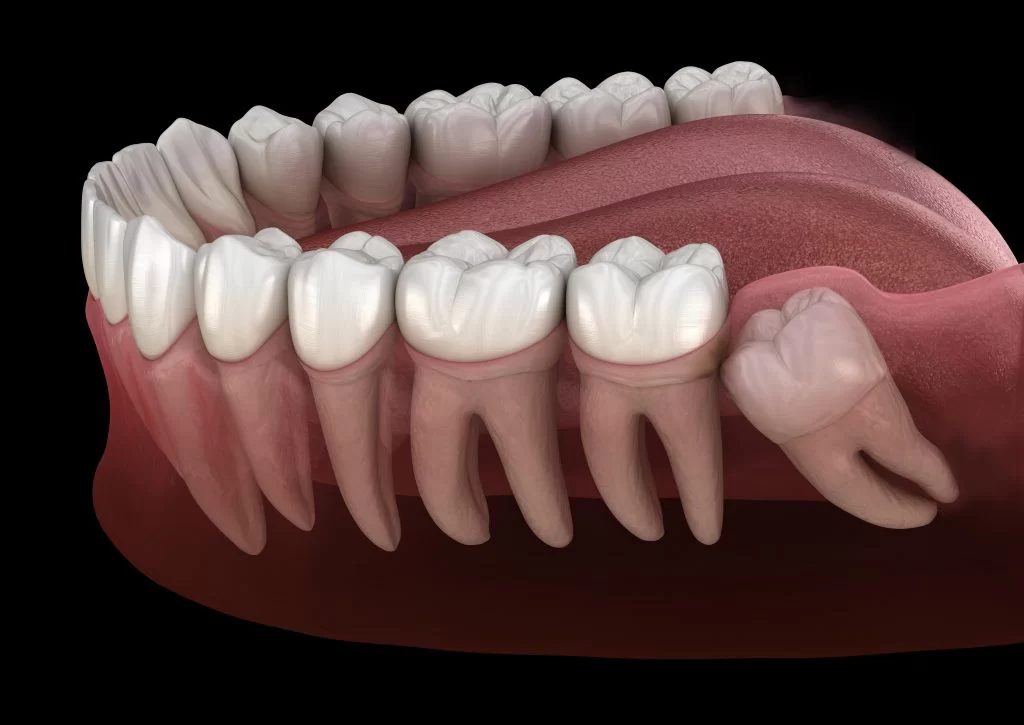
Also called third molars, these teeth sit at the very back of the permanent dentition. They can develop on the right and left sides of both the upper and lower jaw.
The name "wisdom tooth" comes from the fact that these teeth mostly erupt in young adulthood. The name does not mean the tooth will definitely appear at a set age.
Wisdom teeth may erupt in a correct position, stay partly erupted or remain entirely inside the jawbone. A tooth failing to erupt is not a disease in itself. Its position and its effect on the surrounding tissues need to be assessed.
When and at What Age Do Wisdom Teeth Come In?
Wisdom teeth mostly start to erupt between the ages of 17 and 25. In some people they appear earlier or later. It is also possible for a tooth to develop inside the jawbone and never reach the mouth.
The timing depends on the space in the jaw, the direction of the tooth and the bone and gum tissue over it. Age alone cannot tell you when a tooth will come through.
How Many Days Does It Take for a Wisdom Tooth to Come In?
There is no fixed number of days for a wisdom tooth to erupt fully. Eruption can take weeks or months. Sometimes the tooth advances slowly, with periods of sensitivity.
Pain that stops and then returns does not necessarily mean the tooth is erupting properly. Partly erupted or impacted teeth can also cause intermittent complaints.
How Many Wisdom Teeth Do You Get?
A person has at most four wisdom teeth. They sit in the four back corners of the jaws: upper and lower, right and left.
- Two teeth can develop in the upper jaw, on the right and left.
- Two teeth can develop in the lower jaw, on the right and left.
- Some people have one, two or three wisdom teeth.
- In some people, no wisdom tooth develops at all.
A tooth not visible in the mouth may be impacted inside the jawbone. The number and position of the teeth are determined with a radiographic examination when this is considered necessary.
What Are the Signs of a Wisdom Tooth Coming In?
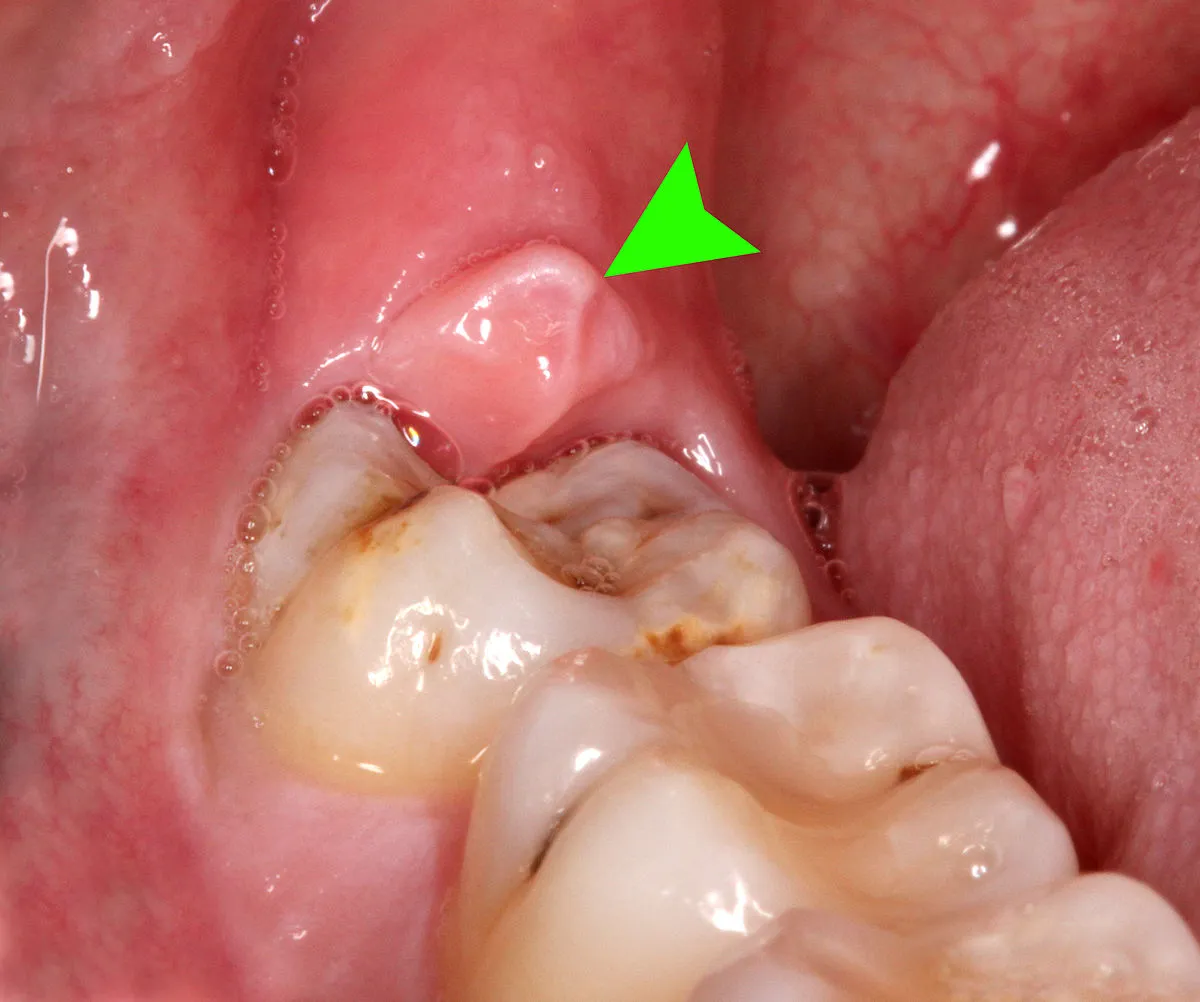
Mild pressure and gum sensitivity can occur while a wisdom tooth erupts. Some teeth come through without any symptoms at all.
Severe or recurring complaints should not be accepted as normal eruption symptoms. These findings may be related to impaction, infection or decay.
- Pain or throbbing at the very back of the jaw
- Redness, tenderness or swelling of the gum
- A feeling of pressure at the back while chewing
- Difficulty opening the mouth or jaw stiffness
- Bad breath or a bad taste
- Food collecting around a partly erupted tooth
- Swelling in the cheek or jaw area
- Pain spreading to the neighboring molar
| Finding | Possible Explanation | Suggested Approach |
|---|---|---|
| Mild, short-lived sensitivity | May be related to the tooth erupting | Keep the area clean and monitor the symptoms |
| Recurring pain and gum swelling | There may be inflammation around a partly erupted tooth | Have a dental examination |
| Fever, pus or a bad taste | May be a sign of infection | See a dentist without delay |
| Difficulty swallowing or breathing | May be related to spreading infection | Get emergency medical assessment |
Why Do Wisdom Teeth Hurt?
Lack of space is not the only cause of wisdom tooth pain. The direction of the tooth, the gum around it and the condition of the neighboring teeth must be assessed together.
Eruption Pressure and Lack of Space
When there is not enough room for the tooth to come through, pressure and tenderness can develop in the surrounding tissues. The tooth may sit tilted toward the second molar.
Gum Inflammation Around a Partly Erupted Tooth
Food and bacteria can collect under the flap of gum over a partly erupted tooth. This can lead to an inflammation called pericoronitis.
One situation we see often in our clinic is recurring gum tenderness around a partly erupted lower wisdom tooth. Because thorough cleaning is difficult, the complaints can come back.
Decay and Problems in the Neighboring Tooth
Brushing the area at the back of the jaw can be difficult. As a result, decay can develop in the wisdom tooth or in the molar in front of it.
Findings Associated With Impacted Teeth
Cystic formations can rarely develop around impacted teeth. This cannot be recognized from symptoms alone. A clinical and radiographic assessment is needed.
How Does Wisdom Tooth Pain Ease and What Helps?
To relieve wisdom tooth pain for good, the source of the pain has to be identified. Home measures only bring temporary relief. If there is infection or impaction, professional treatment may be needed.
- Cold application: If there is swelling, a cold compress can be applied to the outside of the cheek at short intervals. Do not let ice touch the skin directly.
- Gentle oral care: Clean the back area with soft movements. Do not brush a painful gum hard or poke it with sharp objects.
- Warm salt water: If no extraction has been done, the mouth can be rinsed gently. This does not replace an examination or the treatment needed.
- Suitable diet: Temporarily avoid very hot and hard foods and anything that can get stuck in the area.
- Painkillers: A painkiller should be used only if it is suitable for you, and on a dentist's advice or prescription.
Do not place painkiller tablets on the tooth or gum. Doing so burns the oral lining and can cause tissue irritation.
Antibiotics are not needed for every case of wisdom tooth pain. They should not be used without an assessment of the infection. The medicine and the length of the course are decided on prescription.
When Should You See a Dentist?
If the pain keeps coming back, affects daily life or lasts more than a day or two, an examination should be planned. Early assessment makes it easier to detect any problem in the neighboring tooth.
In the following situations, get a medical assessment without delay:
- Pain that keeps increasing or cannot be controlled with a painkiller
- Marked swelling in the face, jaw or neck
- Fever, fatigue, pus or a persistent bad taste
- Marked difficulty opening the mouth
- Difficulty swallowing or breathing
- Bleeding that does not stop after an extraction
Difficulty swallowing or breathing requires emergency assessment. In that situation, do not wait for a routine appointment.
Does Every Wisdom Tooth Have to Be Removed?
Not every wisdom tooth needs to be removed. Teeth that have erupted properly, can be cleaned and do not harm the surrounding tissues can be monitored with regular check-ups.
The decision to extract is not based on impaction alone. Extraction or other treatment options can be considered if the following problems are present:
- Recurring gum infection
- Decay that is advanced or cannot be treated
- Decay, root damage or a gum problem in the neighboring tooth
- An abscess, a cyst or another pathological finding
- A position that cannot be cleaned and causes constant complaints
- Conditions that affect another planned dental treatment
For teeth without symptoms, the choice between monitoring and extraction is individual. The examination and radiographic findings are considered together.
How Is a Wisdom Tooth Extracted?
The first stage is an examination of the mouth. The roots of the tooth, the degree of impaction and the nearby structures can be reviewed with radiographs. Three-dimensional imaging may be requested when needed.
Teeth that are fully visible and in a suitable position can be removed with a standard extraction. Impacted teeth may require access through the gum and limited reshaping of the bone. The tooth is sometimes sectioned in a controlled way before removal.
The procedure is usually carried out under local anesthesia. Anesthesia aims to prevent sharp pain. Feeling pressure or movement can be expected. If you feel pain, tell the dentist.
Is Wisdom Tooth Extraction Difficult?
The difficulty of an extraction is not the same for everyone. A fully erupted upper tooth can be removed in a short procedure. Lower teeth lying horizontally or sitting in the bone may need more detailed planning.
The shape of the roots, how close the tooth is to the nerve canal and how wide you can open your mouth all affect the procedure. For this reason, the difficulty cannot be judged from information found online.
The Process and Care After an Extraction
After an extraction you may have pain, slight oozing of blood, swelling and temporary limits on jaw movement. Swelling can increase for the first few days and should then start to ease.
| Period | What Can Be Expected | What to Watch For |
|---|---|---|
| First 24 hours | Slight oozing of blood and tenderness | Protect the clot; avoid vigorous rinsing and spitting |
| Second and third day | Swelling and jaw stiffness may become more noticeable | Follow your dentist's care and medication advice |
| First week | Pain and swelling are expected to ease gradually | Clean the area gently and follow the check-up advice |
| Later period | The gum continues to heal | See your dentist if pain increases or a bad taste appears |
- Bite down on the gauze placed by your dentist for the stated time.
- Be careful not to bite your cheek or tongue until the anesthesia wears off.
- Avoid very hot, hard and crumbly foods on the first day.
- Smoking and tobacco products can affect healing negatively.
- Do not rinse the extraction area vigorously for the first 24 hours.
- Clean your other teeth, but treat the treated area gently.
- Use medicines only as prescribed.
A few days after an extraction, pain may increase instead of easing, along with a bad taste and bad breath. This should be assessed for dry socket or infection.
Wisdom Tooth Extraction Cost 2026
The cost of a wisdom tooth extraction depends on whether a standard or a surgical extraction is needed. The degree of impaction, the position in the bone and the need for imaging can affect the plan.
| Procedure Group | 2026 TDB Guide Range (VAT Included) |
|---|---|
| Tooth extraction and complicated tooth extraction | 2,475–4,950 TL |
| Surgery for impacted and bone-retained teeth | 7,975–11,715 TL |
These ranges are given for information, in Turkish lira (TL), based on the 2026 guide fee schedule of the Turkish Dental Association (TDB). The final fee is set after the examination and treatment planning.
Frequently Asked Questions
At what age do wisdom teeth come in?
Wisdom teeth mostly erupt between the ages of 17 and 25. In some people they appear later or stay impacted inside the jawbone.
How many wisdom teeth do you get?
There can be up to four wisdom teeth, in the upper and lower, right and left areas. Some people develop fewer, or none at all.
How many days does a wisdom tooth take to come in?
There is no fixed number of days. Eruption can take weeks or months and may progress with periods of sensitivity.
How many days does wisdom tooth pain last?
The duration depends on the cause of the pain. If the pain lasts more than a day or two, recurs or gets worse, a dental assessment is needed.
I can't bear my wisdom tooth pain, what should I do?
With severe pain, see a dentist as soon as possible. If there is facial swelling, fever or difficulty swallowing or breathing, get emergency medical assessment.
Is wisdom tooth extraction difficult?
The difficulty depends on the position of the tooth, its roots and the degree of impaction. Local anesthesia aims to prevent sharp pain; surgical cases can be more detailed.
Does every wisdom tooth have to be removed?
No. Healthy teeth in a good position that can be cleaned may be monitored. The decision to extract is made after an examination and radiographic assessment.
How long does healing take after wisdom tooth extraction?
Pain and swelling usually start to ease within the first week. Complete healing of the gum and the extraction socket takes longer.