
Tooth decay is the loss of minerals from tooth tissue when bacterial plaque in the mouth turns sugars into acid. Front tooth decay is this process developing in the incisors or canines.
Early lesions with no cavity yet can be halted under a dentist's supervision. Once a cavity has formed, however, decay does not go away at home. The dentist assesses how deep the decay is and plans the treatment needed.
What Is Front Tooth Decay?
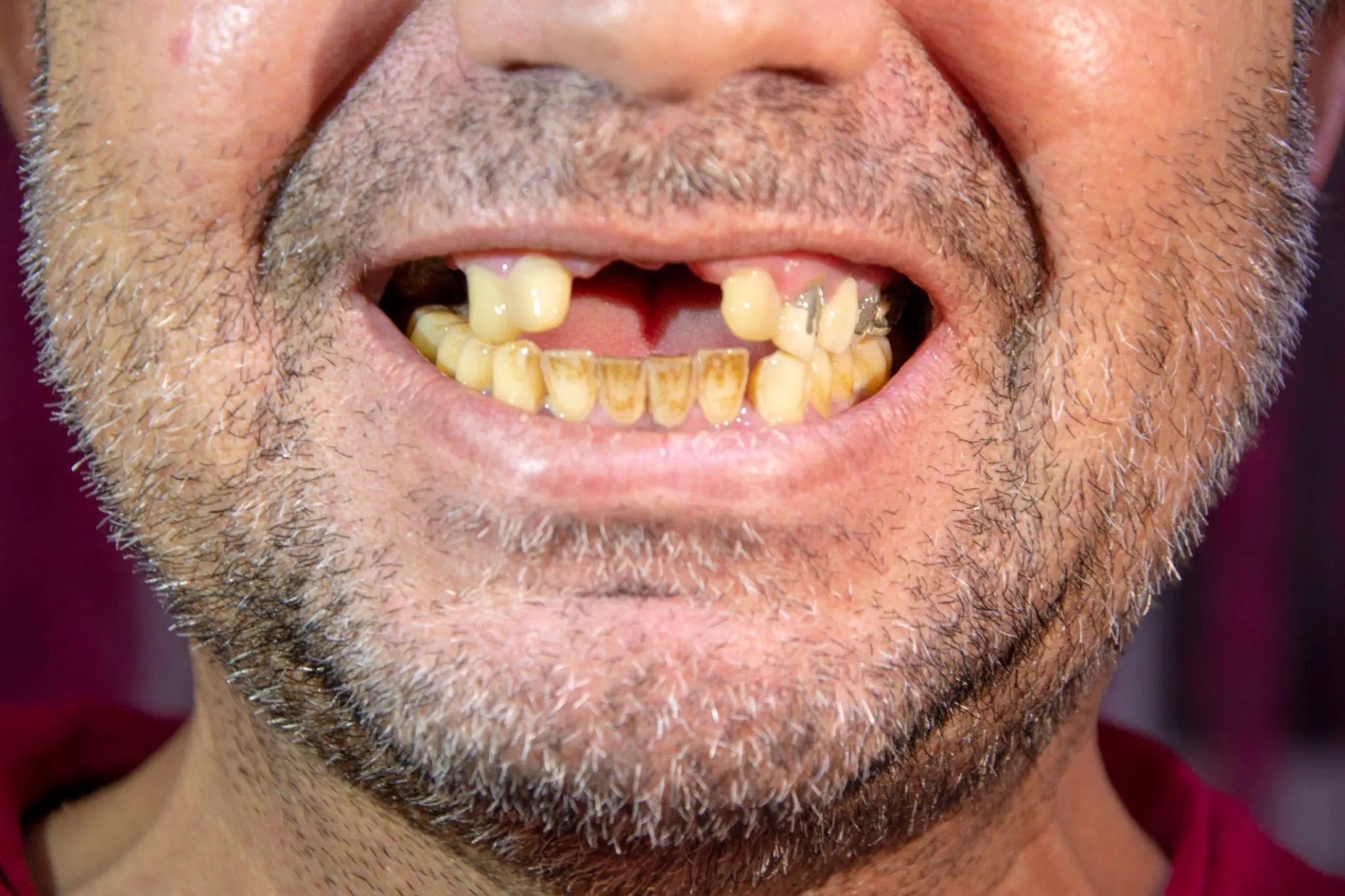
Front tooth decay can develop on the surface of the tooth facing the lip, the palate or the tongue. The contact surfaces between teeth and the gum line are also areas prone to decay.
Because front teeth show when you speak and smile, even a small color change can be noticed early. Decay between the teeth, on the other hand, can progress without being visible from the outside.
Not every white, brown or black mark means active decay. An old stain, a difference in enamel development or a surface stain can look similar. A dental examination is needed to tell them apart.
How Does Tooth Decay Form?
Tooth decay is not a hole that appears in a single moment. It develops when the cycle of mineral loss and repair at the enamel surface breaks down over time.
- A sticky layer of plaque containing bacteria builds up on the tooth surface.
- The bacteria use sugars from food and drinks to produce acid.
- Repeated acid attacks dissolve the minerals in tooth enamel.
- A dull or white area may appear at first.
- If mineral loss continues, the enamel breaks down and a cavity forms.
- Decay can progress into the dentin and then into the pulp, the living tissue of the tooth.
Saliva and fluoride help regain some of the lost minerals. If acid attacks become frequent, however, the natural repair process may not be enough.
What Causes Tooth Decay?
The main cause of tooth decay is frequent contact between plaque bacteria and fermentable carbohydrates. Decay risk varies with a person's oral care, diet, saliva and tooth surfaces.
- Frequent sugar intake: Spreading sugary snacks and drinks through the day leads to repeated acid attacks.
- Inadequate plaque removal: Irregular brushing and not cleaning between the teeth let bacterial plaque build up.
- Not enough fluoride contact: Not using an age-appropriate fluoride toothpaste can reduce the enamel's resistance to acid.
- Dry mouth: Reduced saliva flow makes it harder to neutralize acid and repair minerals.
- Crowding and contact areas: Spaces between teeth that are hard to clean can increase the risk of front tooth decay.
- Orthodontic appliances: Plaque left around brackets or other appliances can lead to early lesions if it is not cleaned regularly.
- Differences in enamel structure: Developmental enamel defects and the margins of old restorations may need closer monitoring.
Acidic drinks are mainly linked to enamel erosion. If a drink also contains sugar, it can increase the risk of decay as well. So it is not only how much you consume but how often.
What Are the Signs of Tooth Decay?
Tooth decay may cause no symptoms at all in its early stages. A lack of pain does not on its own show that a tooth is healthy.
- A dull, chalky or white area on the tooth surface
- Brown or black discoloration
- Roughness on the tooth surface or a visible cavity
- Sensitivity to sweet, hot or cold foods
- Food constantly packing between the teeth
- Dental floss catching or shredding in one particular area
- Discomfort when biting
- Toothache that starts on its own or gets worse at night
- In advanced cases, gum swelling, a bad taste, discharge or facial swelling
Decay in a front tooth can sometimes look like nothing more than a small shadow. Lesions between two teeth in particular can be larger than the area visible from the outside.
How Can You Tell Tooth Decay Is Starting?
Early tooth decay is most often noticed as a white or dull area that has lost its shine. This look can show that the enamel is losing minerals. If the surface has not collapsed yet, the process can be halted with proper follow-up and preventive measures.
The dentist cleans and dries the surface to assess color, hardness and surface integrity. For suspect areas between the teeth, radiographs can be used where clinically necessary.
One situation we see often at our clinic is small marks on front teeth being left for a long time because there is no pain. An early assessment can help preserve more tooth tissue.
How Is Tooth Decay Cleaned and Treated?
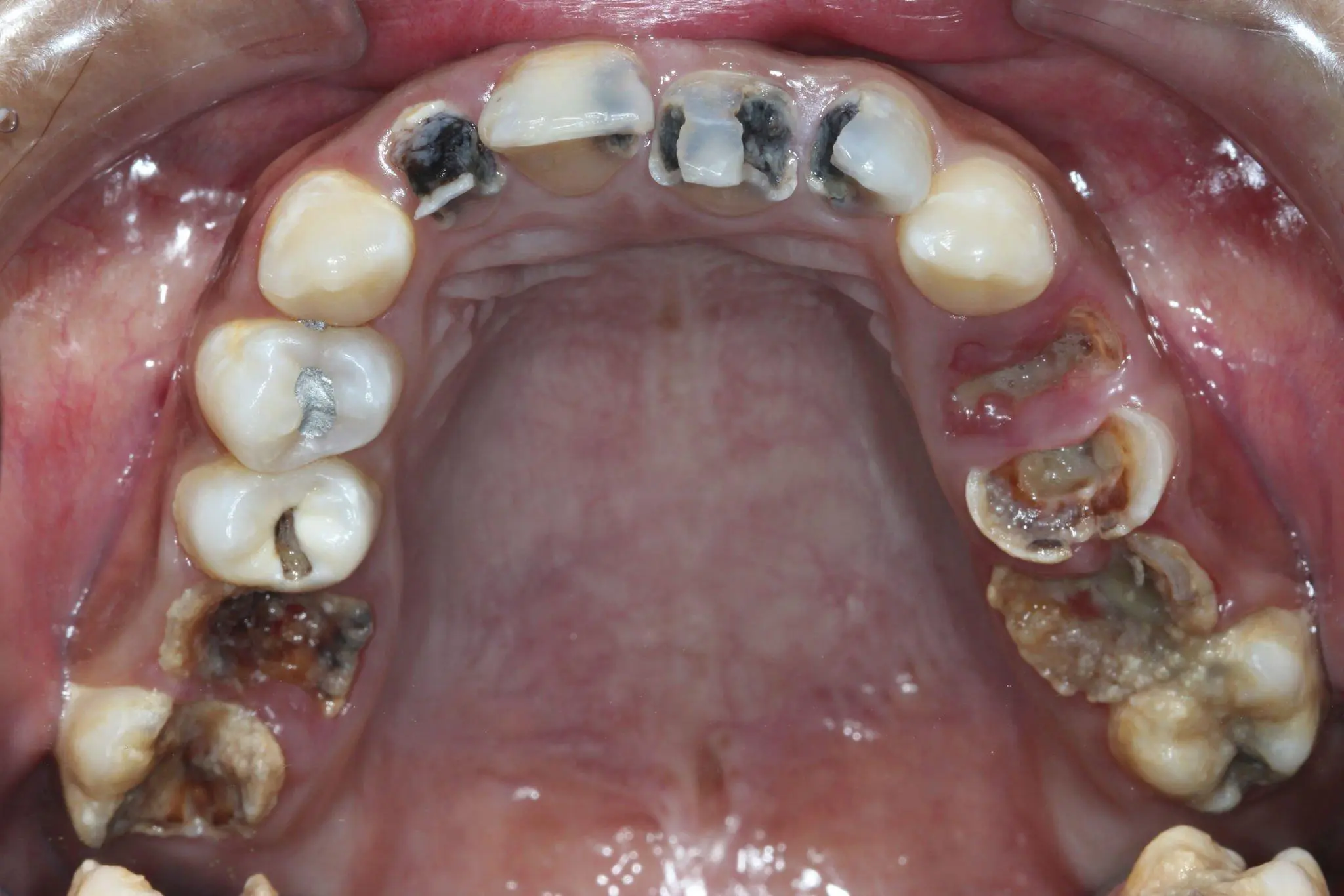
Treatment of tooth decay depends on the surface integrity of the lesion and how close it is to the pulp. Not every color change needs to be drilled out. First it is determined whether the lesion is active.
| Stage of Decay | Possible Findings | General Treatment Approach |
|---|---|---|
| Early lesion | A dull white area with no cavity on the surface | Plaque and diet control, fluoride application and regular follow-up |
| Limited cavity | A small hole, discoloration or sensitivity | Removing the decayed tissue as needed and placing a filling |
| Extensive tissue loss | A large cavity, fracture or weakened tooth tissue | A filling or another restoration depending on the remaining tooth tissue |
| Decay reaching the pulp | Spontaneous pain, night pain or signs of infection | Pulp assessment, root canal treatment where needed, and restoration |
| A tooth beyond repair | Advanced tissue loss or infection that cannot be controlled | Tooth extraction, considered only when the tooth cannot be saved |
The everyday phrase "cleaning tooth decay" can be confused with teeth cleaning (scaling). Scaling removes hard deposits from the surface. Repairing a cavity also requires restorative treatment.
Fluoride and Follow-Up in Early Decay
If no cavity has formed on the surface yet, plaque control, adjusting sugar intake and fluoride support can be planned. The dentist follows how the lesion changes at set intervals.
This approach does not close a cavity that has already formed. In suitable early lesions, it aims to halt or partly reverse mineral loss.
Front Tooth Fillings
If decay has broken the integrity of the tooth, the damaged tissue is removed as far as needed. The area is usually shaped with tooth-colored composite filling material.
The color, translucency and surface shape of the filling are chosen with the neighboring teeth in mind. The result that can be achieved depends on the size and location of the decay and the remaining tooth tissue.
Root Canal Treatment and More Extensive Restorations
If decay has reached the pulp, root canal treatment may be needed. Infected or irreversibly affected pulp tissue is removed and the root canals are filled.
If there is extensive tissue loss in a front tooth, a restoration other than a filling can be considered. The decision about a crown is not based on appearance alone. The remaining tooth tissue, bite forces and previous treatments are reviewed together.
What Helps With Tooth Decay, and Does It Heal at Home?
Tooth decay that has formed a cavity does not heal at home. Brushing or mouthwash does not remove decayed tissue. These measures can help reduce new plaque build-up and prevent further decay.
Until your dental appointment you can clean the area with gentle movements. If very hot, cold or sugary foods increase sensitivity, you can limit them. Food packed between the teeth can be removed gently with suitable interdental cleaning.
Natural methods such as baking soda, lemon, vinegar, garlic or oil pulling do not repair a cavity. Evidence for these methods in treating decay is limited. Acidic or irritating substances can damage the teeth and oral tissues.
Do not try to scrape the tooth with a sharp object or seal the cavity with temporary materials. Such attempts can injure the tooth and delay the examination.
What Happens If Decay Is Left Untreated?
Untreated active decay can progress into the dentin, which is softer than enamel. How fast it progresses varies from person to person and between different teeth in the same mouth.
As decay approaches the pulp, sensitivity and pain can increase. Infection of the pulp can lead to an abscess, swelling or involvement of the tissues around the tooth.
Extensive tissue loss can cause the tooth to fracture. If the tooth cannot be repaired, extraction may come up. Pain easing on its own does not mean the decay has healed.
When Should You See a Dentist?
Book an examination when you notice persistent discoloration, sensitivity, a surface defect or food packing. Waiting for pain to start can let decay reach deeper tissues.
- If there is swelling in the face or gums, a same-day dental assessment is needed.
- Fever, discharge, a bad taste or severe pain can be signs of infection.
- If a front tooth has both a fracture and decay, have it assessed without putting pressure on the tooth.
- If swelling comes with difficulty breathing or swallowing, seek emergency medical care.
How Can Front Tooth Decay Be Prevented?
To prevent tooth decay, plaque control, fluoride contact and eating habits need to be addressed together. Brushing longer alone may not be enough if the spaces between the teeth are not cleaned.
- Brush twice a day for about two minutes with a fluoride toothpaste suitable for your age.
- Do not skip brushing before bed.
- Spit out the excess paste after brushing. Do not rinse with water straight away, so the fluoride keeps working.
- Clean between your teeth every day with floss or an interdental brush of the right size.
- Limit frequent sugary foods and drinks between meals.
- Clean carefully around orthodontic appliances and the margins of restorations.
- If you have a dry mouth, ask a dentist or doctor to help identify the cause.
- Agree how often you need check-ups with your dentist, based on your personal decay risk.
Fluoride mouthwash is not essential for everyone and does not replace toothpaste. The type of product and when to use it can be decided by the dentist according to individual needs.
Front Tooth Decay in Children
In children, decay can appear early in the upper front baby teeth. Sugary drinks, or a bottle containing milk staying in the mouth during sleep, can increase the risk.
Care with an age-appropriate fluoride toothpaste should start once the first tooth appears. Young children's teeth should be brushed by an adult or closely supervised.
When decay in a baby tooth is ignored, pain, feeding difficulties and infection can develop. If you see a dull white area or discoloration on a child's front tooth, do not delay a dental assessment.
In Short: How Does Tooth Decay Go Away?
Decay noticed at an early stage, before a cavity forms, can be halted with preventive measures. Once a cavity has formed, a filling is usually needed. In lesions that reach the pulp, root canal treatment can be considered.
Home care does not close a cavity, but it does help prevent new decay. For a treatment plan, the location and depth of the decay and the remaining sound tooth tissue need to be examined.
Frequently Asked Questions
How does tooth decay go away?
Early decay without a cavity can be halted under dental supervision with fluoride and by managing risk factors. Once a cavity has formed, dental treatment such as a filling is usually needed.
Why do teeth decay?
Plaque bacteria turn the sugars in food and drinks into acid. Repeated acid attacks cause mineral loss in tooth tissue and, over time, decay.
How can you tell if a front tooth is decayed?
Signs include a dull white area, a brown or black mark, roughness, sensitivity and a visible cavity. Some lesions between the teeth are only found by examination or, where needed, a radiograph.
Can tooth decay be cured with natural methods?
Baking soda, lemon, garlic and similar methods do not repair a cavity. Some substances can irritate the teeth and oral tissues, so do not delay a dental assessment.
How is tooth decay cleaned?
The dentist assesses how deep the decay is and removes the damaged tissue as far as needed. The resulting area is usually repaired with a filling; deep decay may need different treatment.
What happens if decay is left untreated?
Active decay can reach the dentin and pulp and cause pain, infection, an abscess or a fractured tooth. With advanced tissue loss, saving the tooth may not be possible.
Will a front tooth filling be noticeable?
Tooth-colored materials can be used for front teeth fillings. The result depends on the size and location of the decay, the tooth color and the remaining sound tissue.