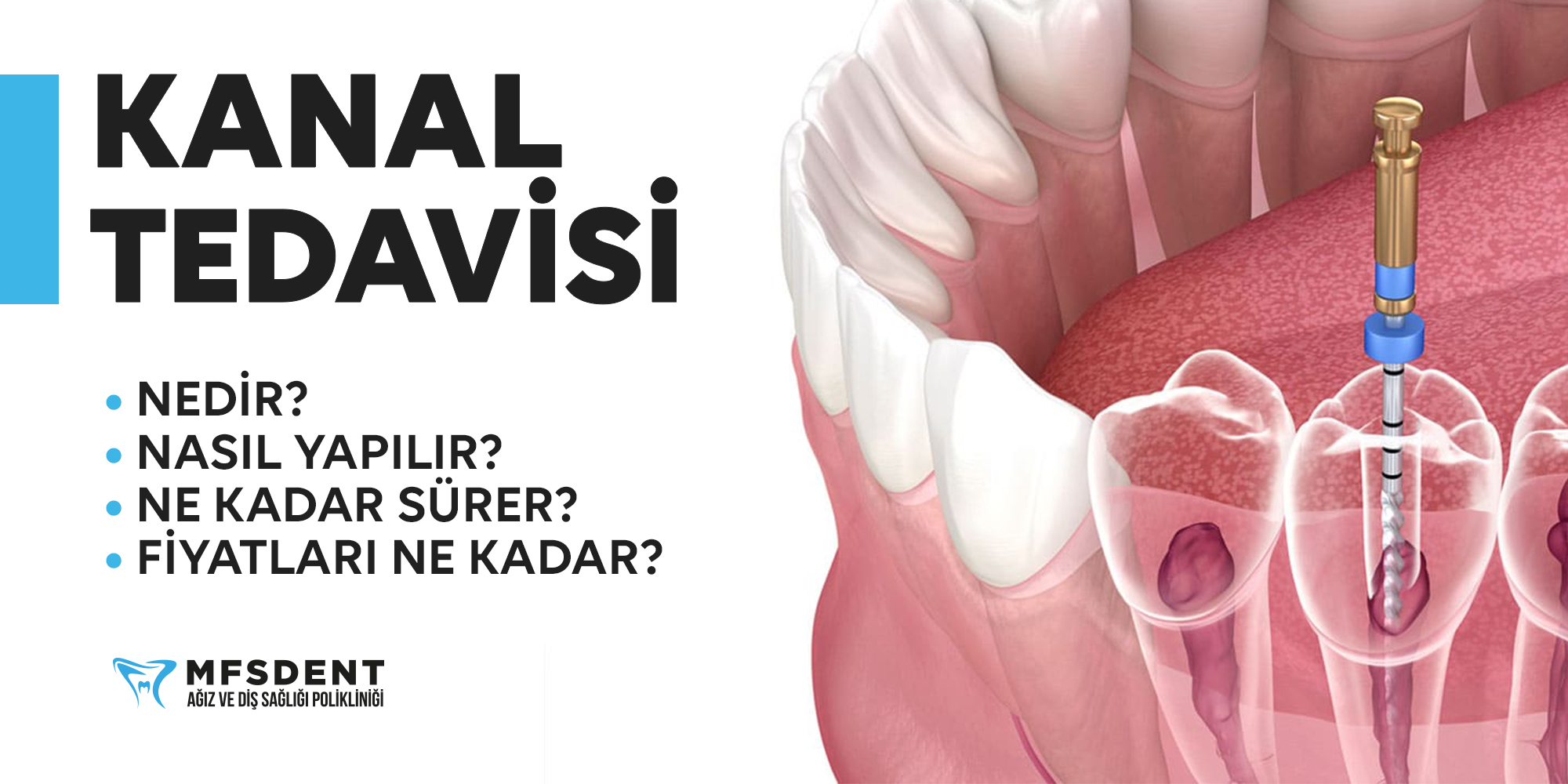
Root canal treatment is the removal of inflamed or infected pulp from inside a tooth. The root canals are cleaned, shaped and filled, and the tooth is sealed again. The aim, in suitable cases, is to keep the natural tooth in the mouth and stop the infection progressing.
Root canal costs in 2026 are 4,610–10,350 TL (Turkish lira) in the TDB guide fee schedule, excluding the filling. For teeth with a lesion at the root tip, the guide range is 5,055–10,980 TL. The figures include VAT and vary with the number of canals. They are for information only; the exact fee is set after an examination.
The pulp is the blood vessel, nerve and connective tissue at the center of the tooth. Deep decay or trauma can cause irreversible damage to this tissue. During root canal treatment, the affected tissue is removed. The cleaned space is filled so that bacteria are less likely to get back in.
Why Is Root Canal Treatment Done?
Root canal treatment can be considered when the pulp is inflamed or infected beyond recovery. Pain alone does not show that a root canal is needed. The final decision is made from the clinical examination, vitality tests and X-ray findings.
Reasons That May Call for Root Canal Treatment
- Deep tooth decay that has reached the pulp
- A crack, fracture or extensive tissue loss in the tooth
- A blow to the tooth or other dental trauma
- Repeated extensive procedures on the same tooth
- Leakage developing around an old filling or crown
- Infection affecting the pulp and the area around the root
How Do You Know a Root Canal Is Needed?
The following symptoms can be linked to pulp inflammation or infection around the root:
- Toothache that starts on its own or gets worse at night
- Sensitivity that lingers after hot or cold
- Pain when biting and chewing
- Swelling on the gum or a pimple-like point of discharge
- Darkening of the color of the tooth
- Swelling in the face or jaw
When the pulp loses its vitality, pain can ease for a while. So pain going away may not mean the problem has resolved. Some infections are found without symptoms during a routine X-ray.
Do not wait if you have rapidly growing swelling in the face or neck, fever, marked fatigue or difficulty swallowing. Difficulty breathing needs emergency medical assessment.
How Is Root Canal Treatment Carried Out?

The treatment plan is set according to the structure of the tooth, the number of canals and the state of infection. The general steps are as follows:
- Examination and imaging: The tooth is assessed and the necessary X-rays are taken. The shape of the roots and the surrounding tissues are examined.
- Local anesthesia: The area is numbed. You may feel pressure or vibration during treatment.
- Isolating the tooth: A rubber dam is used to separate the tooth from saliva. This keeps the working area dry.
- Accessing the canals: A controlled opening is made in the upper part of the tooth. Inflamed or infected pulp is removed.
- Cleaning and shaping: The root canals are cleaned with small instruments and suitable solutions. The canals are prepared for filling.
- Root filling: The cleaned canals are filled with a biocompatible material. The access opening is sealed with a temporary or permanent filling.
- Permanent restoration: The tooth is repaired with a filling or crown, depending on how much tissue was lost. This stage matters for reducing the risk of fracture.
The canal structure is not the same in every tooth. Narrow, curved or previously treated canals can make treatment harder. Your dentist may suggest extra imaging or a different treatment plan along the way.
How Long Does a Root Canal Take and How Many Sessions?
A root canal appointment can mostly take 60–120 minutes. The time depends on the position of the tooth, the number of canals, infection and any previous procedures. Simple cases can be shorter, while complex canals can need more time.
Treatment can be completed in a single session or over several sessions. A temporary filling and a dressing inside the canal may be needed between sessions. The choice of single or multiple sessions is not made on speed alone.
Scientific reviews do not show a clear advantage of single-visit or multiple-visit approaches that applies to every case. The number of sessions is decided from the clinical findings and your dentist's assessment.
How Much Does Root Canal Treatment Cost in 2026?
The TDB 2026 guide fee schedule is set for all provinces and districts. The root canal amounts in the schedule exclude the filling. A permanent filling, crown, post or extra procedures can be planned separately.
| Procedure Group | 2026 Guide Range, VAT Included | Scope |
|---|---|---|
| Standard root canal treatment | 4,610–10,350 TL | One to three canals, filling not included |
| Root canal treatment with a periapical lesion | 5,055–10,980 TL | One to three canals, filling not included |
These amounts are not the final fees of the Private MFSDENT Oral and Dental Health Polyclinic. They are taken from the TDB 2026 guide fee schedule. They are for information only; the exact fee is set after an examination and treatment plan.
What Affects the Cost of a Root Canal?
- The number of canals in the tooth that need treating
- Whether the tooth is a front tooth, a premolar or a molar
- Whether the root canals are narrow, curved or calcified
- Whether there is a lesion at the root tip or widespread infection
- Redoing a root canal treatment carried out previously
- Removing an old filling or fractured material from inside the canal
- The need for a permanent filling, post or crown
- The X-rays and other imaging required
Root canal and filling costs are not worked out from a single fixed amount. The size of the filling and the restoration used vary with the healthy tooth tissue left. The need for a crown on back teeth can also be assessed separately.
Root canal fees at private practices can differ between clinics. When asking about prices, it is important to find out whether the root filling, the permanent filling and other procedures are included in the quote.
What Should You Watch for After Root Canal Treatment?
Numbness can last a few hours. During that time you may bite your cheek or tongue without noticing. It is best not to chew and to avoid very hot drinks until the numbness wears off.
What Should Daily Care Look Like?
- Keep brushing your teeth regularly.
- Be gentle when cleaning the treated area.
- If there is a temporary filling, do not chew hard or sticky foods with that tooth.
- Do not put off the appointment for the permanent restoration.
- Follow your dentist's check-up and care advice.
You do not need to stop brushing for a long time after root canal treatment. Unless your dentist advises otherwise, you can brush gently the same day. There is usually no long wait before drinking water either.
Is Pain After a Root Canal Normal?
In the first few days you may have mild sensitivity, discomfort while chewing or tired jaw muscles. Symptoms are expected to ease gradually. If you need medication, use only what your dentist has prescribed.
You should contact the dentist who treated you in the following situations:
- Pain that gets worse or does not ease within a few days
- Clear swelling in the mouth or face
- Fever or a decline in your general health
- The temporary filling coming out completely
- A clear feeling that your bite is high
- The symptoms you had before treatment coming back
Are Antibiotics Needed for a Root Canal?
Antibiotics do not replace mechanically cleaning the infected tissue out of the root canals. For most limited pulp and periapical problems, dental treatment comes first.
Antibiotics can be considered where there is fever, fatigue or signs of spreading infection. The decision is made by the dentist after an examination. Antibiotics should be used only on prescription and exactly as directed.
Can Any Tooth Have Root Canal Treatment?
The tooth needs enough healthy tissue to be restored and enough bone support. Some teeth with a vertical root fracture or extensive tissue loss may not be suitable for root canal treatment.
If a problem develops in a tooth that has already had root canal treatment, the treatment can be redone. In some cases, root-end surgery can be considered. If the tooth cannot be saved, extraction and options for replacing the missing tooth are discussed.
The outcome of root canal treatment depends on the extent of infection, the canal anatomy and the permanent restoration. So the same result cannot be predicted for every tooth. Regular check-ups allow healing to be monitored.
Root Canal Assessment in Bursa
The decision to have root canal treatment should not be based on the severity of pain or on price research alone. The examination, vitality tests, gum assessment and X-rays are considered together.
One of the questions we hear often at our clinic is whether every painful tooth needs root canal treatment. The answer is no. Similar symptoms can also develop from a crack, a gum problem or chewing trauma.
Frequently Asked Questions
What is root canal treatment?
Root canal treatment means removing inflamed or infected pulp and then cleaning and filling the root canals. The tooth is later repaired with a permanent filling or crown.
How much is root canal treatment in 2026?
In the TDB 2026 guide fee schedule, standard root canal treatment is 4,610–10,350 TL, excluding the filling. The exact fee is set after an examination.
How many sessions does a root canal take?
Treatment can be completed in a single session or over several sessions. The state of infection, the number of canals and the anatomy of the tooth all affect the number of sessions.
How many minutes does a root canal take?
One appointment can mostly take 60–120 minutes. It can take longer for complex or previously treated teeth.
Does a root canal hurt during treatment?
The procedure is usually done under local anesthesia. You may feel pressure or vibration; tell your dentist if you feel discomfort.
How long does pain last after a root canal?
Mild sensitivity can last a few days and should gradually ease. If pain gets worse or there is clear swelling, contact your dentist.
Can you drink water and brush your teeth after a root canal?
There is usually no long wait before drinking water. Avoid hot drinks until the numbness wears off, and keep brushing your teeth gently.
Is a crown needed after a root canal?
Whether a crown is needed depends on the healthy tooth tissue left and the position of the tooth. A dentist's assessment is needed especially for teeth that carry the chewing load.
Sources
- Turkish Dental Association (TDB) 2026 Oral and Dental Health Examination and Treatment Fee Schedule
- NHS – Root Canal Treatment
- Guy's and St Thomas' NHS Foundation Trust – Extirpation Aftercare Advice
- American Dental Association – Antibiotics for Dental Pain and Swelling
- PubMed – Single-Visit or Multiple-Visit Root Canal Treatment: Systematic Review