
After root canal treatment, you should wait until the numbness in your mouth has completely worn off before eating. For most people this takes about 2-4 hours. However, it can take longer depending on the local anesthetic used and on personal factors.
Room-temperature water can usually be sipped in small amounts. Avoid very hot or very cold drinks during the first hour. Mild sensitivity can last a few days and usually decreases steadily.
| Common Question | Short Answer |
|---|---|
| When can you eat? | Once the numbness has fully worn off; for most people, after about 2-4 hours |
| Can you drink water? | Unless your dentist says otherwise, yes, at room temperature and in small sips |
| Can you drink tea or coffee? | Yes, warm, once the numbness has worn off |
| How many days does healing take? | Mild sensitivity usually eases within a few days; the area can take 1-2 weeks to settle |
| When is the filling placed? | In the same session, or at the follow-up appointment your dentist sets |
What Is Root Canal Treatment?
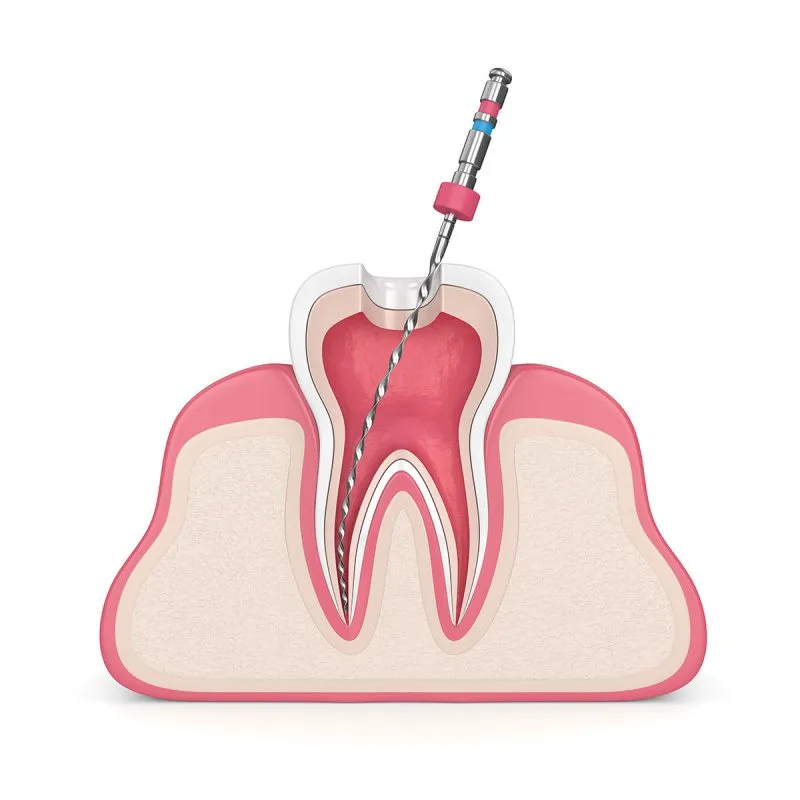
Root canal treatment is a dental procedure in which inflamed or infected pulp tissue inside the tooth is removed. The pulp is made up of nerve, blood vessel and connective tissue. Deep decay, a crack, trauma or previous procedures can damage this tissue.
In the treatment, the root canals are cleaned, shaped and sealed with a biocompatible filling material. The tooth is then restored with a filling or, where needed, a crown. The aim is to help keep the natural tooth in the mouth in suitable cases.
Once root canal treatment is complete, there is no living pulp inside the tooth. Even so, the tissues around the root continue to feel chewing pressure. Sensitivity after the procedure is usually related to these surrounding tissues.
How Is Root Canal Treatment Done?
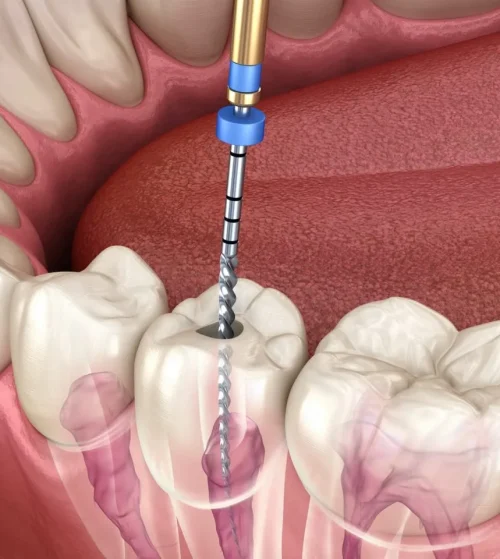
Before the procedure, the tooth and the surrounding tissues are examined. X-ray images are used where needed. Treatment can be completed in one session, or it may take more than one appointment depending on the condition of the tooth.
- Local anesthesia is applied to the treatment area.
- The tooth is isolated from saliva and the working area is prepared.
- A controlled opening is made in the tooth to reach the pulp chamber.
- Inflamed or infected tissue is removed from the root canals.
- The canals are cleaned, shaped and disinfected.
- The root canals are filled with a suitable material and sealed.
- The tooth is closed with a temporary or permanent filling. A crown is planned if needed.
If a temporary filling has been used, it is important to attend the follow-up appointment on time. Until the permanent restoration is placed, the tooth should be used carefully against strong chewing forces.
How Many Hours After a Root Canal Can You Eat?
The key measure for eating is not the clock, but the numbness having completely worn off. The effect of local anesthesia lasts about 2-4 hours in most people. Do not eat solid food until the feeling in your lip, tongue and cheek is back to normal.
A question we are often asked at our clinic is whether there is a fixed waiting time that applies to everyone. Because the duration of anesthesia varies, going by the clock alone is not enough.
What Happens If You Eat Before the Numbness Wears Off?
While you are still numb, you can bite your tongue, cheek or lip without noticing. Because you cannot judge the temperature of food properly, you can burn the tissues in your mouth. Hard food can also put stress on a temporary filling.
Eating too early by accident does not necessarily mean the root canal treatment has been damaged. However, if the filling breaks, comes out or new pain starts, contact your dentist.
What to Choose for Your First Meal
Soft, warm foods are a good choice for the first meal. Chewing slowly on the opposite side from the treated tooth reduces the pressure on the area.
- Yogurt and soft cheese
- Warm soup
- Eggs
- Vegetable puree
- Soft pasta or rice
- Foods that are easy to chew and not too hot
Avoid nuts in hard shells, ice, hard candy, chewing gum and sticky foods. Do not bite hard foods with a tooth that has a temporary filling in particular.
Can You Drink Water After a Root Canal?
Unless your dentist has given different instructions, you can sip room-temperature water. It is safer not to have very hot or very cold drinks in the first hour. While you are still numb, check the temperature of the cup with your hand.
You may feel brief sensitivity in the treated tooth while drinking water. If it is mild and eases day by day, it is usually just monitored. If the complaint becomes more pronounced, a check-up may be needed.
Can You Drink Tea After a Root Canal?
Tea and coffee can be drunk warm once the numbness has completely worn off. Very hot drinks can burn numb oral tissues. Very cold drinks can also increase sensitivity in the surrounding tissues.
Smoking can have a negative effect on oral health and tissue healing. After your treatment, follow your dentist's advice about smoking.
How Many Days Does a Root Canal Take to Heal?
After root canal treatment, mild pain, tenderness to touch or discomfort when chewing can occur for a few days. Symptoms are expected to decrease each day. In some people, the surrounding tissues can take 1-2 weeks to settle completely.
Infection present before treatment, the root structure of the tooth, chewing forces and the restoration placed all affect healing. For that reason, no exact number of days applies to everyone.
| Symptom | Expected Duration | What to Do |
|---|---|---|
| Mild tenderness to touch | A few days | Do not stress the tooth and monitor your symptoms |
| Mild discomfort when chewing | A few days to 1 week | Avoid hard foods |
| Tiredness in the jaw muscles | Usually short-lived | Limit activities that keep your mouth open for a long time |
| Pain that keeps increasing | Not an expected sign of healing | Contact your dentist |
| Noticeable swelling in the face or gum | Needs a check-up | See your dentist without delay |
The tooth can feel different from your other teeth for a few days. However, severe pressure, pain that keeps you awake or growing swelling should not be considered part of normal healing.
When Is the Filling Placed After a Root Canal?
Once the root canals are filled, the tooth can be closed with a permanent filling in the same session. In some cases, a temporary filling is used between treatment sessions. When the permanent filling is placed depends on the state of the infection, how much tooth tissue has been lost and the treatment plan.
If you have a temporary filling, the permanent restoration should not be put off unnecessarily. Attend the follow-up appointment your dentist has set. If the temporary filling breaks or falls out, the root canals can come into contact with the mouth again.
Does Every Root-Treated Tooth Need a Crown?
Not every tooth needs a crown. Some front teeth with enough sound tissue can be restored with a filling. For back teeth, or where a lot of tissue has been lost, restorations such as a crown can be considered.
The decision is made by looking at the position of the tooth, the sound tissue remaining, whether there is a crack and the chewing forces. If your bite feels high, tell your dentist without waiting.
What to Watch for After a Root Canal
- Do not eat solid food until the numbness has completely worn off.
- Choose soft, warm foods for your first meals.
- Do not crack hard foods with the treated tooth until the permanent restoration is complete.
- Keep brushing your teeth gently twice a day.
- Do not stress the area with the temporary filling while cleaning between your teeth.
- Do not try to check the temporary filling with your tongue or a hard object.
- Do not postpone your follow-up and permanent restoration appointments.
- Follow the personal care instructions from your dentist first.
Can You Take Painkillers After a Root Canal?
For pain after the procedure, use only the painkillers your dentist considers suitable. Not every painkiller is suitable for everyone. Tell your dentist if you are pregnant or have a stomach condition, a kidney problem, use blood thinners or have a medicine allergy.
Do not increase the dose yourself, and do not use someone else's medicine. If pain increases despite the recommended treatment, see your dentist rather than trying to suppress it with medication alone.
Do You Need Antibiotics?
Antibiotics are not automatically needed after every root canal treatment. They should be used only if your dentist considers them necessary and prescribes them. Follow the instructions for the prescribed medicine, and contact a health professional if you have an unexpected reaction.
Care Plan for the First 24 Hours and the First Week
| Period | What to Watch For |
|---|---|
| First hour | Avoid very hot or very cold drinks and avoid chewing |
| First 2-4 hours | Wait for the numbness to wear off; take care not to bite your lip or cheek |
| First day | Eat soft foods and do not chew hard with the treated tooth |
| First few days | Watch whether the sensitivity is steadily decreasing |
| First week | Keep up your oral care and attend the planned check-up |
| Until the permanent restoration | Do not stress the temporary filling with hard or sticky foods |
When Should You See a Dentist?
If any of the following appear, contact your dentist without waiting for the planned check-up day:
- Severe pain that does not ease within a few days or keeps increasing
- Noticeable swelling in the face, jaw or gum
- Fever or a decline in your general health
- The tooth touching before the others when you bite
- The temporary filling falling out completely or breaking
- The symptoms you had before treatment coming back
- A rash, itching or difficulty breathing after taking medication
- Numbness lasting longer than expected, or a new loss of feeling
Difficulty breathing, rapidly growing facial swelling or trouble swallowing needs emergency assessment. With these signs, go to the nearest emergency department.
When Might Root Canal Treatment Be Needed?
Deep decay, cracks in a tooth, trauma and previous procedures affecting the pulp can lead to the need for root canal treatment. Prolonged sensitivity to hot and cold, pain on chewing, a change in tooth color, gum swelling or signs of an abscess should be assessed.
In some teeth, pulp damage can develop without obvious symptoms. Whether root canal treatment is needed cannot be decided from symptoms alone. A dentist's assessment with a clinical examination and any necessary imaging is required.
Frequently Asked Questions
How many hours after a root canal can you eat?
You should wait until the numbness in your mouth has completely worn off. For most people this takes about 2-4 hours, but it can take longer.
Can you drink water after a root canal?
Unless your dentist has given different instructions, you can sip room-temperature water. Avoid very hot or very cold drinks in the first hour.
Can you drink tea after a root canal?
You can drink warm tea once the numbness has completely worn off. Hot tea should be avoided because of the risk of burns and sensitivity in the oral tissues.
How many days does a root canal take to heal?
Mild sensitivity usually eases within a few days. In some people, the surrounding tissues can take 1-2 weeks to settle completely.
When is the filling placed after a root canal?
The permanent filling can be placed in the same session or at the follow-up appointment your dentist sets. If you have a temporary filling, the permanent restoration should not be put off unnecessarily.
Can you take painkillers after a root canal?
Take only the painkiller your dentist considers suitable, following the instructions given. The type of medicine and how long it is used vary with your personal health.
Is pain after a root canal normal?
Mild sensitivity that lasts a few days and steadily decreases can occur. See your dentist if pain worsens or you have noticeable swelling, fever or a high bite.
What should you do if the temporary filling falls out after a root canal?
Avoid chewing on that area and contact your dentist quickly. Do not try to fill the gap with anything at home.
Sources
- What Is a Root Canal? – American Association of Endodontists
- Root Canal Post Treatment Care – American Association of Endodontists
- Root Canal Treatment – NHS
- Root Canals – American Dental Association MouthHealthy
- Post-Operative Pain After Endodontic Instrumentation, Irrigation and Obturation: An Umbrella Review