
A dental filling is used to repair tooth structure lost to decay, fracture or wear. The aim is to support the chewing function of the tooth and to close the damaged area with a suitable restoration. The material used is chosen according to the position of the tooth and the extent of tissue loss.
How much does a dental filling cost in 2026? The Turkish Dental Association's guide fee schedule lists 3,375–5,300 TL including VAT for a composite filling. All amounts are in Turkish lira (TL), and the figure varies with the number of surfaces the filling covers. This range is for information only; the exact fee is set after an examination.
What Is a Dental Filling and Why Is It Done?
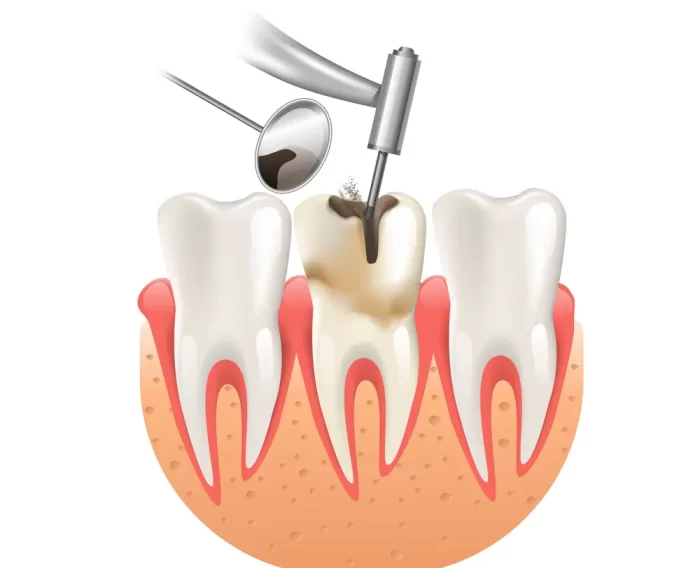
A filling restores the cavity left after damaged tooth tissue is removed, using a suitable restorative material. It does not simply close the existing gap. It also aims to rebuild the shape of the tooth, its contact with neighboring teeth and the way your teeth meet.
A dental filling can be considered in the following situations:
- Loss of tooth structure due to decay
- A part of the tooth breaking or cracking
- Small to medium tissue loss caused by trauma
- Repair of worn tooth surfaces
- An old filling fracturing, wearing down or losing its margin fit
- Limited shape and surface defects in front teeth
Not every decayed tooth can be treated with a filling alone. If the damage has reached the nerve tissue, root canal treatment may be needed. If too little tooth structure remains, other restorations such as a crown can be assessed.
Dental Filling Prices 2026
The VAT-inclusive amounts in the guide fee schedule published by the TDB, valid from 1 January 2026, are summarized below. These are not the final treatment fees charged by MFS Dent.
| Procedure group | TDB 2026 guide range | What determines the range |
|---|---|---|
| Composite filling | 3,375–5,300 TL | Restoring one, two or three tooth surfaces |
| Amalgam filling | 2,845–4,845 TL | The number of surfaces the filling covers |
| Glass ionomer and cervical fillings | 2,115–2,720 TL | Material and area of application |
| Inlay and composite inlay | 6,050–6,770 TL | Material, method and number of surfaces |
| Filling repair or removal | 1,480–2,920 TL | The procedure applied to the existing restoration |
Prices are given for information based on the TDB 2026 guide fee schedule; the exact fee is set after an examination. X-rays, root canal treatment, a protective liner under the filling or the need for a different restoration can change the overall plan.
How Much Is a Dental Filling in a Private Clinic?
It is not possible to set the exact fee for a filling at a private dental clinic over the phone or without seeing the tooth. A cavity that looks small from the outside does not mean it is limited to one surface. An examination, and an X-ray where needed, shows the true extent of the loss.
In private clinics, the price is affected most by the number of surfaces and the material used. Detailed shaping for color matching on front teeth can also change the treatment plan. With deep decay, the vitality of the tooth is assessed separately.
One situation we see often at our clinic is decay that has spread to the contact area with the neighboring tooth. In that case, a restoration that appears to be single-surface may be planned as a two-surface filling after the examination.
Factors That Affect Private Clinic Prices
- The number of teeth to be filled
- The depth and extent of the decay
- The number of tooth surfaces to be restored
- The choice of composite, glass ionomer or an indirect restoration
- Whether the work is on a front or back tooth
- Removing or repairing an old filling
- The need for X-rays and additional treatment
- Whether root canal treatment is needed before the filling
Do You Pay for Dental Fillings at Public Hospitals in Turkey?
At public hospitals in Turkey and oral and dental health centers, basic filling procedures may be covered depending on the patient's SGK cover (the Turkish social security system) and the institution's rules. Different rules can apply to the examination contribution fee, the chosen material or procedures outside the covered scope.
For that reason, it would not be correct to give a single fee for a filling at a public hospital. Current coverage should be checked with the patient registration desk of the institution where you book. The TDB guide fee schedule also does not mean an automatic, fixed patient invoice at private facilities.
At private hospitals and private dental clinics, the fee is set according to clinical findings and the treatment plan. Private health insurance cover for dental treatment can vary from policy to policy.
What Are the Types of Dental Filling?
Composite Fillings
Composite is a direct filling material that can be matched to the tooth color. It can be used on front and back teeth according to clinical needs. It is bonded to the tooth, shaped in layers and usually hardened with a special light.
Glass Ionomer Fillings
Glass ionomers can be considered near the gum margin and in some areas that do not carry heavy chewing loads. The decision to use them is based on moisture control in the area and the durability expected from the restoration.
Amalgam Fillings
Amalgam is a metal-based filling material. Because it is not tooth-colored, it may not be preferred where appearance matters. Existing amalgam fillings are not removed simply because they are there; a clinical assessment is needed.
Inlay and Onlay Restorations
Inlays and onlays are indirect restorations made outside the mouth and then bonded to the tooth. They can be considered where the loss of tooth structure is too wide for a direct filling but limited for a crown. Ceramic and composite-based options are available.
How Is a Dental Filling Done?

A filling can usually be completed in one visit. However, the depth of the decay, the vitality of the tooth and the restoration method chosen can change the number of visits.
- The tooth and surrounding tissues are examined. An X-ray is taken if needed.
- If sensitivity is expected, local anesthesia is given.
- Decayed or unsupported damaged tooth tissue is removed in a controlled way.
- The prepared area is cleaned and made ready for the material to be used.
- The filling material is placed in the cavity and shaped to the natural form of the tooth.
- Contact with the neighboring tooth, floss passage and bite height are checked.
- After any adjustments, the filling surface is finished and polished.
A suitable method of pain control is chosen during the procedure. With deep decay, temporary sensitivity can occur afterwards. How the symptoms progress is closely linked to the initial condition of the tooth.
How Is a Front Tooth Filling Planned?
For front tooth fillings, color, shape and surface texture matter as much as function. The shade of the composite can be chosen to match the color transitions in different parts of the tooth. The aim is to rebuild the lost tissue in a controlled way.
If the fracture extends to the root or affects the nerve tissue, a simple filling may not be enough. Front tooth fractures after trauma should be examined by a dentist even if there is no pain.
Is Root Canal Treatment or a Crown Needed Instead of a Filling?
If the decay is limited to the hard tooth tissues, a filling may be enough. If there is irreversible inflammation or infection in the nerve tissue, root canal treatment may be needed. Pain that starts on its own, wakes you at night or lasts a long time is important here.
Where most of the tooth has been lost, a direct filling may not give enough support against chewing forces. Inlay, onlay or crown options are assessed according to the remaining healthy tissue. The decision is not made by looking at the size of the cavity alone.
What Should You Pay Attention To After a Filling?
When you can eat after a filling depends on the material used and whether you had anesthesia. A light-cured composite filling is already hard at the end of the procedure. Even so, eating before the numbness wears off can lead to biting your cheek or tongue without noticing.
- Do not chew until the numbness has worn off.
- Limit very hard and sticky foods on the first day.
- If you have sensitivity, avoid very hot and cold foods.
- Keep brushing your teeth regularly.
- Clean around the filling with floss without forcing it.
- If a temporary filling was placed, follow the specific instructions your dentist gave.
If the new filling feels higher than the other teeth, tell the clinic instead of waiting to get used to it. A high contact can cause pain when chewing and put excessive force on the restoration.
Is Pain or Aching After a Filling Normal?
Short-term sensitivity to hot, cold or chewing can occur. Sensitivity can be more noticeable after deep fillings. It is expected to decrease gradually; how long it lasts is not the same for every tooth.
If the pain increases, starts on its own or wakes you from sleep, reassessment is needed. Pain at a single point when biting can be linked to a filling left too high. Prolonged sensitivity to heat may require the nerve tissue to be assessed.
How Can You Tell if a Filling Is Faulty, High or Fractured?
You cannot tell whether a filling is faulty from pain alone. Temporary sensitivity can develop in a newly placed deep filling. The following signs call for a check-up:
- The filling touching first when you close your teeth
- Sharp pain at a specific point while chewing
- Dental floss constantly catching or shredding
- Feeling a gap or fracture at the filling margin
- Food debris packing in the same area repeatedly
- The filling moving or falling out completely
- Increasing sensitivity to heat, cold or pressure
Do not chew hard food on the side where a filling has come out. Trying to close the cavity at home with glue or other substances is not appropriate. The remaining tooth structure should be assessed soon.
When Should You See a Dentist?
Cavities may not cause pain at first. Arrange an examination when you notice a hole, a color change, food packing or sensitivity to cold. Early assessment can help preserve more healthy tooth structure.
If there is facial swelling, fever, pus discharge, difficulty swallowing or difficulty breathing, seek medical care without delay. Severe trauma, uncontrolled bleeding and rapidly increasing swelling also require urgent assessment.
How Can You Extend the Life of a Filling?
How long a filling lasts depends on the material, its size, teeth clenching and oral care. For that reason, no fixed lifespan applies to every filling. Fillings are considered permanent, but they should not be assumed to last a lifetime.
- Brush your teeth twice a day with fluoride toothpaste.
- Clean between your teeth every day with a suitable method.
- Do not crack hard items such as ice or nuts with your teeth.
- Tell your dentist if you clench or grind your teeth.
- Have the filling margins examined at regular check-ups.
New decay can develop at the margin even if the filling looks intact. At check-ups, a clinical examination and, where needed, an X-ray help assess problems that cannot be seen by eye.
Frequently Asked Questions
How much is a dental filling in 2026?
The TDB 2026 guide fee schedule lists 3,375–5,300 TL including VAT for composite fillings. This information is for guidance only; the exact fee is set after an examination.
How much is a dental filling at a private clinic?
The fee at a private clinic varies with the number of surfaces, the material, the position of the tooth and any additional treatment needed. An exact price cannot be set without examining the tooth.
Do you pay for a dental filling at a public hospital in Turkey?
Basic filling procedures may be covered depending on the patient's SGK cover and the institution's rules. For the current contribution fee and material details, ask the institution where you book.
Does having a dental filling hurt?
Where necessary, local anesthesia is used to control pain. Temporary sensitivity can occur after the procedure.
How many hours after a filling can you eat?
You should not eat before the numbness has fully worn off. Because the waiting time can vary with the filling material, follow your dentist's advice.
Is aching after a filling normal?
Short-term sensitivity to heat, cold or pressure can develop. If the pain increases, starts on its own or lasts a long time, a check-up is needed.
How long does a dental filling last?
How long a filling lasts depends on the material, its size, chewing forces and oral care. Regular care and check-ups support its lifespan.
Sources
- Turkish Dental Association (TDB) 2026 Oral and Dental Health Examination and Treatment Fee Schedule
- American Dental Association – Materials for Direct Restorations
- American Dental Association – Caries Management Clinical Practice Guidelines
- NHS – Dental Treatments
- Social Security Institution of Turkey (SGK) – Examination Contribution Fee
- Nizip Oral and Dental Health Center – Filling Treatment