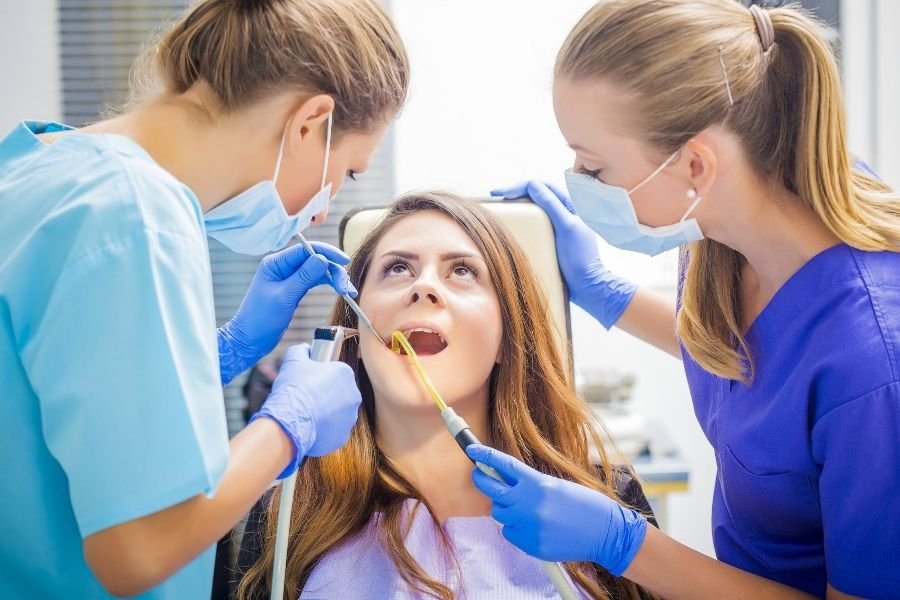
Teeth clenching is the involuntary activity of the chewing muscles while you are awake or asleep. Its medical name is bruxism. It can appear as pressing the teeth together, grinding them or holding the lower jaw tense.
Stress and anxiety are linked in particular to daytime clenching. Sleep bruxism can be connected to sleep patterns, certain health problems, medications and lifestyle habits. Treatment is not the same for everyone. The first aims are to protect the teeth, reduce pain and identify the contributing factors.
What Is Teeth Clenching?
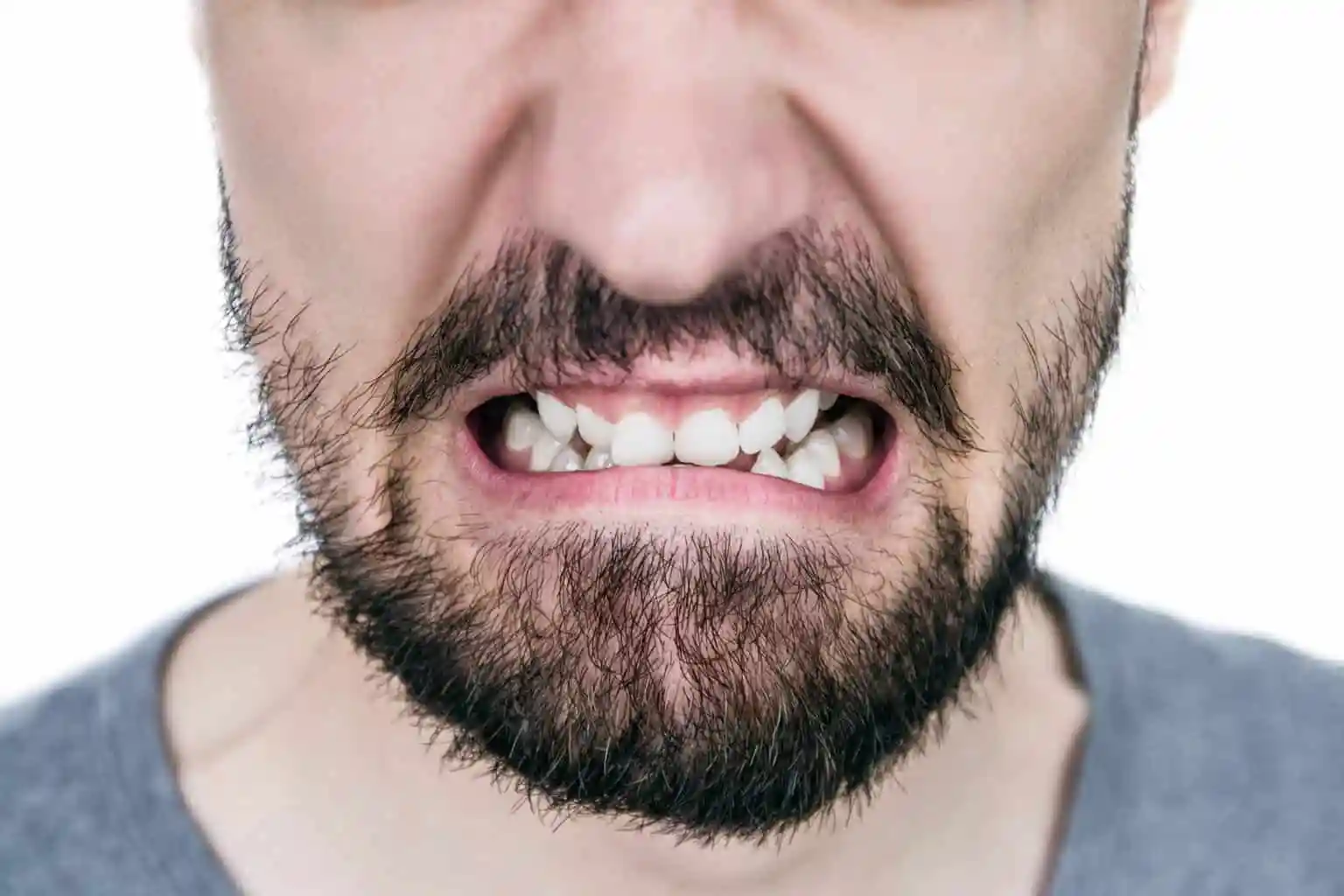
Teeth clenching and teeth grinding are discussed under the same heading, but they are not exactly the same movement. In clenching, the teeth usually press together forcefully without moving. In grinding, the lower jaw moves and the teeth rub against each other.
Bruxism is divided into awake bruxism and sleep bruxism according to when it happens. People can gradually become aware of clenching during the day. Movements that occur during sleep are usually unknown to the person.
| Type of bruxism | Typical feature | Common clue |
|---|---|---|
| Awake bruxism | Pressing the teeth together or holding the jaw tense is the main pattern. | Can increase during intense concentration, stress or tension. |
| Sleep bruxism | Rhythmic or non-rhythmic muscle activity occurs during sleep. | Morning jaw fatigue, or a grinding sound heard by someone nearby. |
Bruxism is not always regarded as a disease. Mild muscle activity may not cause a noticeable problem in some people. However, repeated forces can damage the teeth, fillings, chewing muscles and the jaw joint.
What Causes Teeth Clenching?
Teeth clenching has no single, definite cause. Physical, psychological, genetic and sleep-related factors can all play a part together. The mechanisms behind awake and sleep bruxism also differ from each other.
Stress, Anxiety and Intense Concentration
Stress, anxiety, anger and mental effort are often linked to awake bruxism. The teeth can come into contact without you noticing while you use a computer, drive or concentrate on a task.
It should not be assumed that every case of clenching is psychological. Even so, tracking whether the symptoms increase during stressful periods helps with the assessment.
Sleep Problems
Sleep bruxism can be connected to brief arousal responses during sleep. It may also occur alongside sleep problems such as snoring and sleep apnea.
Loud snoring, pauses in breathing during sleep, morning fatigue or daytime drowsiness should be mentioned to your dentist. A sleep medicine assessment can be requested if needed.
Medications and Other Substances
Some prescription medications can increase the tendency to clench. A link can be made in particular with certain drugs used in mental health, neurological conditions or attention deficit treatment.
If you think your medication is increasing your clenching, do not stop it on your own. Inform the doctor managing your treatment and your dentist.
High caffeine and alcohol intake and tobacco use can also increase the risk of bruxism or the severity of symptoms. This relationship can vary from person to person.
Genetic and Health-Related Factors
Sleep bruxism can be seen in more than one member of the same family. Links have also been reported with some neurological conditions, reflux and sleep disorders. However, every accompanying condition is not a direct cause.
The way the teeth bite together was once considered one of the main causes. Current knowledge shows that bruxism cannot be explained by tooth alignment alone. Unnecessary and irreversible reshaping of teeth should be avoided.
What Are the Symptoms of Teeth Clenching?
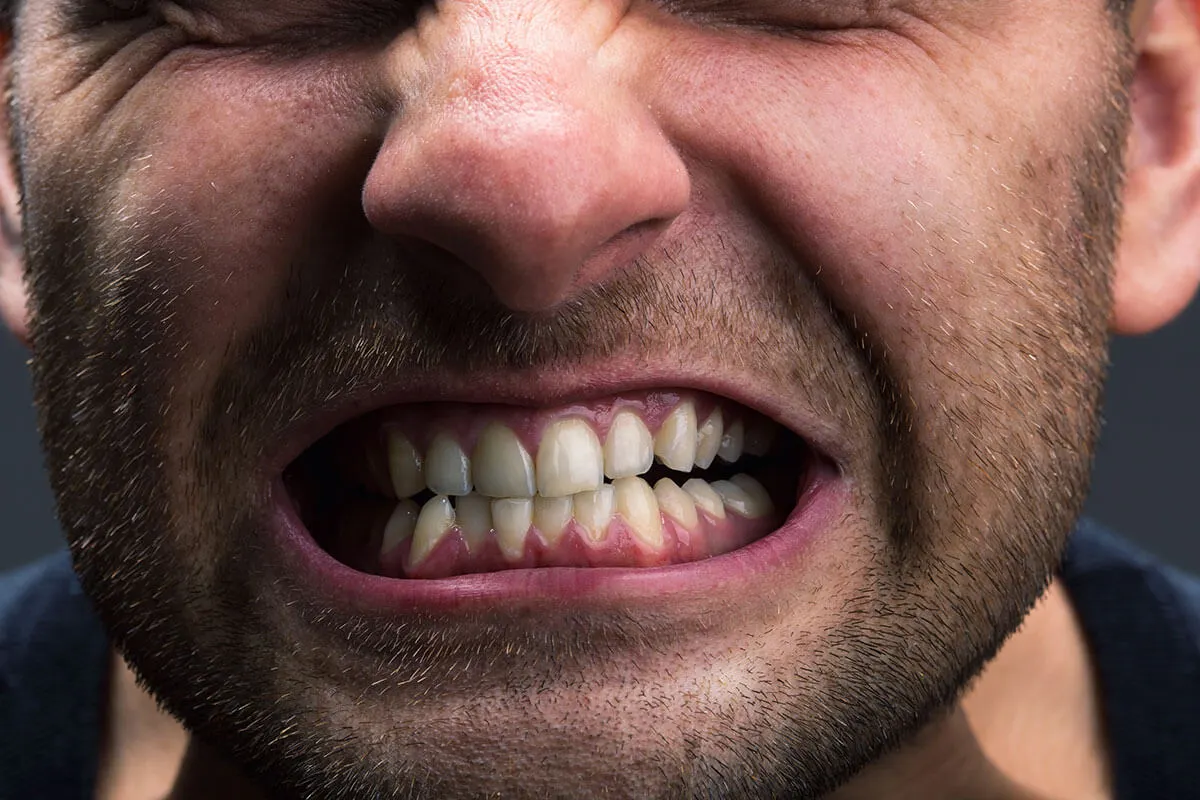
Because clenching can happen silently, it may go unnoticed for a long time. Symptoms can be more obvious when you wake up or at the end of a demanding day.
- Fatigue, stiffness or pain in the jaw muscles in the morning
- A dull headache felt around the temples
- Flattening, wear or cracks on the tooth surfaces
- Sensitivity to heat, cold or chewing
- Repeated damage to fillings, crowns or other restorations
- Pain in the face, jaw, neck or around the ears
- Difficulty opening the mouth, joint sounds or temporary locking
- A grinding sound during sleep that other people can hear
- Disturbed sleep or morning tiredness despite resting
None of these findings alone confirms a diagnosis of bruxism. Tooth wear can also be related to acid erosion, hard brushing or a clenching habit from the past.
One of the first clues we often see at our clinic is a person waking with jaw fatigue although they are unaware of any clenching. The findings need to be assessed together.
What Causes Teeth to Rub Against Each Other?
Teeth rubbing together occurs through repeated lower jaw movements during the grinding form of bruxism. This movement can make a sound during sleep. During the day it may appear in shorter, silent episodes.
Over time, rubbing can wear down tooth enamel. However, not every worn tooth is a sign of active grinding. The dentist looks at the pattern of the wear, whether it is progressing, and the other findings.
How Is Teeth Clenching Diagnosed?
The assessment starts with a detailed medical history and an oral examination. The dentist may ask when the symptoms increase, about your sleep habits and about the medications you use.
The following areas are assessed during the examination:
- Signs of wear, cracks, fractures and sensitivity in the teeth
- Damage to fillings and crowns
- Tenderness or enlargement of the chewing muscles
- Movement of the jaw joint and how wide the mouth opens
- Contact marks around the cheeks and tongue
- Whether existing wear has progressed over time
A single examination does not always show active bruxism. Where necessary, follow-up examinations, imaging or methods that measure muscle activity may be used.
A sleep study is not needed for every patient. It may be arranged by the relevant doctor if there is loud snoring, pauses in breathing during sleep or a suspected sleep disorder.
Which Doctor Should You See for Teeth Clenching?
The first visit for teeth clenching should be to a dentist. The dentist assesses the damage to the teeth, the chewing muscles and the jaw joint, then sets up a suitable follow-up plan.
If snoring or sleep apnea is suspected, an assessment in sleep medicine may be needed. Where anxiety and stress are marked, mental health support may be suggested. If a medication side effect is suspected, the prescribing doctor should be consulted.
How Is Teeth Clenching Treated?
Not every case of clenching needs treatment. Mild cases with no symptoms, pain or tooth damage can be followed with regular check-ups. If treatment is needed, the plan is prepared according to the type of bruxism and its effects.
Night Guards and Intraoral Appliances
A custom-made night guard creates a protective surface between the upper and lower teeth. Its main purpose is to protect the teeth from wear, cracks and damage to restorations.
A night guard does not stop bruxism in every patient. Even if muscle activity continues, it can reduce the forces transmitted directly to the teeth. The fit of the guard and how long it is worn should be checked by a dentist.
Ready-made or poorly fitting products can have a negative effect on how the jaws relate to each other. Using an appliance bought online for a long time without an examination is not appropriate.
Awareness and Habit Change
In awake bruxism, noticing the behavior matters. Phone reminders or short notes placed in your workspace can help you check your jaw position during the day.
The teeth should not be in constant contact while at rest. The lips can stay relaxed, but there should be a small gap between the upper and lower teeth.
Stress Management and Psychological Support
Breathing exercises, regular physical activity and relaxation practices can help reduce stress-related clenching. Where anxiety or emotional strain is marked, mental health support can be considered.
These approaches do not repair damage that has already occurred to the teeth. For that reason, the intraoral findings also need to be followed by a dentist.
Addressing Sleep Patterns and Related Problems
Regular sleep hours and a suitable sleep environment can help with managing symptoms. If a problem such as sleep apnea is identified, treating it becomes part of managing the bruxism.
If a medication-related cause is suspected, only the prescribing doctor should change the treatment. Changing the dose or stopping the drug on your own is not appropriate.
Jaw Exercises and Physical Therapy
If there is pain, stiffness or restricted movement in the jaw muscles, controlled exercises and physical therapy can be considered. The program should be planned according to the examination findings.
Intense massage routines or forced jaw movements seen online are not suitable for every patient. Movements that increase pain should not be continued.
Further Treatment Options
In some persistent and painful cases, interventions such as botulinum toxin may be considered. This is not a routine first choice and its effect is temporary. The evidence and treatment protocols continue to develop.
The general effectiveness of medication for bruxism is limited. Prescription options are assessed by a doctor only in line with accompanying conditions and clinical need.
Repairing Damaged Teeth
If there is severe wear, cracking or loss of chewing surface, fillings, crowns or other restorative procedures may be needed. It is important first to assess the ongoing forces and the risk factors.
Repairing the worn surfaces alone does not remove the clenching behavior. Follow-up and, where needed, a protective appliance can be planned to protect the restorations.
What Can You Do at Home to Reduce Teeth Clenching?
Steps you can take at home do not replace a professional assessment. They can, however, help you notice habits and ease some symptoms.
- Check regularly during the day whether your teeth are touching.
- Keep your sleep and waking times as regular as possible.
- Avoid heavy caffeine and alcohol intake in the evening.
- If you use tobacco, ask a health professional about support to quit.
- Limit chewing gum and very hard foods while your jaw hurts.
- Note the timing of symptoms and possible triggers in a short diary.
- Ask the person you live with whether they hear any sounds while you sleep.
- Do not try to file your teeth down or change your bite yourself.
When Should You See a Dentist?
A dental assessment is needed if you have tooth sensitivity, repeated fractures, jaw pain or morning headaches. An examination should also be arranged if someone hears you grinding your teeth in your sleep.
Frequent locking of the jaw, reduced mouth opening or difficulty chewing should not be put off. If a child has tooth damage, pain or a sleep problem, the dentist should be informed.
Facial swelling, fever, jaw trauma or sudden severe toothache may not be explained by bruxism alone. With these signs, seek a medical assessment without waiting.
Frequently Asked Questions
What causes teeth clenching?
Teeth clenching can be related to stress, anxiety, sleep problems, genetic factors, some medications and lifestyle habits. In most people no single cause can be identified.
Which doctor should you see for teeth clenching?
The first visit should be to a dentist. If sleep apnea, a medication side effect or marked anxiety is suspected, referral to the relevant field may be needed.
Does a night guard stop teeth clenching completely?
The main purpose of a night guard is to protect the teeth from wear and fracture. It may not completely stop muscle activity or the clenching behavior in every person.
How can you tell if you clench your teeth during the day?
You may notice your teeth touching while working or concentrating, fatigue in the jaw muscles and pain by the end of the day. Regular reminders can help you notice the behavior.
Can teeth clenching cause headaches?
Prolonged tension in the chewing and temple muscles can be linked to headaches in some people. With recurring headaches, other causes should also be assessed.
Does teeth clenching go away on its own?
Mild, temporary episodes can ease. If there is pain, sensitivity or tooth damage, see a dentist rather than waiting for it to resolve on its own.
Is teeth grinding normal in children?
Children can grind their teeth from time to time and treatment is not needed in every case. If there is pain, tooth damage or a sleep problem, a pediatric dental assessment is appropriate.
Sources
- Bruxism — National Institute of Dental and Craniofacial Research
- Teeth Grinding (Bruxism) — NHS
- Teeth Grinding: Diagnosis and Treatment — Mayo Clinic
- Updating the Bruxism Definitions: Report of an International Consensus Meeting
- Bruxism Treatment Outcomes: A Systematic Review and Meta-analysis
- Occlusal Splints Versus Botulinum Toxin for Adult Sleep Bruxism