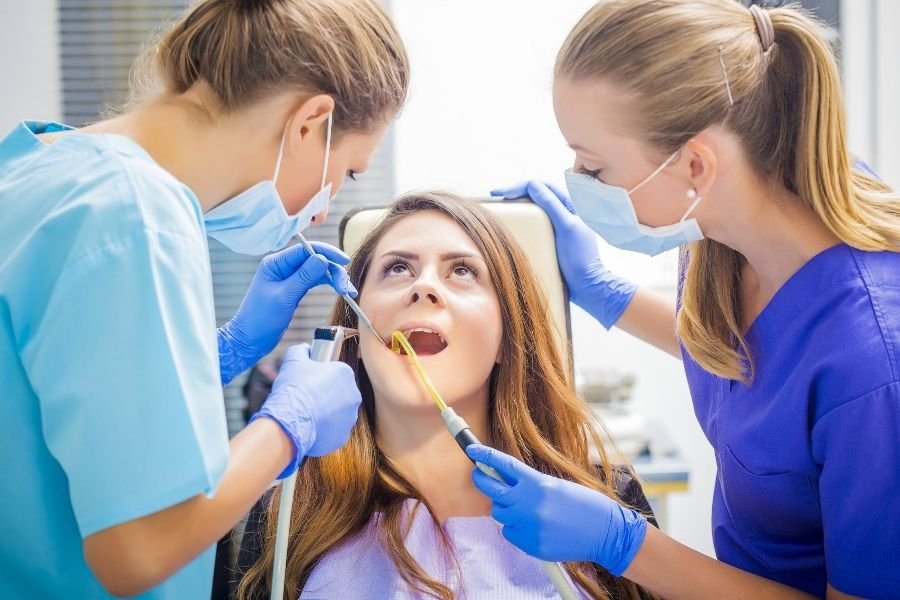
A porcelain dental crown is a laboratory-made ceramic restoration that covers the visible surface of a tooth or the whole tooth. In everyday speech, the term can refer both to full crowns and to porcelain veneers bonded to the front surface.
Treatment involves an examination, tooth preparation, an impression, a temporary crown and bonding of the final restoration. Based on the relevant items in the 2026 TDB fee guide, a single tooth costs roughly 12,000–27,000 TL (Turkish lira), depending on the type of crown. This range is for information only; the exact fee is set after an examination.
What Is a Porcelain Crown and How Does It Differ From a Veneer?
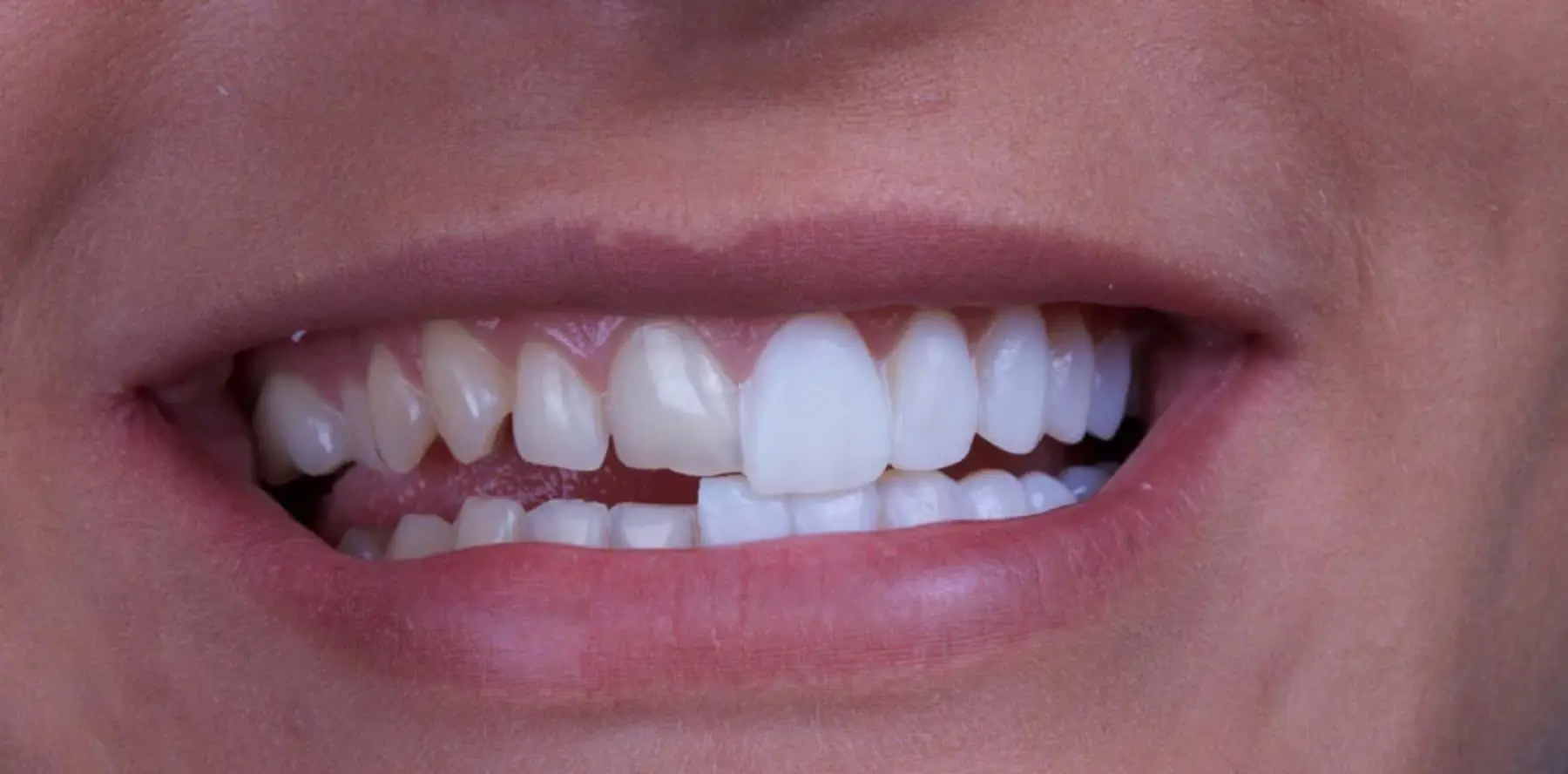
A dental crown is a fixed restoration made to correct a problem with the shape, color, tissue loss or strength of a tooth. How much of the tooth it covers depends on the problem and on the material chosen.
A full crown covers the chewing surface and the sides of the tooth. It is usually considered for teeth with large fillings, fractures or advanced tissue loss.
A porcelain veneer, on the other hand, is a thin ceramic layer bonded mostly to the front surface. It may be considered for color, shape or small gap concerns. A veneer and a full crown are not the same treatment.
One of the mix-ups we see often at our clinic is the assumption that every porcelain restoration is a veneer. Which method is suitable can only be decided after the remaining healthy tooth tissue has been examined.
When Can a Dental Crown Be Placed?
Dental crowns are not used for appearance alone. In some teeth, they can also restore lost shape and chewing function.
- Teeth that are fractured, cracked or noticeably worn
- Teeth with large fillings and weakened remaining tissue
- Color differences that are not expected to change with whitening
- Clear mismatches in the shape or size of teeth
- Small gaps between teeth in selected cases
- Teeth that need structural support after root canal treatment
- Abutment teeth for a bridge planned in an area with a missing tooth
- Fixed restorations to be placed on a dental implant
If there is active decay or gum disease, these problems are addressed first. A crown should not be used to cover up an untreated infection.
What Types of Porcelain Crowns Are There?
"Porcelain tooth" does not describe a single material or method. Under the ceramic outer surface there may be a metal or zirconia substructure. The restoration can also be made entirely of ceramic.
| Crown Type | Main Feature | When It May Be Considered |
|---|---|---|
| Porcelain fused to metal | Ceramic is layered over a metal substructure. | Back teeth, bridges and selected cases that need strength |
| All-ceramic crown | Contains no metal substructure. | Front teeth, where light transmission matters |
| Zirconia crown | A ceramic based on zirconium dioxide. | Front or back teeth, planned according to bite forces |
| Porcelain veneer | Covers mostly the front surface of the tooth. | Selected esthetic cases with enough enamel left |
| Implant-supported ceramic crown | Attaches to the upper part of the implant. | Single missing teeth restored with an implant |
Zirconia is sometimes described incorrectly as a metal. Zirconia is not a metal; it is classified as a ceramic material. Material choice should not be made on appearance alone.
How Is a Porcelain Tooth Made?
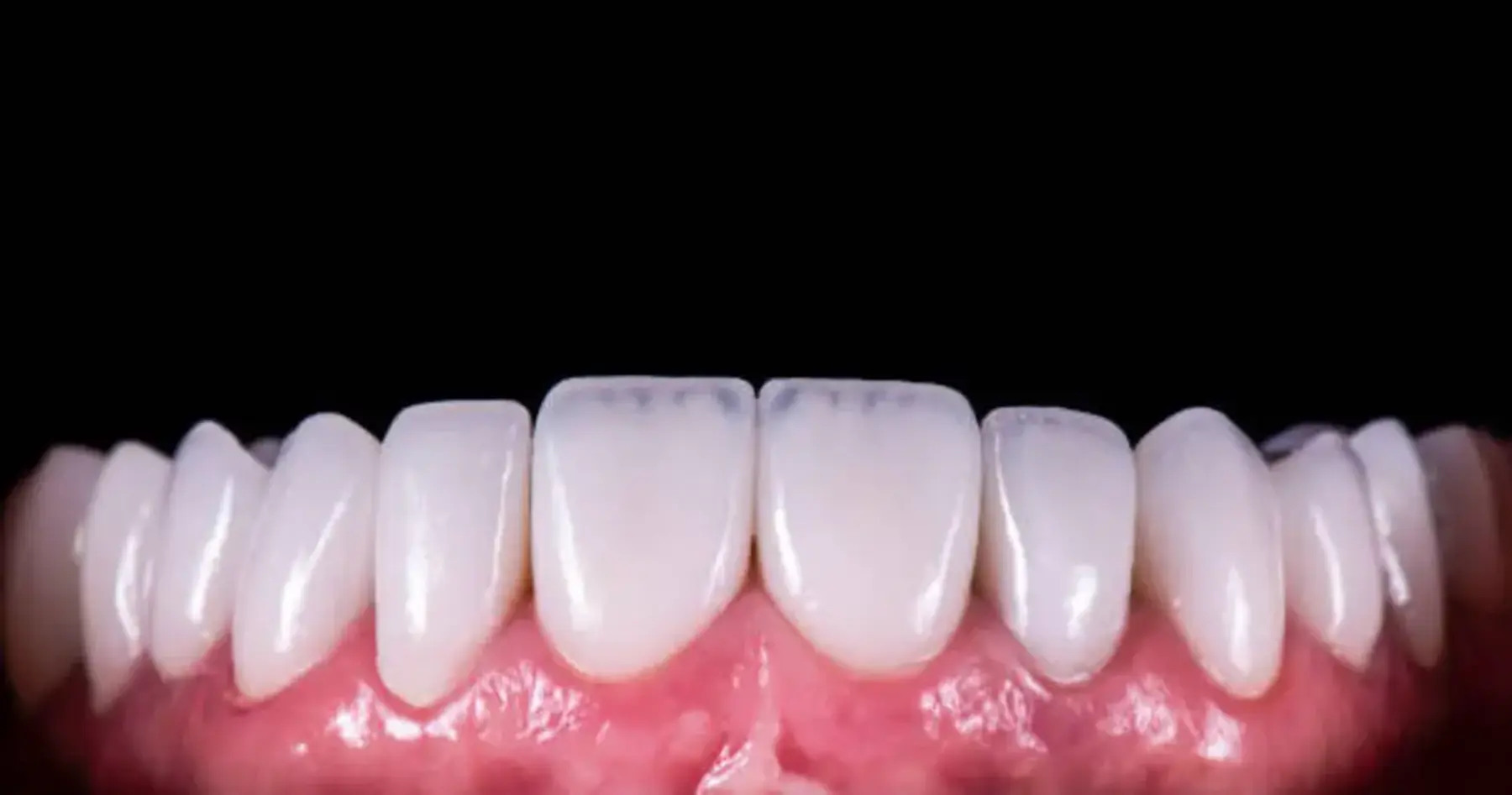
The steps can vary with the condition of the tooth and the type of crown chosen. Laboratory-made restorations usually need more than one appointment.
- Examination and planning: The teeth, gums and bite relationship are assessed. X-rays are taken when needed.
- Preliminary treatment: Decay, gum disease or problems with old fillings are dealt with first. Root canal treatment is not required before every crown.
- Tooth preparation: For a crown, a controlled amount of tissue is removed around the tooth. For veneers, preparation can be more limited.
- Impression and shade selection: A conventional impression or, with suitable systems, a digital scan can be used. The shade is assessed for harmony with neighboring teeth.
- Temporary crown: A temporary crown may be placed to protect the tooth until the final restoration is ready.
- Try-in: The margins, contact points, color and bite relationship of the crown are checked. Any needed adjustments are made.
- Bonding: After suitable surface preparation, the restoration is fixed to the tooth. Excess cement is cleaned away and the bite is checked again.
- Follow-up: A check-up may be planned for sensitivity, bite and gum health.
Local anesthesia can be used during tooth preparation. Short-term sensitivity may occur afterwards. Ongoing pain or a feeling of a high bite should be assessed rather than accepted as normal.
Porcelain Crown Prices 2026
The TDB 2026 guide fee schedule applies from 1 January 2026. The figures below are rounded ranges based on the VAT-inclusive reference amounts in that schedule.
The table is not a clinic price list. The substructure used, the number of teeth and any additional treatment can change the total fee. All price ranges are for information only; the exact fee is set after an examination.
| Procedure | 2026 Indicative Range | Notes |
|---|---|---|
| Recementing a crown or bridge that has come off | 1,200–1,300 TL | Cementation per fixed unit |
| Crown removal | 1,800–1,900 TL | Per fixed unit |
| Temporary crown, single tooth | 2,200–2,300 TL | Not a permanent crown |
| Ceramic veneer crown | 12,000–12,500 TL | Also searched for as porcelain fused to metal |
| Implant-supported ceramic veneer crown | 13,500–14,000 TL | Abutment fee not included |
| Zirconia crown | 13,500–14,000 TL | Ceramic restoration based on zirconium dioxide |
| All-ceramic crown without metal | 21,000–22,000 TL | Guide range for a single tooth |
| Ceramic laminate veneer | 26,000–27,000 TL | Also known as a leaf porcelain veneer |
How Much Does It Cost to Have Teeth Done?
The phrase "cost of having teeth done" can cover fillings, crowns, implants, bridges or removable dentures. For that reason, no reliable total can be worked out from the phrase alone.
For a single-tooth porcelain crown plan, the relevant range can be used. If more than one tooth is involved, temporary crowns and any needed preliminary treatment are considered on top of the number of teeth.
How Much Does a Full Set of Teeth Cost?
The TDB fee schedule has no single item called "full porcelain teeth". The total depends on how many teeth can be saved, the number of implants, the number of bridge units and the material chosen.
No case can be costed simply by multiplying the number of teeth by a unit price. Root canal treatment, posts, gum treatment or temporary restorations are assessed separately.
What Changes Dental Crown Prices?
- The number of teeth to be crowned
- The choice between porcelain fused to metal, all-ceramic, zirconia or veneers
- Whether the crown is placed on a natural tooth or an implant
- The need for a temporary crown
- Removing or recementing an old crown
- The need for decay removal, a filling, a post or root canal treatment
- Gum health and bite adjustments
- The laboratory production method and the substructure used
A more expensive material does not mean it is more suitable for every tooth. The position of the restoration, the amount of healthy tissue and chewing forces should be assessed together.
Advantages and Limitations of Porcelain Crowns
Possible Advantages
- The color, shape and size of the tooth can be adjusted in a controlled way
- Teeth with extensive tissue loss can be protected all around by a crown
- A ceramic surface can offer light properties close to those of a natural tooth
- With regular care, it can be used for a long time
- It can be adapted to plans ranging from a single tooth to multi-unit bridges
Possible Limitations
- Preparing the tooth tissue is usually irreversible.
- Temporary or lasting sensitivity may develop after treatment.
- A crown can fracture, crack or lose its bond over time.
- If plaque builds up at the margin, decay and gum problems can develop.
- When natural teeth are whitened, the color of existing porcelain does not change.
- Teeth clenching and biting hard objects can increase the load on the restoration.
Scientific reviews report that ceramic restorations can function for years. However, no fixed lifespan or definite outcome can be promised in advance.
What Alternatives to a Crown Can Be Considered?
Not every color or shape concern calls for a crown. Options that can preserve healthy tooth tissue should be assessed according to the cause of the problem.
- Professional cleaning or teeth whitening for surface staining
- Composite bonding for minor shape irregularities
- Orthodontic treatment for problems with tooth position
- A filling, inlay or onlay for limited tissue loss
- A full crown for advanced tissue loss
- A bridge, dental implant or removable denture for a missing tooth
When choosing between the options, not only appearance but also the health of the teeth and gums is taken into account.
How Do You Care for Porcelain Crowns?
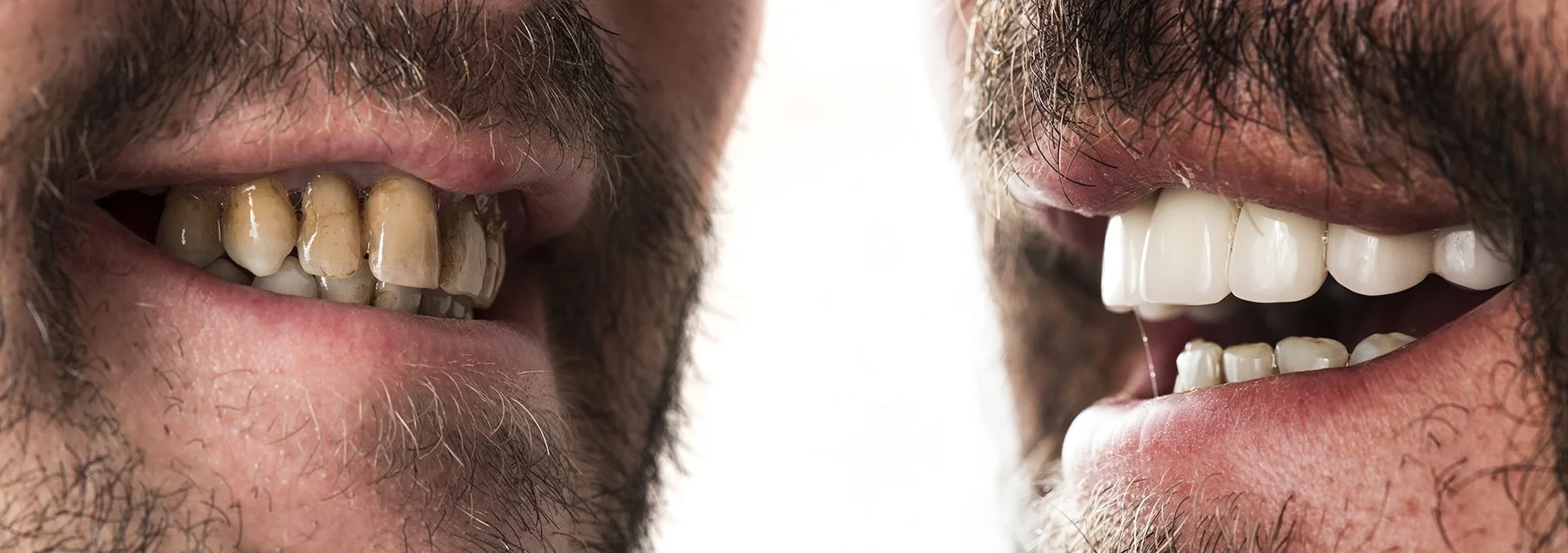
A porcelain surface does not decay, but the natural tooth underneath and the crown margin can. Keeping the gums healthy matters for monitoring the restoration.
- Brush your teeth twice a day for about two minutes with a fluoride toothpaste.
- Clean between your teeth every day with dental floss or a suitable interdental brush.
- Do not crack hard objects such as ice, pens or nutshells with your teeth.
- If you clench your teeth, use the protective night guard your dentist recommends.
- If there is a risk of impact during sport, ask about a suitable mouthguard.
- Agree how often you should come for check-ups with your dentist, based on your oral health.
If a crown comes off, do not use household glue. Keep the crown in a clean box and take it to your dentist. Whether the tooth underneath and the crown can be reused is determined by an examination.
When Should You See a Dentist?
If you feel movement, a fracture, a sharp edge or a change in your bite, do not delay an assessment. Constant pain, sensitivity to hot and cold, a bad taste or bleeding gums also need to be checked.
If you have rapidly increasing swelling in the face or mouth, a fever or difficulty opening your mouth, seek medical care without delay. Difficulty breathing or swallowing needs emergency assessment.
Frequently Asked Questions
How much does a single porcelain crown cost?
Based on the ceramic crown and veneer items in the 2026 TDB fee guide, a single tooth is roughly 12,000–27,000 TL. This indicative range does not include any additional treatment needed; the exact fee is set after an examination.
How much does it cost to have teeth done?
"Having teeth done" can mean a filling, crown, implant, bridge or denture. Without knowing which treatment is planned, no reliable price range can be given.
How much does a full set of teeth cost?
The total depends on which teeth can be saved, the number of implants and bridge units, the material and any preliminary treatment. So no reliable total for full-mouth treatment can be worked out without an examination.
Does getting a porcelain crown hurt?
Local anesthesia can be used when needed while the tooth is prepared. Short-term sensitivity may occur afterwards; pain that continues or gets worse should be assessed.
How many years does a porcelain crown last?
How long it lasts depends on oral hygiene, bite forces, teeth clenching and the condition of the restoration. Studies show many ceramic restorations can be used for years, but no fixed lifespan can be given.
Should you choose a porcelain or a zirconia crown?
Zirconia is also a ceramic material. The choice should be made with your dentist, based on the position of the tooth, the amount of healthy tissue, bite forces and esthetic needs.
How much does it cost to recement a crown?
The rounded range in the 2026 TDB guide for recementing a crown or bridge that has come off is 1,200–1,300 TL per unit. This is for information only; whether the crown can be reused is determined at the examination.
Which type of dental crown costs more?
Among the relevant items in the 2026 TDB guide, the ceramic laminate veneer has a higher reference amount than the crown types listed. A higher price does not mean the method is more suitable for every patient.
Sources
- Turkish Dental Association (TDB) Examination and Treatment Fee Schedule 2026
- 2026 Oral and Dental Health Examination and Treatment Fee Schedule for Dentists
- Materials for Indirect Restorations — American Dental Association
- Crowns — Leeds Teaching Hospitals NHS Trust
- How to Keep Your Teeth Clean — NHS
- Clinical Survival and Complication Rate of Ceramic Veneers — PubMed