
A dental implant is a medical structure placed in the jawbone that mimics the root of a missing tooth. A crown, a bridge or a removable denture can be planned on top of it. Treatment consists of examination, surgical placement, healing and the restorative stage.
In 2026, dental implant prices in Bursa, Turkey vary with the number of implants, the type of restoration, the condition of the bone and the components used. In the TDB guide, the surgical procedure and the ceramic crown items come to roughly 36,000–37,000 TL. All amounts are in Turkish lira (TL). The implant body and the abutment are not included in that range. This information is for guidance only; the final fee is set after an examination.
What Is a Dental Implant?
Dental implants are mostly made of titanium, titanium alloys or zirconia-based materials. The part placed in the jawbone acts as an artificial root. The connector known as the abutment sits between the implant body and the restoration.
An implant does not restore every property of a natural tooth. With appropriate planning and regular care, however, it can support chewing function in the area of the missing tooth.
When Is Implant Treatment Used?
The choice of treatment depends on the number of missing teeth and the condition of the surrounding tissues. An implant may be considered in the following situations:
- A single missing tooth, so that a crown can be made without reducing the neighboring teeth
- Several missing teeth, where an implant-supported bridge can be made
- A fully edentulous jaw, where implants support a fixed or removable denture
- Cases where a removable denture does not stay in place well enough
- Cases with no natural teeth at the back of the jaw to support a bridge
Bridges and removable dentures can also be used to treat missing teeth. Which method suits you is determined by a personal examination and imaging results.
Who Can Have a Dental Implant?
Implant planning looks not only at age but also at jaw development and general health. In people whose growth is not yet complete, treatment is usually postponed.
- There must be enough bone volume and bone quality to support the implant.
- Gum disease should be brought under control before the procedure.
- Systemic conditions such as diabetes need to be monitored.
- Oral hygiene must be sustainable.
- Smoking can have a negative effect on healing and on the tissues around the implant.
- Your medications and past illnesses should be reported to your dentist.
Blood thinners or medicines that affect bone metabolism should never be stopped on your own. Any adjustment is made after an assessment by the prescribing physician and your dentist.
What Types of Dental Implants Are There?
Implants by Material
Most dental implants used today are made of titanium or titanium alloys. Zirconia implants are not a metal alloy; they are ceramic structures based on zirconium dioxide.
The choice between zirconia and titanium is not based on appearance alone. The scientific evidence, the implant design, the restorative plan and the condition of the tissues are all considered together. Long-term comparative data on zirconia systems are more limited than for titanium.
Implants by Restorative Plan
- Single-tooth implant: a single crown is placed on one implant body.
- Implant-supported bridge: several missing teeth are supported by a set number of implants.
- Full-arch fixed restoration: a fixed restoration is made on implants in an edentulous jaw.
- Implant-supported removable denture: the denture is held more securely by implant attachments.
How Is Implant Treatment Carried Out?

An intraoral examination is carried out before treatment. Bone level, gums and neighboring anatomical structures are reviewed with imaging. If there is not enough bone, grafting or a sinus lift may be planned.
| Stage | What Is Done | Approximate Time |
|---|---|---|
| Examination and planning | Oral examination, medical history and any necessary imaging | One or several appointments |
| Preparation | Gum treatment, extraction or bone recontouring | Varies with need |
| Implant placement | Placing the implant in the bone, usually under local anesthesia | Varies with the number of implants |
| Integration with bone | Healing around the implant and formation of the bone connection | 2–6 months in most cases |
| Restorative stage | Impressions, try-in and fitting of the crown or denture | May take several appointments |
Healing time is not the same in every jaw. Bone quality, additional surgical procedures and general health can change the overall timeline.
Can Implants Be Placed in One Day?
“Same-day implant” can mean two different things. The first is placing the implant in the same session as the extraction. The second is attaching a temporary restoration to the implant on the same day.
Same-day loading is not possible for every patient. It requires enough bone support, suitable implant stability and controllable chewing forces. Even when a temporary tooth is fitted on the same day, the permanent restoration may be made at a later stage.
Possible Benefits and Limits of Implant Treatment

- With a single missing tooth, healthy neighboring teeth may not need to be reduced.
- It can support fixed restorations or removable dentures.
- It can support chewing function in the area of the missing tooth.
- It may contribute to functional stimulation of the jawbone.
- It can be tailored to different patterns of tooth loss.
An implant cannot decay, but the gum and bone around it can become diseased. The crown, the connecting screw or the denture can wear over time and need maintenance. Regular check-ups matter for how long an implant lasts.
Dental Implant Prices in Bursa 2026
The TDB 2026 guide fee schedule publishes procedure items that apply in every province and district. The amounts below are rounded ranges of the VAT-inclusive figures in that guide. They are not a clinic price list.
| Procedure Item | 2026 Guide Range | Not Included in the Range |
|---|---|---|
| Endosseous implant placement | Approximately 22,000–23,000 TL | Implant body |
| Implant-supported ceramic crown | Approximately 13,500–14,000 TL | Abutment |
| Total of the two core procedure items | Approximately 36,000–37,000 TL | Implant body, abutment and additional procedures |
| Grafting or sinus lift, if needed | Approximately 14,000–16,000 TL as an additional procedure | Cost of grafts and biomaterials |
The price ranges are for guidance only; the final fee is set after an examination. Once the implant body and the abutment are added, the total cost of a single-tooth implant can exceed the core total in the table.
How Is the Price Calculated for One or Five Teeth?
With a single missing tooth, one implant and one crown are usually considered. Five missing teeth do not always require five implants. Different restorative plans, such as an implant-supported bridge, can be used.
For that reason, the price for five implants cannot be worked out by multiplying the cost of one implant by five. The number of implants, the number of teeth in the restoration and the connecting components are all assessed together.
Factors That Affect the Price of an Implant
- The implant system and the cost of its components
- The type of abutment and implant-supported crown
- Whether the plan is a single tooth, a bridge or a full-arch restoration
- The need for a bone graft or a sinus lift
- The need for imaging and a surgical guide
- Whether a temporary restoration is planned
- The number of implants and restorations
At the Private MFSDENT Oral and Dental Health Polyclinic, planning is prepared individually after a clinical examination and any necessary imaging. One of the questions we hear most often at the clinic is whether the fee covers the implant body alone. In a treatment plan, all surgical and prosthetic items should be considered separately.
Are Implants Available in Public Hospitals?
Some public oral and dental health institutions in Turkey may offer implant treatment for suitable cases. However, each institution's dental staff, capacity and acceptance criteria can differ.
As a general rule, SGK (the Turkish social security system) does not cover the cost of endosseous implants. Limited payment may be made with a medical board report for certain trauma cases, congenital absences and advanced tissue loss. Current conditions should be confirmed with the relevant public institution and with SGK.
How Should You Care for an Implant Afterwards?
- Pressure may be applied to the surgical site for as long as your dentist indicates.
- On the first day, avoid hot or hard foods and anything that strains the area.
- Do not probe the wound area with your tongue or fingers.
- Keep up oral hygiene exactly as your dentist has shown you.
- Take prescribed medicines only as instructed by your dentist.
- Smoking and alcohol can have a negative effect on healing.
- In the long term, interdental brushes or other suitable cleaning aids may be needed.
Possible Risks and When to Contact a Dentist
Mild pain, swelling, bruising or oozing bleeding can occur after the procedure. How these signs progress depends on the procedure performed.
Failure of the implant to integrate with the bone, infection, disease of the tissues around the implant and loosening of restoration components can all develop. Areas close to anatomical structures such as nerves and the sinus require additional risk assessment.
- Pain or swelling that keeps increasing
- Heavy bleeding that does not stop or that starts again
- Fever, pus or a marked bad taste
- Numbness or altered sensation that lasts a long time
- A feeling of movement in the implant or the restoration
- A bite problem that prevents chewing
With any of these signs, contact your dentist without waiting for your scheduled check-up.
Sources
- Turkish Dental Association (TDB) 2026 Oral and Dental Health Examination and Treatment Fee Guide
- SGK Dental Treatments and Endosseous Implant Payment Conditions
- Guy's and St Thomas' NHS Foundation Trust: Dental Implants
- Turkish Ministry of Health, Manavgat ADSM Implant Treatment Information Guide
- Current State of Evidence for Implant Placement and Loading in Partially Edentulous Patients
- Survival and Clinical Performance of Zirconia Compared to Titanium Implants
Guides
Our Implant Dentist
Mehmet Fatih Sever
Dentist
Muhammed Ali Kurmuş
Dentist
İremnur Yıldız
Dentist
Beyzanur Şaşmaz
Dentist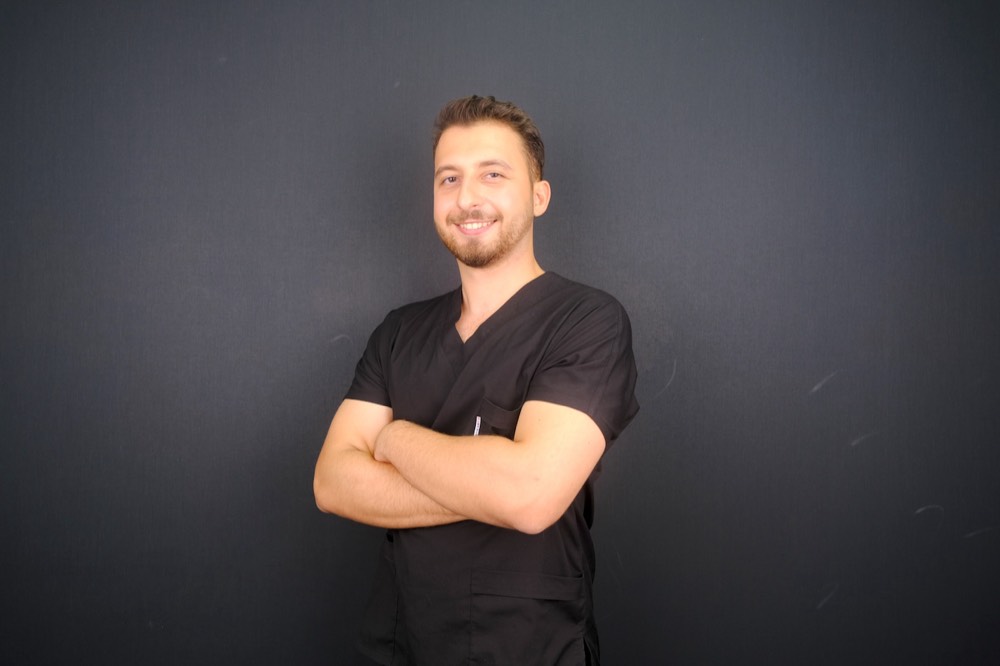
Hasan Köken
DentistFrequently Asked Questions
In the Turkish Dental Association (TDB) 2026 fee guide, the implant surgery and implant-supported ceramic crown items together come to roughly 36,000–37,000 TL. The implant body, the abutment and any additional procedures are not included in that range; the final fee is set after an examination.
Implant placement is usually carried out under local anesthesia. Sensitivity and swelling may last for a few days afterwards; if the pain is more than expected, a dentist should assess you.
In selected cases with adequate bone support and sufficient implant stability, a temporary tooth may be planned for the same day. This approach is not suitable for every patient, and the permanent restoration may be made later.
In most cases the implant takes about 2–6 months to integrate with the bone. A bone graft, a sinus procedure or your general health can extend the overall timeline.
Implant treatment may be considered when diabetes is under control. Blood sugar control, healing capacity and other health factors should be reviewed by your dentist together with the physician treating you.
Some public institutions may offer implant treatment under specific criteria. Coverage by SGK, the Turkish social security system, is generally limited and may only be considered for defined medical conditions with a medical board report.
How long it lasts depends on oral hygiene, smoking, general health, the forces on the restoration and regular check-ups. The tissues around the implant and the restoration components may need maintenance over the long term.
I am a mother who stayed up all night looking for a dentist after my child said his tooth hurt. Besides finding a good dentist, I also wanted his first visit to a dental office to be a good experience, and that stress had worn me out by the time I booked the appointment and went in without knowing what to expect. Their pediatric dentistry team turned our first experience into a fairy tale; we got through a difficult filling without any trouble or trauma, with care and attention. It meant a great deal to me that my son was neither upset nor frightened. Congratulations to your whole team 🙏
Gülşen Kır
The content on this page is published for informational purposes only. It does not constitute a curative health service. For diagnosis and treatment, please consult your dentist.