
A dental prosthesis, or denture, is the general name for the artificial teeth and supporting structures made to replace missing or badly damaged teeth. It is planned individually to support chewing and speech. Fixed, removable and implant-supported options are available.
The term "false teeth" is mostly used for full or partial dentures the patient can take out. So every set of false teeth is a denture, but not every denture can be taken in and out. Crowns and bridges belong to the fixed denture group.
What Is a Denture?
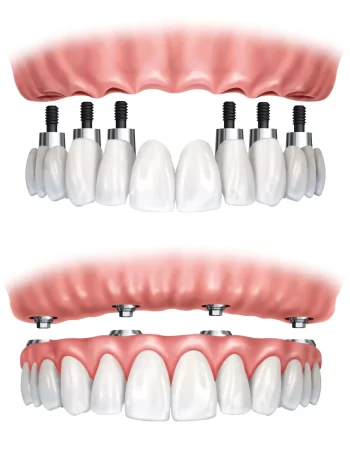
A dental prosthesis is made to replace lost teeth, the visible parts of teeth or the surrounding tissues. Its scope can range from a single tooth to a whole jaw.
Prosthetic dentistry is the field that covers crowns, bridges, removable dentures and implant-supported dentures. The aim of treatment is not only to change appearance. Balanced chewing, clear speech and protection of the remaining oral tissues are also part of the planning.
Are a Denture and False Teeth the Same?
In everyday language, the two terms can be used interchangeably. "False teeth" mostly describes a removable denture the patient can take out. A fixed bridge, a crown or a fixed structure on implants is also a denture, but the user cannot remove it.
When Might You Need a Denture?
Tooth loss can develop from decay, gum disease, trauma or congenitally missing teeth. A tooth with major tissue loss can also be restored with a crown. The same solution is not required for every gap.
A prosthetic assessment can be made in the following situations:
- One or more missing teeth
- Loss of all the teeth
- Certain areas that cannot be used while chewing
- Speech affected by missing teeth
- A broken tooth or one with severe tissue loss
- An old denture that has loosened, broken or irritates the tissues
The position of the missing tooth, the condition of the remaining teeth, the jawbone and oral hygiene are examined together. Your systemic health and what you expect from the denture are also assessed.
What Types of Dentures Are There?
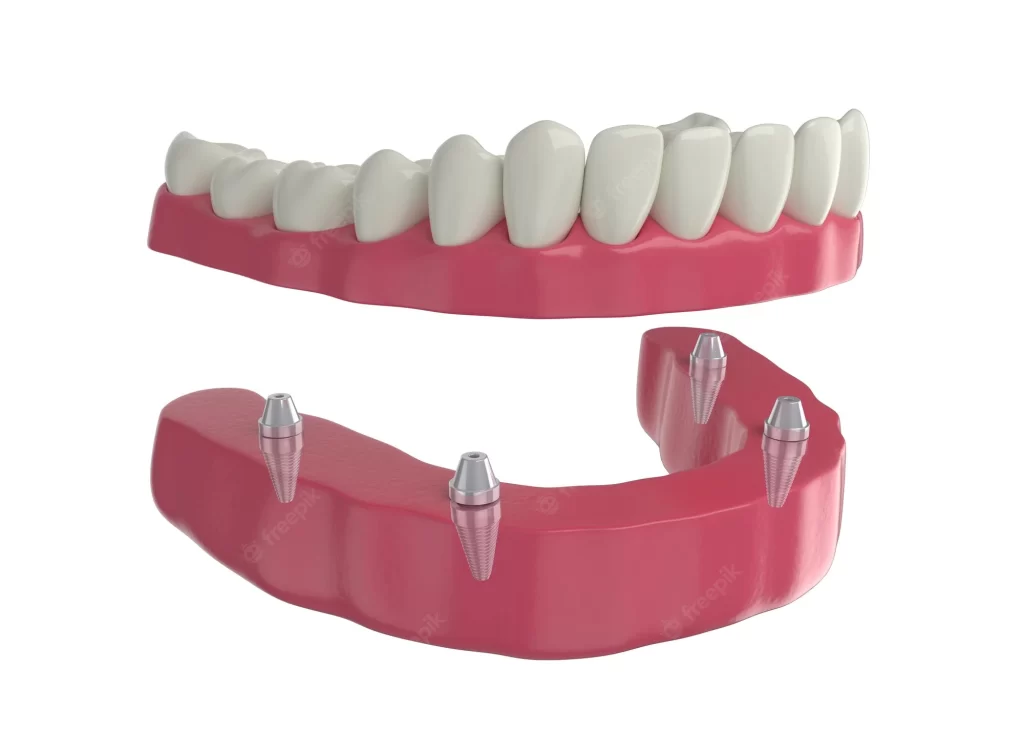
Denture types are classified by the structure that supports them and by whether the patient can take them out. The main options are compared in the table below.
| Type of Denture | Removable? | General Use | Supporting Structure |
|---|---|---|---|
| Crown and fixed bridge | No | A damaged tooth or a limited gap | Natural teeth or implants |
| Full denture | Yes | Loss of all teeth in a jaw | The palate and oral tissues |
| Partial denture | Yes | Jaws where some natural teeth remain | Natural teeth and oral tissues |
| Immediate denture | Yes | The transition period after extractions | Healing oral tissues |
| Implant-supported denture | Depends on the type | Several or all teeth missing | Implants placed in the jawbone |
The choice of denture is not based on the number of missing teeth alone. The health of the supporting teeth, the amount of bone, the bite relationship and how easily it can be cleaned also matter.
Fixed Dentures and Bonded Bridges
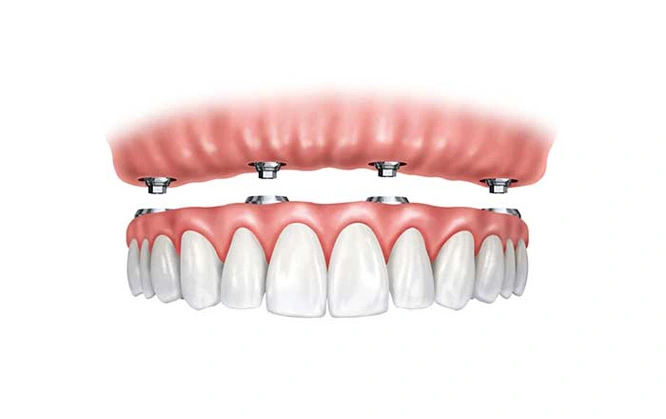
Fixed dentures cannot be removed by the patient. A crown covers the visible part of a badly damaged tooth. A bridge fills the gap left by a missing tooth, supported by the neighboring teeth or by implants.
Traditional bridges may require the supporting teeth to be prepared. In bonded bridges, known as adhesive bridges, the artificial tooth is attached to the neighboring tooth with special wings and dental materials. This is sometimes what people mean when they say "glued-on tooth".
An adhesive bridge cannot be used for every gap. The position of the gap, the bite forces and the structure of the supporting teeth should be assessed. A fixed denture that has come loose should not be refitted with household adhesives.
Implant-Supported Dentures
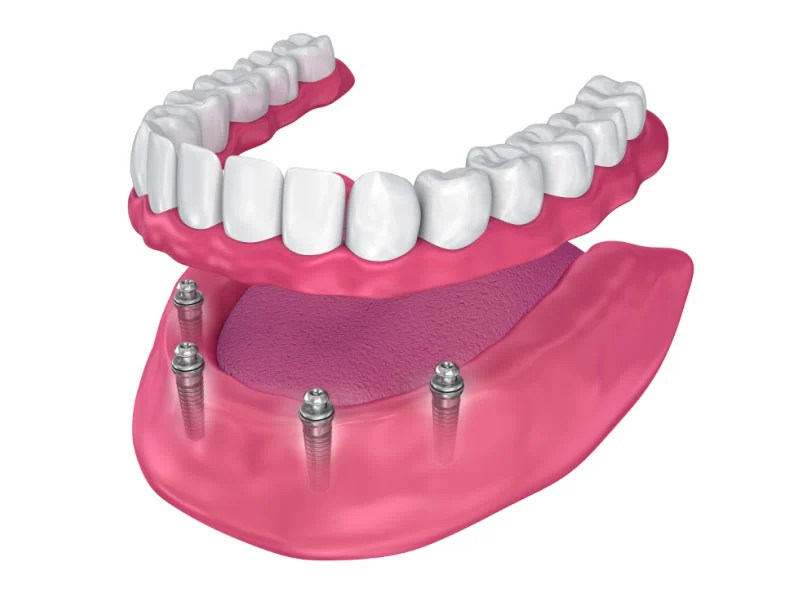
In implant-supported dentures, the support comes from implants placed in the jawbone. The restoration can be made fixed, or planned as a denture the patient can take out.
A removable implant-supported denture attaches to the implants with special connections. A fixed implant-supported denture can only be removed by the dentist. The number of implants and the design of the denture are decided by a personal examination.
Implants are not automatically suitable for everyone. The bone structure, oral hygiene, active infections and general health should be assessed. The surgical and prosthetic stages needed can vary from person to person.
Types of Removable False Teeth
Full Denture
A full denture is the removable denture used when no natural teeth remain in a jaw. It takes its support from the palate and other oral tissues. Retention conditions can differ between lower and upper jaw dentures.
Partial Denture
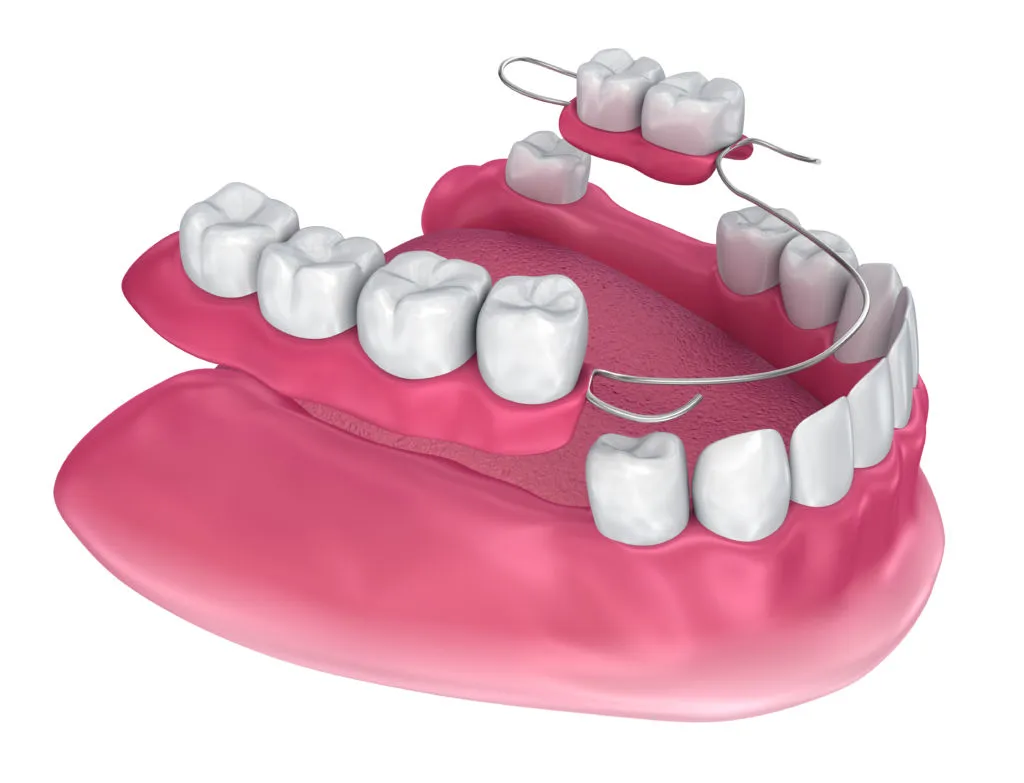
A partial denture can be preferred when some natural teeth remain in the mouth. It can attach to the supporting teeth with clasps or precision connections. The term "metal false teeth" usually describes a partial denture reinforced with a metal framework.
Immediate Denture
An immediate denture is made in advance, to be used right after extractions. During healing, the gum and bone can change shape. For that reason, relining, adjustment or replacement may be needed later.
Overdenture
An overdenture sits on tooth roots that can be kept in the mouth, or on implants. These supports can help reduce movement of the denture. Regular care of the roots or implants must be maintained.
How Is a Denture Made?
Making a denture involves several stages that vary with the method chosen. For removable dentures, the process generally includes these steps:
- The mouth, teeth, gums and jaw relationship are assessed.
- The necessary radiographic examinations are carried out and treatment options are discussed.
- A record of the jaws is taken with an impression or an intraoral scan.
- The bite, the size of the teeth and their arrangement are planned.
- At the try-in stage, the bite, speech and appearance are checked.
- The finished denture is fitted and any necessary adjustments are made.
- Care, removal and insertion are explained to the user.
Fixed dentures can involve extra stages such as preparing the supporting teeth, taking an impression or scan and fitting a temporary restoration. With implant-supported work, the surgical healing period is added to the plan.
How Is a Denture Fixed in Place?
"Fixing a denture" can describe two different things. Fixed crowns and bridges are placed by the dentist with dental cement or adhesive systems. Denture adhesives, on the other hand, are products that support the retention of a removable denture.
Using Denture Adhesive
Denture adhesive can add retention to a removable denture that already fits well. It is not the real solution for a denture that is loose or injuring the tissue. The product should be used according to the manufacturer's instructions and your dentist's advice.
Adhesive residue should be cleaned off the denture and the oral tissues every day. Needing more product than recommended can be a sign that the fit of the denture has deteriorated. In that case, relining or replacing the denture can be considered.
One problem we often see at our clinic is a loose denture being used with adhesive alone for a long time. This approach can mask irritation and delay a check-up.
Can a Fixed Denture That Has Come Out Be Glued at Home?
A crown or bridge that has come out should not be refitted with household adhesives. These substances may not be suitable for use in the mouth. Incorrect positioning can also have a negative effect on the bite and the supporting tooth.
Keep the piece that has come out in a clean container and see a dentist. Whether the restoration can be reused depends on the condition of the supporting tooth and of the restoration itself.
How Often Are Dentures Replaced?
There is no fixed replacement interval that applies to everyone. It is recommended that removable dentures are assessed for replacement after the fifth year. Scientific studies report an average service life of about 10 years for full dentures.
This period is not a strict expiry date. The oral tissues, the jawbone and the remaining teeth can change over time. Some dentures are replaced earlier, while others can be used longer with regular care.
| Assessment Finding | Procedure That May Be Needed |
|---|---|
| Slight loss of fit in the denture | Adjustment or relining |
| Frequent movement and a growing need for adhesive | A fit check and assessment for replacement |
| A fracture, crack or missing artificial tooth | Repair or a new denture |
| A sore that does not heal and chronic irritation | Examination of the oral tissues |
| Noticeably worse chewing or speech | Reassessment of the bite and the denture plan |
How to Care for False Teeth
Removable dentures should be rinsed with water after meals. For daily cleaning, use a soft brush and a non-abrasive cleaner suitable for dentures. Hard brushes and abrasive products can scratch the surface.
- After taking the denture out, clean any remaining natural teeth, the tongue and the palate.
- While cleaning, fill the basin with water or place a soft towel in it, in case the denture is dropped.
- Do not leave the denture in hot or boiling water.
- Do not use bleach or household chemicals.
- Follow the storage method your dentist recommends, so the denture does not dry out.
- Do not file down or glue a broken denture at home.
Most removable dentures are taken out at night. This lets the oral tissues rest and makes cleaning easier. If a different routine has been recommended, follow your dentist's plan.
With fixed crowns and bridges, the area under the bridge needs cleaning in addition to normal brushing. Around implants, use the interdental tools recommended to reduce plaque build-up.
Getting Used to a New Denture
A new denture can feel bulky or loose in the first few days. You may notice more saliva, temporary changes in speech and mild sensitivity. Pressure points can be adjusted at your check-up appointments.
At the start, small bites and softer foods can be easier. Chewing evenly on both sides can help you control the denture. Constant pain should not be considered normal.
Denture Prices 2026
Denture prices vary with the type of denture, the material used, whether one or both jaws are treated and any additional procedures. Implants, precision attachments, extractions and other preparatory work can be separate items.
The ranges below were prepared from the amounts excluding and including VAT in the Turkish Dental Association's guide fee schedule, valid from 1 January 2026. All amounts are in Turkish lira (TL) and are not our clinic's exact prices.
| Procedure | 2026 TDB Guide Range |
|---|---|
| Full acrylic denture, one jaw | 29,000–31,900 TL |
| Partial acrylic denture, one jaw | 27,900–30,690 TL |
| Full denture, metal-reinforced, one jaw | 36,000–39,600 TL |
| Partial denture, metal-reinforced, one jaw | 35,000–38,500 TL |
| Implant-supported removable denture, one jaw | 37,000–40,700 TL |
Prices are for information only; the exact fee is set after an examination. The amount for an implant-supported removable denture may not include extra components such as the implants and precision attachments.
When Should You See a Dentist?
If you develop noticeable pain, bleeding, swelling or recurring sores while wearing a denture, do not put off a check-up. Mouth sores lasting more than two weeks should also be assessed.
See a dentist if the denture breaks, suddenly becomes loose or makes swallowing and speaking difficult. If fever, rapidly increasing facial swelling or difficulty breathing develops, emergency medical assessment is needed.
Regular oral examinations should continue even if no natural teeth remain. These check-ups help assess the fit of the denture and the health of the oral tissues.
Frequently Asked Questions
What is a denture?
A denture is an artificial tooth and supporting structure made individually to replace missing or badly damaged teeth. It can be fixed, removable or implant-supported.
Is a denture the same as false teeth?
False teeth are the type of denture the patient can take out. Fixed work such as crowns and bridges is also a denture, but the user cannot remove it.
What are false teeth called?
In dentistry, the term removable denture is generally used for false teeth. If all the teeth are missing it is a full denture; if some are missing, a partial denture.
Which dental field covers dentures?
Denture work falls within prosthetic dentistry. The first examination can be carried out by a dentist, and further assessments are planned according to the scope of treatment.
How often are dentures replaced?
There is no fixed replacement interval. It is recommended that removable dentures are assessed for replacement after the fifth year, with regular check-ups starting earlier.
What are metal false teeth?
This term usually describes a partial denture reinforced with a metal framework. The denture takes support from the remaining natural teeth and the oral tissues.
What are bonded false teeth?
The term can describe either denture adhesive or an adhesive bridge bonded to a neighboring tooth. Which one is meant, and whether it suits you, should be decided by a dentist.
Can you sleep with false teeth in?
Most removable dentures are taken out at night so the oral tissues can rest. If there is a different medical need, follow your dentist's advice on wear.
Sources
- Turkish Dental Association (TDB) 2026 Oral and Dental Health Examination and Treatment Fee Guide
- TDB Adult Patient Information Leaflet
- American Dental Association: Denture Care and Maintenance
- NHS: Dentures
- Longevity of Complete Dentures: A Systematic Review and Meta-analysis
- Mayo Clinic: Denture Care