
What Is a Dental Bridge?
A dental bridge is a fixed dental prosthesis that fills the gap left by one or more missing teeth. The artificial tooth section is held in place by supports attached to neighboring natural teeth or implants. It is not removed by the patient; when needed, a dentist takes it off.
The artificial part that fills the gap is called the pontic, and the natural teeth that carry it are called abutment teeth. In a traditional three-unit bridge, the pontic in the middle replaces the missing tooth. The crowns on either side attach the bridge to the abutment teeth.
A dental bridge can support chewing and speech. It can restore the appearance of the area with the missing tooth and may reduce the risk of neighboring teeth tilting into the gap. Even so, the same bridge design cannot be used for every missing tooth. The abutment teeth, gums, bite and bone structure are assessed during the examination.
What Does a Dental Bridge Look Like?
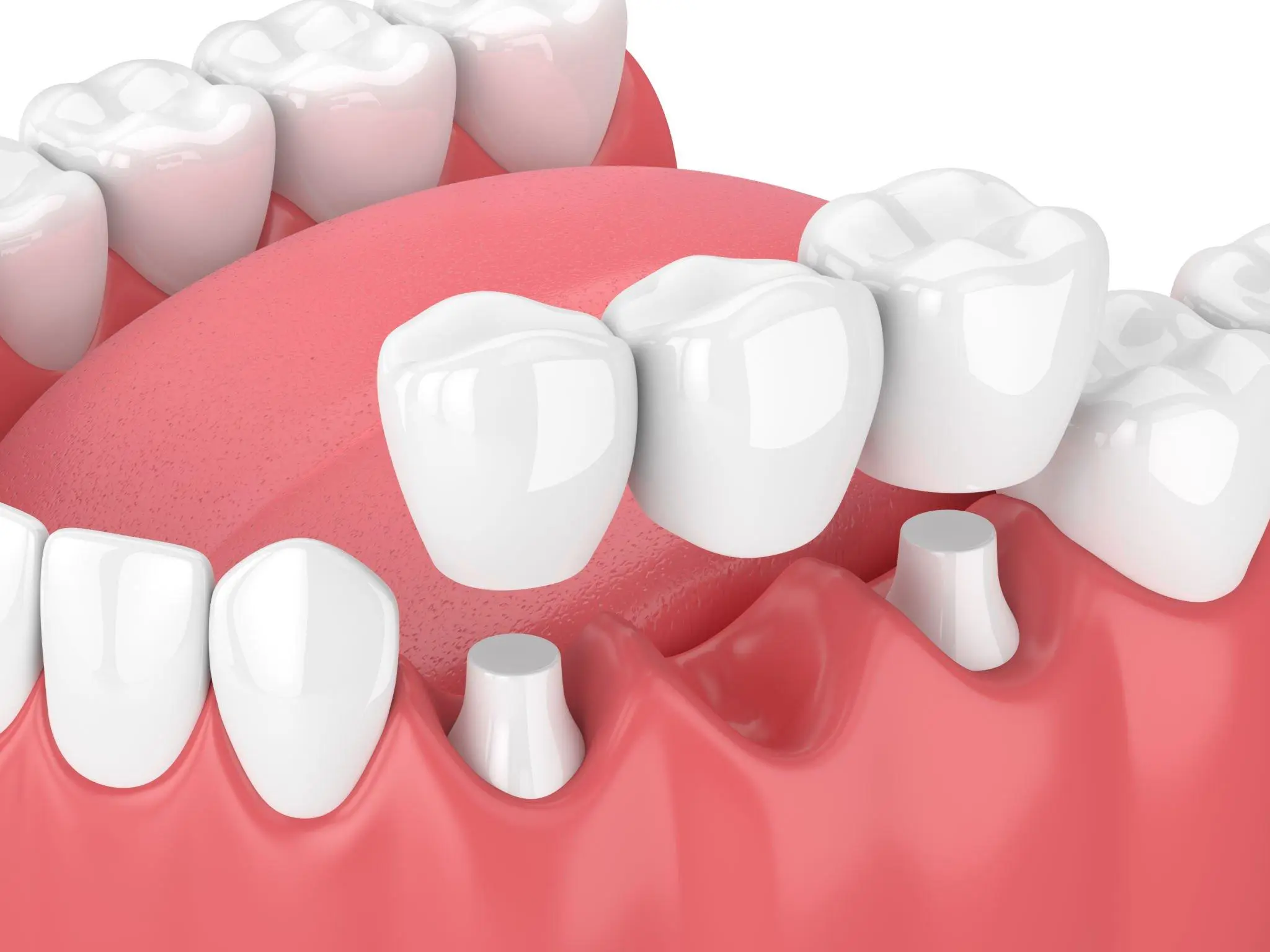
How a bridge looks depends on the material used, the position of the missing tooth and the gum level. Color, shape and size are planned to match the surrounding teeth. From the outside, the supporting crowns and the artificial tooth usually form one connected unit.
The pontic is positioned either to touch the gum or to sit close enough to allow cleaning. However, it has no root like a natural tooth. That is why the area under the bridge must be cleaned with special floss or suitable interdental tools.
Gum recession, material wear or problems in an abutment tooth can change the appearance over time. A new dark margin, gap, movement or color change should be assessed by a dentist.
What Are the Types of Dental Bridge?
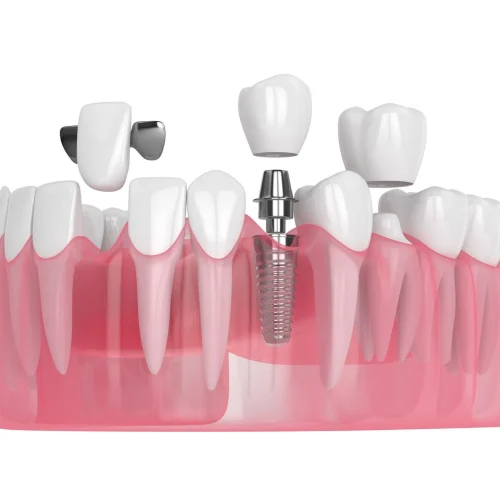
The type of bridge is not chosen on appearance alone. The number of missing teeth, the position of the gap, the supporting tissues and chewing forces are assessed together.
| Bridge type | Form of support | Tooth preparation | Points to consider |
|---|---|---|---|
| Traditional bridge | Natural teeth next to the gap | Abutment teeth are prepared for crowns | Can be planned in front and back areas when there is enough support |
| Adhesive bridge | A wing bonded to the back surface of neighboring teeth | A small amount of preparation may be needed | Usually considered for selected short gaps in the front area |
| Cantilever bridge | A tooth on one side of the gap only | The support on one side is prepared | Can be used in selected situations where the chewing load is limited |
| Implant-supported bridge | Implants placed in the jawbone | Neighboring natural teeth do not need preparation | Requires surgery, bone assessment and a healing period |
Metal-ceramic, zirconia and different all-ceramic systems can be used to make a bridge. Not every material suits every span and bite pattern. The material is chosen according to the location, the length of the bridge, any clenching habit and appearance needs.
Who Is a Dental Bridge Suitable For?
Bridge treatment can be considered for people who have lost one or more teeth. There must be enough abutment teeth with sufficient strength. The roots of the abutment teeth, the surrounding bone and the gums should be healthy.
- The gap is short enough to be restored with a bridge
- There is no advanced mobility in the abutment teeth
- Active decay and gum problems are under control
- There is an oral care routine that can clean under the bridge
- Bite forces are suitable for the planned bridge
If there is active gum disease, inadequate support or uncontrolled clenching, these issues may be addressed first. For some people, an implant or a removable partial denture may be a different option. The decision is made after clinical and radiographic assessment.
How Is a Dental Bridge Fitted?
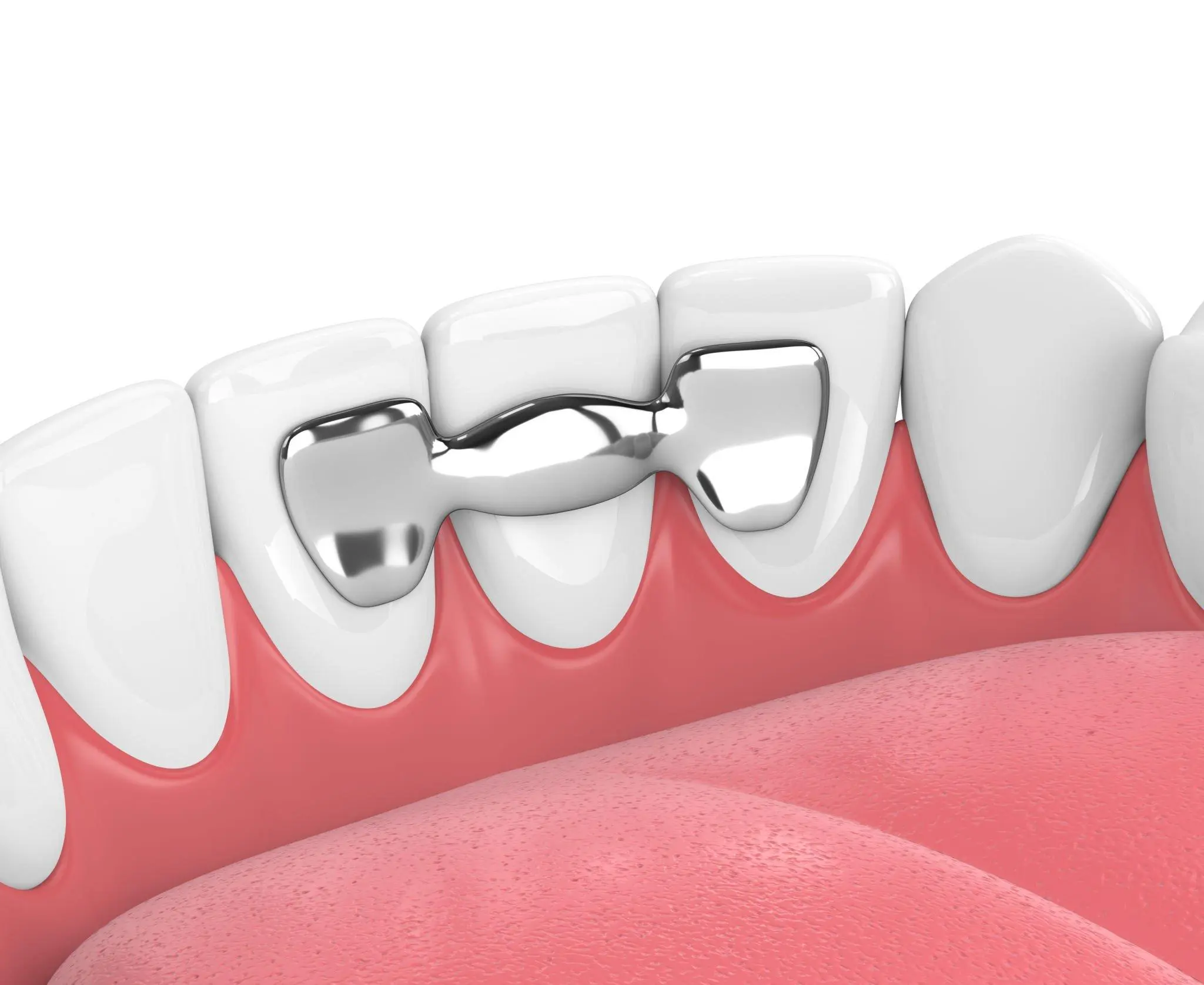
Making a bridge involves several stages that vary with the chosen method. For a traditional tooth-supported bridge, the process is generally as follows:
- Examination and planning: The gap, abutment teeth, bite and gums are examined. X-rays are taken when needed.
- Preliminary treatments: If decay, gum inflammation or root canal treatment is required, these are included in the plan.
- Preparing the abutment teeth: A controlled amount of tissue is removed around the teeth so the crowns can fit. Preparation can be more limited for adhesive bridges.
- Impression or digital scan: A record of the prepared teeth and the opposing jaw is taken. The tooth shade is also chosen at this stage.
- Temporary bridge: A temporary restoration may be used to protect the teeth until the permanent prosthesis is ready.
- Try-in and fitting: The margin fit, color, contacts and bite of the bridge are checked. After any adjustments, it is fixed to the teeth.
A traditional bridge usually requires two or more appointments. Laboratory time and any preliminary treatments can change the total duration. With implant-supported bridges, the process can take longer because of surgery and bone healing.
Does Fitting a Dental Bridge Hurt?
Local anesthesia can be used during tooth preparation to reduce sensitivity. You may feel pressure and vibration during the procedure. After the anesthesia wears off, short-term gum tenderness or sensitivity to hot and cold can occur.
Increasing pain, an ache that wakes you at night or clear discomfort when biting should not be considered normal. These symptoms can come from a high bite, an abutment tooth or the gums. A dental check-up is needed.
How Long Does a Dental Bridge Last?
No single lifespan can be given for everyone. Clinical sources often use a range of 5-15 years. Scientific studies show that many traditional bridges can function for ten years or longer.
A bridge staying in the mouth does not always mean it is problem-free. During that time, re-cementing, surface repair or treatment of an abutment tooth may be needed. The main factors affecting expected lifespan are:
- The initial condition of the abutment teeth
- The length, design and material of the bridge
- Margin fit and how chewing forces are distributed
- Regular cleaning underneath the bridge
- Gum disease and the development of new decay
- A clenching or grinding habit
- Tobacco use and keeping up with check-ups
A bridge is not a treatment that lasts indefinitely. Even without symptoms, it is important to have the abutment teeth and the bridge margins checked at regular intervals.
Can a Dental Bridge Come Loose?
A bridge can loosen if the cement loses its hold or if a problem develops in an abutment tooth. Decay, a tooth fracture, biting a hard object and bite forces can also cause it to come out.
Do not chew on the side where the bridge has loosened. Do not try to fix the bridge back in place with household glues. Keep the piece that came out in a clean container and see a dentist. Whether the bridge can be reused depends on the condition of the abutment teeth.
What Happens if You Swallow a Dental Bridge?
A bridge that comes out can be swallowed or inhaled into the airway. If you notice the bridge is missing, ask for a medical assessment even without symptoms. Imaging such as an X-ray can be used to locate the piece.
If there is shortness of breath, a choking sensation, constant coughing or difficulty swallowing, call for emergency help. Abdominal pain, vomiting or blood in the stool also require urgent assessment.
How Should You Care for a Dental Bridge?
The surface of the bridge should be brushed twice a day, like natural teeth. However, the area under the pontic cannot be cleaned fully with a standard brush. For that area, bridge floss, a floss threader or the interdental brush your dentist recommends can be used.
One problem we see often at our clinic is the belief that the area under a bridge cannot be cleaned. With a suitable interdental tool, the space under the pontic and the margins of the abutment teeth can be cleaned regularly.
- Remove food debris under the bridge every day.
- Avoid habits that overload the teeth, such as biting ice or opening packaging.
- If you clench your teeth, follow the protective plan your dentist recommends.
- If you notice bleeding gums, a bad taste or movement, do not delay a check-up.
- Have examinations and professional cleaning at the intervals your dentist sets.
Differences Between Bridges, Implants and Removable Dentures
The options for replacing a missing tooth vary with each person's mouth. Every option differs in how it is supported, what care it needs and how the treatment runs.
| Option | How it is supported | Neighboring teeth | General process |
|---|---|---|---|
| Tooth-supported bridge | By natural abutment teeth | Prepared in the traditional method | Can take several appointments with laboratory stages |
| Implant-supported restoration | By implants in the jawbone | Usually not prepared | Includes surgical assessment and a healing period |
| Removable partial denture | By teeth and oral tissues | Clasps may be used depending on the design | Taken out by the patient for cleaning |
For an implant, bone structure and general health are assessed. For a bridge, the condition of the abutment teeth matters. Removable dentures can be considered when more teeth are missing or when fixed options cannot be used.
What Affects Dental Bridge Prices in 2026?
A single fee cannot be set for a dental bridge without an examination. In the Turkish Dental Association's 2026 guide fee schedule, each tooth in a bridge is priced according to the type of crown used. The total number of units is therefore one of the main price factors.
- The number of abutment and pontic teeth in the bridge
- The choice of metal-ceramic, zirconia or another material
- An adhesive, traditional or implant-supported design
- Temporary bridge and laboratory requirements
- Whether the abutment teeth need fillings or root canal treatment
- Whether gum treatment or other additional procedures are planned
Price information for 2026 is for guidance only; the exact fee is set after an examination. Which procedures the treatment plan includes and the possible alternatives should also be explained to the patient.
When Should You See a Dentist?
When a tooth is lost, an assessment can be made without waiting for the gap to cause problems. The following signs mean an existing bridge should be checked soon:
- Movement, a crack or a fracture in the bridge
- Pain when biting or a change in the bite
- Swelling, bleeding or discharge at the bridge margin
- A bad taste or bad breath that does not go away
- Sensitivity to hot and cold in an abutment tooth
- Facial swelling, fever or worsening pain
Rapidly increasing facial swelling, difficulty breathing or difficulty swallowing needs urgent assessment. The choice of bridge and the care interval should be planned through a personal examination by a dentist.
Frequently Asked Questions
What does a dental bridge mean?
A dental bridge is a fixed prosthesis that fills the gap of a missing tooth with an artificial one. It can take support from natural teeth or implants.
What does a dental bridge look like?
The color and shape of the bridge are planned to match the surrounding teeth. The appearance depends on the material, the gum level and the position of the missing tooth.
Does fitting a dental bridge hurt?
Because local anesthesia can be used during tooth preparation, pain can be controlled. Short-term sensitivity can occur afterwards; increasing pain needs a check-up.
Can a dental bridge fall out?
A bridge can come out if the cement loses its hold or because of decay or a fracture in an abutment tooth. Household glue should not be used; see a dentist instead.
How long does a dental bridge last?
Clinical sources often use a range of 5-15 years, but no exact duration can be given. The abutment teeth, bridge design, oral care and chewing forces all affect it.
What happens if a dental bridge is swallowed?
A bridge can be swallowed or inhaled into the airway. Ask for a medical assessment even without symptoms; with shortness of breath, constant coughing or difficulty swallowing, call for emergency help.
Which is preferable, an implant or a bridge?
An implant may avoid preparing the neighboring teeth, but it involves surgery and a healing period. The choice between a bridge and an implant is made by assessing the abutment teeth, bone structure and general health.
How much does a dental bridge cost?
The fee varies with the number of units, the material, the form of support and any additional treatments needed. Price information for 2026 is for guidance only; the exact fee is set after an examination.
Sources
- American Dental Association MouthHealthy – Bridges
- Leeds Teaching Hospitals NHS Trust – Bridges
- Turkish Dental Association (TDB) – 2026 Guide Fee Schedule Booklet
- Survival of Fixed Prosthetic Restorations on Vital and Nonvital Teeth: A Systematic Review
- Secondary Caries in Fixed Dental Prostheses: Long-Term Clinical Evaluation
- Guy's and St Thomas' NHS Foundation Trust – Swallowing or Breathing in an Object During Dental Treatment