
A porcelain veneer is a thin, tooth-colored restoration bonded to the visible front surface of a tooth. The word "laminate" means covering a surface with a thin layer.
Also called a leaf veneer, this treatment may be considered for color, shape, small chips and limited gaps. It is not suitable for every tooth, and the treatment decision is made after an examination.
What Is a Porcelain Veneer and What Does It Do?
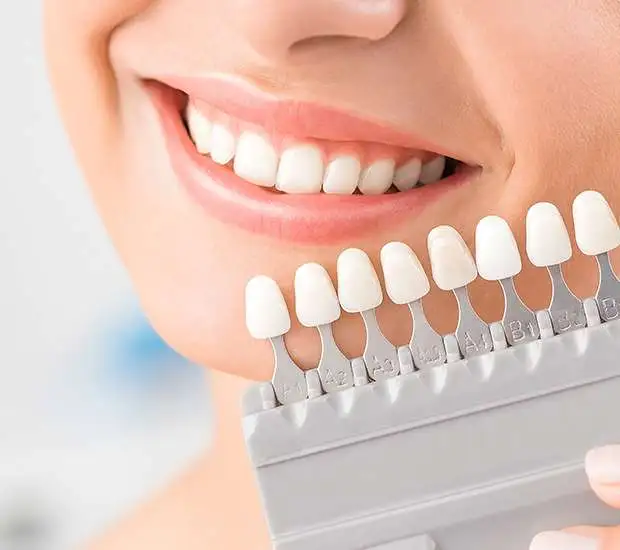
A veneer covers only the outward-facing surface of a natural tooth. It does not replace a missing tooth and does not wrap around the whole tooth the way a conventional crown does.
The aim is to adjust the color or shape of the tooth while preserving as much healthy tooth tissue as possible. How much preparation is needed varies with the position of the tooth and the material chosen.
In some cases, planning may be possible without working on the tooth surface at all. However, it cannot be said that "no-prep veneers" are possible for every patient. Limited preparation may be needed to avoid a thick, bulky look.
Are Veneers, Laminates and Leaf Teeth the Same Thing?
In everyday speech, the terms veneer, laminate and leaf tooth are mostly used for the same treatment. In scientific sources you may come across the terms "laminate veneer" or "porcelain laminate veneer".
These terms describe the thin restoration that covers the front surface of the tooth. Although the word "cover" is used, the treatment differs from a crown, which encircles the whole tooth.
When Are Porcelain Veneers Considered?
Veneer treatment is not planned on appearance expectations alone. The teeth, the gums and the bite relationship also have to be suitable for the procedure.
- Certain color changes that whitening is not expected to resolve
- Differences in the size or shape of teeth
- Small chips and wear on the front teeth
- Closing limited gaps between teeth
- Replacing old front restorations that no longer look right
- Mild position irregularities that do not require orthodontic treatment
If there is severe crowding or a bite problem, an orthodontic assessment may be needed first. Veneers are not an alternative to braces or clear aligners for every alignment problem.
Who May Not Be Suitable for Porcelain Veneers?
If there is active decay or gum disease, these problems need to be brought under control first. Insufficient enamel can also affect how the veneer bonds and how it performs long term.
- People with uncontrolled teeth clenching or grinding
- People with a severe bite problem and heavy chewing loads
- People who bite their nails, chew pens or open hard objects with their teeth
- People whose teeth have fillings or tissue loss covering a large part of the tooth
- People with active decay, infection or advanced gum problems
- People whose expectations do not match what treatment can realistically achieve
These situations are not always an absolute barrier. Your dentist will assess the preliminary treatment needed and the different restoration options for you personally.
How Is Veneer Treatment Carried Out?
The process varies with the material and the current condition of the teeth. Porcelain veneers usually involve a laboratory stage, while direct composite veneers can be shaped at the clinic.
- Examination and planning: The teeth, gums, existing fillings and bite relationship are examined. X-rays are taken when needed.
- Color and shape selection: The facial proportions of the teeth and harmony with neighboring teeth are taken into account. Achievable changes are discussed with you.
- Preparing the tooth surface: If needed, a controlled amount of tissue is removed from the enamel. The amount of preparation is not the same for every tooth.
- Impression or digital scan: A record of the teeth is taken so ceramic veneers can be made in the laboratory.
- Temporary restoration: Depending on the amount of preparation and the waiting time, a temporary restoration may be needed.
- Try-in and bonding: Color, margins and bite are checked. Once approved, the veneer is bonded to the tooth with adhesive systems.
- Check-up: Gum health, bite and cleanable areas are reassessed.
Ceramic veneer treatment mostly needs more than one appointment. Composite work can be completed in a single appointment in some cases. The exact timeline is set by the treatment plan.
Porcelain Veneer Prices 2026

Porcelain veneer prices vary with the material used, the number of teeth, the laboratory process and any preliminary treatment needed. It is not appropriate to quote an exact total for any patient without an examination.
The amounts below are rounded ranges, in Turkish lira (TL), of the VAT-inclusive figures in the TDB guide fee schedule that applies from 1 January 2026. The zirconia row is not a conventional veneer; it refers to a zirconia crown, shown for comparison.
| Type of Treatment | 2026 Guide Price Range | Notes |
|---|---|---|
| Porcelain or ceramic veneer | 26,000–26,500 TL | Listed by the TDB as "Laminate Veneer, Ceramic". |
| Zirconia crown | 13,500–14,000 TL | Not the same treatment as a conventional leaf veneer. |
| Composite veneer | 9,000–9,500 TL | Listed by the TDB as "Laminate Veneer, Composite". |
Prices are for information only; the exact fee is set after an examination. These ranges are not the final treatment prices of the Private MFSDENT Oral and Dental Health Polyclinic.
What Affects the Price of a Veneer
- The number of teeth to be treated
- The choice between porcelain, ceramic or composite material
- The current position of the teeth and the amount of enamel
- Existing fillings and restorations
- The need for gum treatment or decay treatment
- Temporary restorations and laboratory stages
- The need for a bite adjustment or a protective night guard
What Is a Leaf Porcelain Veneer?
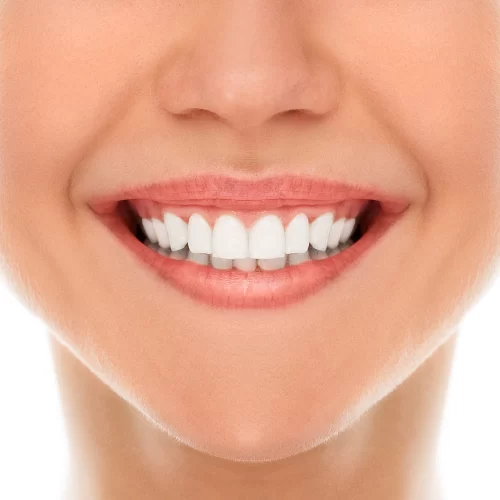
A leaf porcelain veneer is a thin ceramic layer made in the laboratory and bonded to the tooth surface. Different ceramics such as feldspathic porcelain and lithium disilicate can be used.
Ceramic materials can offer advantages in light transmission and color stability. Even so, the result depends not only on the material but also on the underlying tooth and the way it is prepared.
Porcelain veneers can fracture, crack or debond. Depending on the type of damage, polishing, repair or replacement of the restoration may be needed.
What Is a Zirconia Veneer?
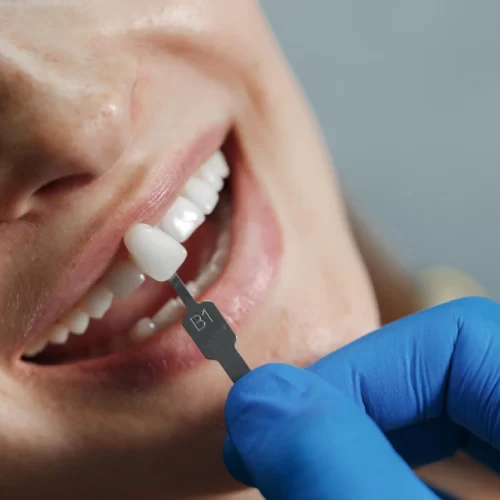
Although the term "leaf zirconia" is used often online, not every zirconia restoration is a veneer. Zirconia is mostly used in crown restorations that wrap around the tooth more extensively.
Thin zirconia veneers can be considered in selected cases. However, long-term clinical data on zirconia veneers is more limited than for established porcelain and glass-ceramic options.
The light transmission of zirconia varies with the product used. It may be considered in cases where a marked color change needs to be masked. Material choice should not be driven by durability or whiteness expectations alone.
What Is a Composite Veneer?
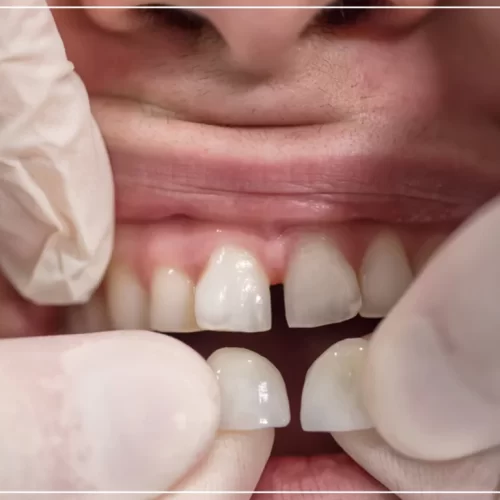
A composite veneer is a tooth-colored resin-based restorative material shaped on the tooth surface. Direct application is mostly done at the clinic and may not require a laboratory stage.
Composite can be considered for limited shape changes and for correcting small chips. One of its notable features is that it can be repaired in the mouth when needed.
Surface gloss can fade over time. Staining, wear or deterioration at the margins may occur. For this reason, periodic check-ups and polishing may be needed.
Differences Between Porcelain, Zirconia and Composite
Material choice should not be based on price alone. The tooth tissue, the bite, the degree of color change and repair expectations are assessed together.
| Feature | Porcelain Veneer | Zirconia Restoration | Composite Veneer |
|---|---|---|---|
| How it is made | Usually made in the laboratory. | Mostly made as a crown. | Can be applied directly or indirectly. |
| Tooth preparation | Can be minimal or limited, depending on the case. | A crown plan may need more extensive preparation. | Can be more limited in some cases. |
| Color stability | Generally high. | Varies with the product used. | May need polishing over time. |
| Repair in the mouth | Limited, depending on the type of damage. | Limited, depending on the type of damage. | Most minor problems can be repaired. |
| Main area of use | Color and shape changes on the front surface | More extensive tissue loss or a need for masking | Small chips and limited shape changes |
One thing we come across often at our clinic is the assumption that a veneer and a full crown are the same treatment. In fact, the amount of tissue removed and the way the restoration covers the tooth are different.
Advantages and Limitations of Porcelain Veneers
Possible Advantages
- In suitable cases, they can offer an approach that preserves natural tooth tissue.
- The color, shape and surface texture of the tooth can be adjusted together.
- Color stability can be high with porcelain options.
- They can be planned for a single tooth or for several front teeth.
Limitations to Consider
- They are not suitable for every case of crowding or bite problem.
- Where preparation is done, the procedure may be irreversible.
- A veneer can fracture, crack or come away from the tooth.
- Decay and gum disease can develop in the natural tooth underneath.
- A teeth clenching habit can increase the risk of complications.
- No specific lifespan can be promised in advance.
How Long Do Porcelain Veneers Last?
How long a veneer lasts depends on the material, the bond to enamel, bite forces and oral hygiene. For that reason, no exact number of years can be given for every patient.
A systematic review of porcelain veneers reported an estimated ten-year cumulative survival rate of 95.5 percent. This figure is not a guarantee of an individual outcome.
Fracture and debonding are among the complications reported. With composite veneers, surface roughness, color mismatch and marginal staining may call for more frequent maintenance.
How Should You Care for Porcelain Veneers?
The veneer surface does not decay, but the natural tooth underneath can. It is especially important to prevent plaque building up at the margins of the restoration.
- Brush your teeth twice a day with a fluoride toothpaste.
- Clean between your teeth every day with suitable floss or an interdental tool.
- Do not crack hard objects such as ice, nuts or packaging with your teeth.
- Avoid nail biting and pen chewing.
- If you clench your teeth, use the protective night guard your dentist recommends.
- Keep to the check-up interval your dentist sets.
Coffee, tea and tobacco products can contribute to staining, especially on composite surfaces. If you notice the surface becoming dull, do not use abrasive home remedies.
What Are the Alternatives to Porcelain Veneers?
To preserve the healthy structure of the tooth, more limited options can be assessed first. The right alternative depends on the cause of the problem.
- Teeth whitening for color change alone
- Composite bonding for small chips and shape concerns
- Orthodontic treatment for crowding or gaps
- A crown restoration for extensive tissue loss
- Professional cleaning or enamel microabrasion for surface stains
Options such as whitening and orthodontics can deliver a result without covering the tooth surface. The order of treatment should be decided after an oral examination.
When Should You See a Dentist?
Before having veneers, do not delay an examination if you have pain, decay, bleeding gums or a loose tooth. The priority is diagnosing and treating any existing oral disease.
After treatment, a dentist assessment is needed if any of the following develops:
- Tooth sensitivity that continues or gets worse
- A veneer that moves or comes off completely
- A crack, fracture or sharp edge
- Pain when biting or a clear feeling of a high bite
- Swelling, bleeding or discharge in the gum
- A blow to the tooth
A veneer that has come off should not be glued back on at home. It is best to keep the restoration in a clean box and take it to your dentist.
How Is the Decision to Have Veneers Made?
The decision is made by assessing the current health of the teeth, the amount of enamel, the bite relationship and your expectations together. A treatment plan cannot be built from photos or price information alone.
At the examination, the benefits and limitations of options such as porcelain veneers, composite veneers, orthodontics and crowns should be discussed. That way, an approach that preserves tooth tissue can be identified.
Frequently Asked Questions
What does "laminate" mean?
Laminate means covering a surface with a thin layer. In dentistry it describes the thin, tooth-colored restoration bonded to the front surface of a tooth.
How much do porcelain veneers cost in 2026?
Based on the TDB 2026 guide fee schedule, composite veneers are roughly 9,000–9,500 TL and ceramic veneers 26,000–26,500 TL. Prices are for information only; the exact fee is set after an examination.
Can veneers be placed on any tooth?
No. If there is active decay, gum disease, insufficient enamel, severe crowding or uncontrolled teeth clenching, a different plan may be needed.
Can a veneered tooth decay?
The veneer material does not decay, but decay can develop in the natural tooth under and around it. That is why regular brushing, interdental cleaning and check-ups matter.
Are porcelain veneers permanent?
A veneer can be used for a long time, but it is not expected to last indefinitely. Maintenance or replacement may be needed because of fracture, debonding, wear or a problem in the tooth underneath.
Should you choose a veneer or zirconia?
A veneer covers the front surface of the tooth, while zirconia is mostly used as a crown that encircles the tooth. Your dentist assesses the choice based on the remaining tooth tissue, the color change and bite forces.
Does getting veneers hurt?
Where little preparation is needed, discomfort can be limited. Local anesthesia can be used when necessary; the experience of pain and sensitivity varies from person to person.
How many days does veneer treatment take?
Composite veneers can be placed in a single appointment in some cases. Porcelain veneers made in the laboratory mostly need more than one appointment; the exact timeline depends on the treatment plan.
Sources
- Turkish Dental Association (TDB) 2026 Guide Fee Schedule Booklet
- American Dental Association — Glossary of Dental Terms
- NHS — Dental Treatments: Veneers
- Long-Term Survival and Complication Rates of Porcelain Laminate Veneers
- Survival and Complication Rates of Resin Composite Laminate Veneers
- American Dental Association — Home Oral Care