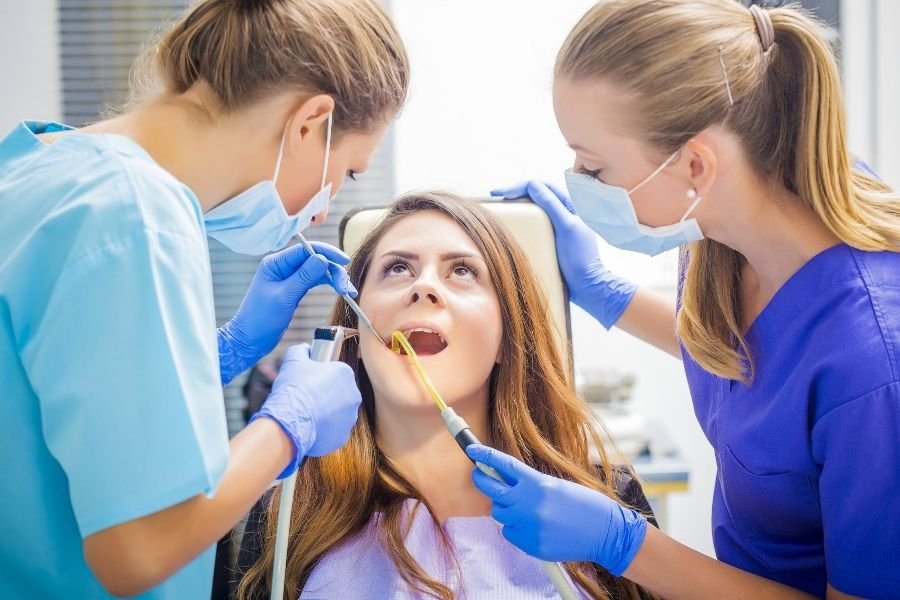
Teeth can turn yellow because of surface stains, plaque and tartar, aging or color changes inside the tooth. How it resolves depends on where the yellowness comes from. Regular oral care can reduce surface stains. Lasting or deep color changes need a dental assessment.
Yellow teeth are not always a sign of disease. The natural shade of a tooth varies from person to person because of the yellowish dentin beneath the enamel. However, if a single tooth darkens suddenly, or there is pain or a clear stain, the underlying cause should be investigated.
What Are Yellow Teeth?
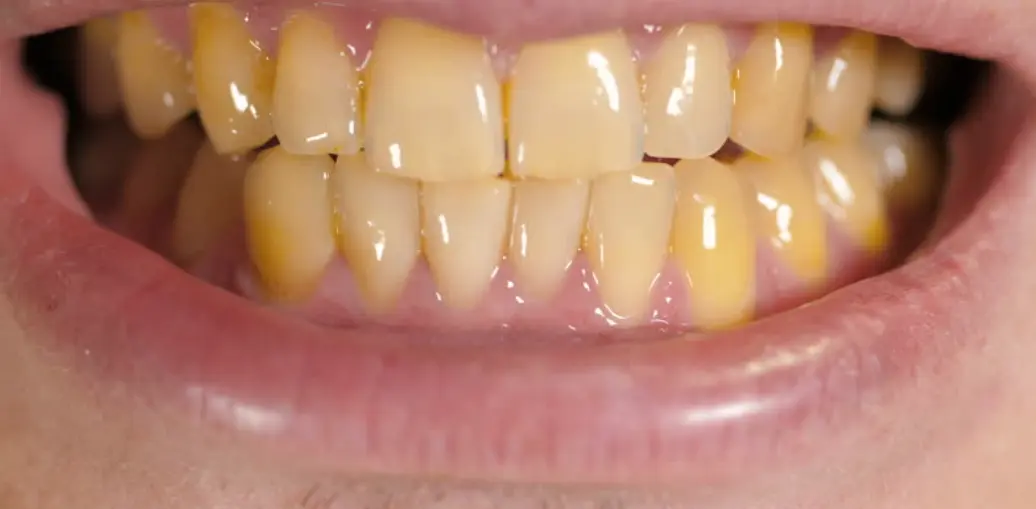
Yellow teeth means that one or more teeth look more yellow, brown or dark than their natural color. In everyday speech this is also described as teeth "going yellow".
The color change can develop on the tooth surface or in the inner tissues of the tooth. This distinction determines how yellowed teeth should be cleaned and which procedure is suitable.
- Extrinsic discoloration: Comes from plaque, tartar and colored substances collecting on the enamel surface.
- Intrinsic discoloration: A change in the color of the enamel or dentin tissue itself.
- Combined discoloration: Surface stains and the natural tooth color darkening together.
One situation we see often in our clinic is surface staining being confused with the natural yellow shade of the tooth. An examination helps make this distinction.
What Causes Yellow Teeth?
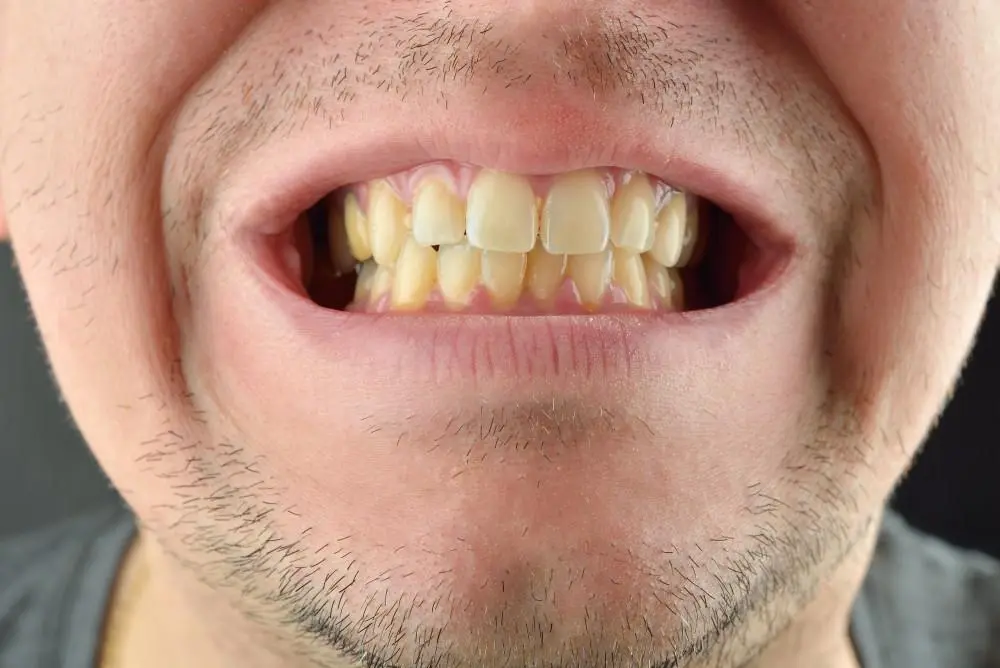
Yellowing of the teeth does not have a single cause. Drinks such as coffee and tea stain the surface, while enamel thinning with age can make the yellowish dentin more visible.
Foods, Drinks and Tobacco Use
Tea, coffee, red wine, cola and some strongly colored foods can leave stains on the enamel surface over time. Tobacco use can also cause yellow or brown discoloration.
These stains may be superficial at first. If they are not cleaned regularly, they can become more noticeable as plaque and tartar build up.
Plaque, Tartar and Inadequate Oral Care
Plaque left on the tooth surface can appear as a yellowish layer. When plaque hardens it turns into tartar, which cannot be removed by brushing.
Tartar can be yellow, brown or darker. It collects especially along the gum margin and can be accompanied by bleeding gums.
Aging and the Natural Color of the Tooth
Tooth enamel is a translucent structure. With age it can wear down or look more transparent. The yellowish dentin layer underneath therefore becomes more obvious.
Some people's teeth are naturally more yellow because of genetic and structural features. This alone does not mean decay or oral disease.
Decay, Trauma and Changes in the Tooth Nerve
Decay can create white, yellow or brown stains at first. As it advances, a cavity, sensitivity or pain can develop on the surface.
A tooth that has taken a knock can look gray, yellow-brown or dark over time. Such a color change may require assessment of the inner tissues of the tooth.
Developmental Enamel Differences and Fluorosis
Enamel defects that form during tooth development can cause white, yellow or brown areas. Some stains have a smooth surface, while others show pitting.
Taking in more fluoride than needed during tooth development can lead to fluorosis. The appearance can range from faint white lines to brown stains.
Medicines and Oral Care Products
Exposure to certain antibiotic groups during tooth development can be linked to intrinsic color changes. Long-term use of some antiseptic mouthwashes can also cause surface staining.
Iron preparations used in children on medical advice can cause temporary surface discoloration. A medicine should not be stopped on your own when discoloration is noticed.
How Do You Get Rid of Yellow Teeth?
To address yellow teeth, the type of color change is identified first. For surface stains, care or professional cleaning may be enough. For intrinsic yellowing, whitening or restorative options can be considered.
| Type of Discoloration | Approach That May Be Considered | Key Point |
|---|---|---|
| Plaque and light surface stains | Regular brushing and interdental cleaning | Does not remove deep color changes |
| Tartar and heavy surface staining | Professional teeth cleaning and polishing | Tartar should not be scraped off at home |
| Widespread intrinsic yellowing | Whitening supervised by a dentist | Decay and gum health are assessed first |
| A single tooth darkening after trauma | Clinical and, if needed, radiographic examination | The procedure is planned according to the vitality of the tooth |
| Limited enamel stains | Microabrasion, resin infiltration or bonding | The depth of the stain affects the method |
| Color mismatch in a crown or filling | Assessment for polishing, repair or replacement | Whitening does not lighten restorations |
What Can You Do at Home for Yellow Teeth?
Brush your teeth twice a day for about two minutes with fluoride toothpaste. Clean between your teeth every day with a suitable tool.
Rinsing your mouth with water after colored drinks such as tea or coffee can help reduce the pigments left on the surface. Tobacco products should be avoided.
Home care works on plaque and new surface stains. It cannot completely remove tartar, deep enamel stains or the natural color of the dentin.
Rubbing acidic substances such as lemon or vinegar on the teeth is not advised. Acids can erode the enamel surface and make the yellow dentin more visible.
Uncontrolled use of abrasive mixtures containing baking soda or charcoal can also scratch the surface. Evidence that charcoal products provide safe whitening is limited.
Do Whitening Toothpastes Work?
Whitening toothpastes mostly reduce surface stains with abrasive or chemical ingredients. They may not produce a noticeable change in the internal color of the tooth.
Excessive and hard brushing can lead to enamel wear, gum recession or sensitivity. The product should be chosen according to your own oral health.
Professional Teeth Cleaning
Teeth cleaning (scaling) removes hardened deposits and some surface stains. It does not change the natural color of the tooth, but it can make the teeth look cleaner.
Scraping an area of tartar with sharp objects at home can damage the gum and enamel. Deposits should be assessed by a dentist.
Whitening Supervised by a Dentist
Whitening aims to lighten the color of natural teeth with suitable agents. It can be done in the clinic, or with a personalized at-home method planned by the dentist.
Before the procedure, decay, cracks, sensitivity and gum problems are assessed. Temporary tooth sensitivity and gum irritation can occur.
Whitening only works on natural tooth tissue. It does not lighten fillings, crowns, zirconia crowns or implant-supported restorations.
Bonding, Veneer and Crown Options
For limited stains that do not respond well enough to whitening, composite bonding or porcelain veneer options can be considered. With widespread tissue loss, different restorative methods may come up.
These treatments are not the first option for every yellow tooth. Preserving healthy tooth tissue and considering less invasive methods are important.
How Do You Remove Yellow Stains on Teeth?
How a yellow stain resolves depends on whether it is superficial, caused by decay or developmental. A soft layer at the gum margin is usually related to plaque.
Hard, rough yellow areas may be tartar. Stains that do not come off with brushing, that form pits or that cause sensitivity should be examined for decay.
Yellow or brown enamel stains with clear borders may indicate a developmental difference. A dentist may consider options such as polishing, microabrasion or resin infiltration.
A single procedure is not expected to remove every stain. The source of the stain must be identified first, and then a plan suited to the tooth tissue prepared.
Why Do Children Get Yellow Teeth?
A yellow look in children's teeth does not always mean disease. Newly erupted permanent teeth can look yellow next to the whiter baby teeth beside them.
Plaque build-up, inadequate brushing, decay, trauma and developmental enamel differences are among the other causes. Iron preparations can also create surface discoloration.
Cosmetic whitening of all the teeth in children is not a routine approach, especially during the primary and mixed dentition period. The cause of the discoloration should be investigated first.
If there is pitting, pain, sensitivity or rapid darkening in a child's tooth, a dental examination should not be delayed. Color changes after trauma should also be assessed.
Which Disease Do Yellow Teeth Indicate?
Yellow teeth usually do not indicate a specific systemic disease on their own. Most cases are related to surface stains, the natural tooth color or age-related changes.
That said, a color change can occur along with decay, an enamel development disorder or damage to the tissues inside the tooth. A diagnosis cannot be made from color alone.
A sudden color change in a single tooth in particular may be related to past trauma or a problem in the tooth nerve. A clinical examination and, when needed, imaging can be carried out.
When Should You See a Dentist?
Widespread natural yellowness that has not changed for a long time is not an emergency. With the following signs, it is important to plan an examination:
- A single tooth turning yellow, gray or dark within a short time
- Color change accompanied by pain, swelling or a bad taste
- A cavity, crack, fracture or marked sensitivity in the tooth
- Yellow-brown stains in children together with the enamel surface breaking down
- Hard deposits, bleeding or bad breath at the gum margin
- Sensitivity that continues after using a whitening product
During the examination, the tooth surface, fillings, gums and the distribution of the color change are assessed. If a single tooth is affected, the vitality of the tooth can also be tested.
How Can Yellow Teeth Be Prevented?
The natural shade of a tooth cannot be changed completely, but new surface stains and plaque build-up can be reduced. This requires an oral care routine you can keep up.
- Brush your teeth twice a day for about two minutes with fluoride toothpaste.
- Clean between the teeth every day with floss or a suitable interdental brush.
- Rinse your mouth with water after tea and coffee.
- Do not use tobacco products.
- Do not try to whiten your teeth with acidic home mixtures.
- Use products such as mouthwash for the time and in the way your dentist advises.
- Agree your check-up interval with your dentist based on your decay and gum disease risk.
Treatments applied without knowing the cause of the yellowness may not give the expected result. A dental assessment clarifies the difference between cleaning and whitening.
Frequently Asked Questions
Are yellow teeth unhealthy?
Not every yellow tooth is unhealthy. The natural dentin color and enamel thickness can make teeth look yellow; assessment is needed if there is pain or a clear stain.
How do you fix yellow teeth at home?
Regular brushing, interdental cleaning and rinsing with water after colored drinks can reduce surface stains. Tartar and intrinsic yellowing cannot be fully removed at home.
Is a yellow stain on a tooth decay?
Not every yellow stain is decay; it may be plaque, tartar or an enamel difference. If the stain is pitted, rough or sensitive, a dental examination is needed.
Why are children's teeth yellow?
Permanent teeth can naturally look more yellow than baby teeth. Plaque, decay, trauma, iron preparations and developmental enamel problems can also change the color.
Does whitening toothpaste remove yellowness?
Whitening toothpastes can reduce some surface stains, but may not noticeably change the internal color of the tooth. Uncontrolled use of abrasive products can cause sensitivity.
Does teeth whitening cause sensitivity?
Temporary tooth sensitivity or gum irritation can occur after whitening. Sensitivity that continues or gets worse should be assessed by a dentist.
Can a yellowed zirconia crown be whitened?
Whitening agents do not lighten the color of a zirconia crown. Polishing can be considered for surface stains; for a color mismatch, the condition of the crown and the need for replacement are assessed.
Sources
- American Dental Association — Whitening
- American Dental Association — Home Oral Care
- NHS — Teeth Whitening
- American Academy of Pediatric Dentistry — Dental Bleaching for Child and Adolescent Patients
- PubMed — Tooth Whitening: Current Status and Prospects
- Turkish Ministry of Health — Oral and Dental Health