
Dental scaling is the removal of hardened bacterial plaque from the tooth surface and the gum margin with special instruments. The procedure, also called descaling, is carried out by a dentist in a clinical setting. Hardened tartar cannot be removed by brushing or flossing.
A simple teeth cleaning is usually completed in a single session. The duration depends on how much build-up there is and on gum health. The TDB 2026 guide fee schedule lists 3,000–3,300 TL (Turkish lira) for scaling one jaw, depending on whether VAT is included. This figure is not our clinic's price; details are explained in the table below.
What Is Tartar and Why Does It Form?
Plaque is a sticky layer of bacteria that forms continuously on the teeth. Plaque that is not cleaned regularly can combine with minerals in saliva and harden. This hard deposit is called tartar, or calculus.
Tartar is most often seen at the gum line and on the inner surfaces of the lower front teeth. Build-up can be faster in the areas where the salivary glands open into the mouth. Crowded teeth, poor interdental cleaning, dry mouth and tobacco use can raise the risk.
When tartar forms, you may notice the following signs:
- Yellow, brown or dark hard layers at the gum margin
- Bleeding while brushing or flossing
- Redness, swelling or tenderness in the gums
- Bad breath or a bad taste in the mouth
- A rough feeling on the tooth surface
Tartar is not always visible to the eye. Deposits below the gum can be identified during a periodontal examination and, where needed, a radiographic assessment.
How Is Dental Scaling Done?
The teeth and gums are assessed before the procedure. Findings such as gum bleeding, pocket depth, recession and loose teeth are checked. This examination separates routine cleaning from more extensive periodontal treatment.
- An examination is carried out: The areas with tartar and the health of the gums are assessed.
- Deposits are removed: Ultrasonic devices and, where needed, hand instruments are used.
- The gum margin is checked: Remaining deposits in hard-to-reach areas are cleaned.
- Surfaces may be polished: Where appropriate, polishing is applied to reduce surface stains and smooth roughness.
- Home care is explained: Brushing and the use of floss or an interdental brush are tailored to the person.
The tip of the ultrasonic scaler breaks up tartar with vibration. The water used during the procedure helps cool the device and wash away the loosened deposits. Different tips or hand instruments may be preferred for narrow areas.
The same method and scope are not applied to every patient. Health information such as a pacemaker, a respiratory condition or regular medication should be shared with the dentist before the procedure.
Are Scaling and Deep Cleaning the Same?
Routine scaling mostly targets deposits above the gum line and in accessible margin areas. If there is periodontitis or there are deep gum pockets, cleaning below the gum and root surface planing may be needed.
Deep periodontal cleaning can be done under local anesthesia, divided by area and over more than one session. For this reason, the price of a routine teeth cleaning is not the same as the fee for periodontal treatment.
How Long Does Dental Scaling Take?

In patients with light build-up, cleaning can take about 15–30 minutes. If there is heavy tartar, surface staining or gum sensitivity, it can approach 30–60 minutes. These are average times and vary with the examination findings.
| Scope of the Procedure | Approximate Duration | Sessions |
|---|---|---|
| Light, localized build-up | 15–30 minutes | Usually a single session |
| Heavy tartar and staining | 30–60 minutes | Mostly a single session |
| Deep cleaning below the gum | Varies with the scope | More than one session may be needed |
How many minutes a scaling takes does not depend only on how the build-up looks. The number of teeth, gum bleeding, how wide you can open your mouth and sensitivity also affect the time.
Does Dental Scaling Hurt?
Routine scaling can be completed without anesthesia in most patients. During the procedure you may feel vibration, water, pressure or brief twinges. Heavy tartar and inflamed gums can increase sensitivity.
If the root surfaces below the gum need cleaning, local anesthesia can be considered. It helps to tell your dentist beforehand if you have sensitivity or feel anxious about dental treatment.
Does Scaling Damage the Teeth?
Carried out with suitable instruments and the correct technique, scaling is a safe procedure for most patients. Removing tartar is not intended to thin the tooth enamel. Gaps noticed after the procedure may be natural spaces that were previously covered by tartar, or areas of gum recession.
Teeth can feel longer or loose after cleaning, especially in people with heavy build-up. If the mobility continues, the supporting tissues need to be assessed.
How Often Should You Have a Scaling?
There is no fixed rule that every patient needs a scaling every six months. The frequency of check-ups and cleaning is set by gum health, how quickly tartar forms and personal risk factors.
People with a history of periodontal disease may need follow-up every three to six months. Longer intervals may be suitable for people with good oral hygiene and a low disease risk. The need for cleaning should be decided by clinical examination, not by the calendar alone.
Situations that may call for more frequent assessment include:
- Previous treatment for periodontitis
- Frequent bleeding or swelling of the gums
- Heavy and rapid tartar build-up
- Tobacco use
- Dry mouth
- Conditions that can affect gum health, such as diabetes
- Fixed orthodontic appliances or restorations that make cleaning harder
What to Watch for After a Scaling
Short-lived gum sensitivity or slight bleeding can occur after a routine cleaning. If the tooth roots are exposed, sensitivity to hot and cold can last a few days.
After the procedure, you can pay attention to the following points:
- Keep brushing your teeth gently with a soft-bristled brush.
- Clean between your teeth with the floss or interdental brush your dentist recommends.
- If you have sensitivity, temporarily limit very hot and very cold foods.
- If local anesthesia was used, take care not to bite your cheek or tongue until the numbness wears off.
- Do not use medication or antiseptic mouthwash unless it has been recommended.
- Avoid tobacco products, as they can have a negative effect on gum healing.
There is no strict few-hour ban on eating after routine scaling that applies to everyone. If a fluoride application, anesthesia or another procedure was carried out, follow the time your dentist gives.
One thing we often see at our clinic is patients feeling gaps between their teeth after heavy tartar has been removed. This feeling usually comes from noticing again the spaces that the tartar had filled.
Dental Scaling Prices 2026
In the 2026 guide fee schedule published by the Turkish Dental Association (TDB), scaling is listed as "tartar removal – one jaw". The guide amount is 3,000 TL excluding VAT and 3,300 TL including VAT, per jaw.
| Procedure | 2026 TDB Guide Range | Note |
|---|---|---|
| Scaling, one jaw | 3,000–3,300 TL | Guide amounts excluding and including VAT |
| Scaling, both jaws | 6,000–6,600 TL | The one-jaw amount calculated for both jaws |
| Subgingival curettage, single tooth | 1,700–1,870 TL | A periodontal procedure that differs from routine scaling |
These price ranges are based on the TDB 2026 guide fee schedule and are given for information only; the exact fee is set after an examination. The amounts in the table are not our clinic's price list.
The fee for teeth cleaning can vary with whether one or both jaws are treated, how heavy the deposits are and whether periodontal treatment is needed. Whether an examination, radiograph or a different gum procedure is required also affects the treatment plan.
There is no separate standard procedure called "laser tartar removal" that every patient needs. The device and technique used are decided by the dentist based on the gum findings.
What Is the Difference Between Teeth Cleaning and Teeth Whitening?
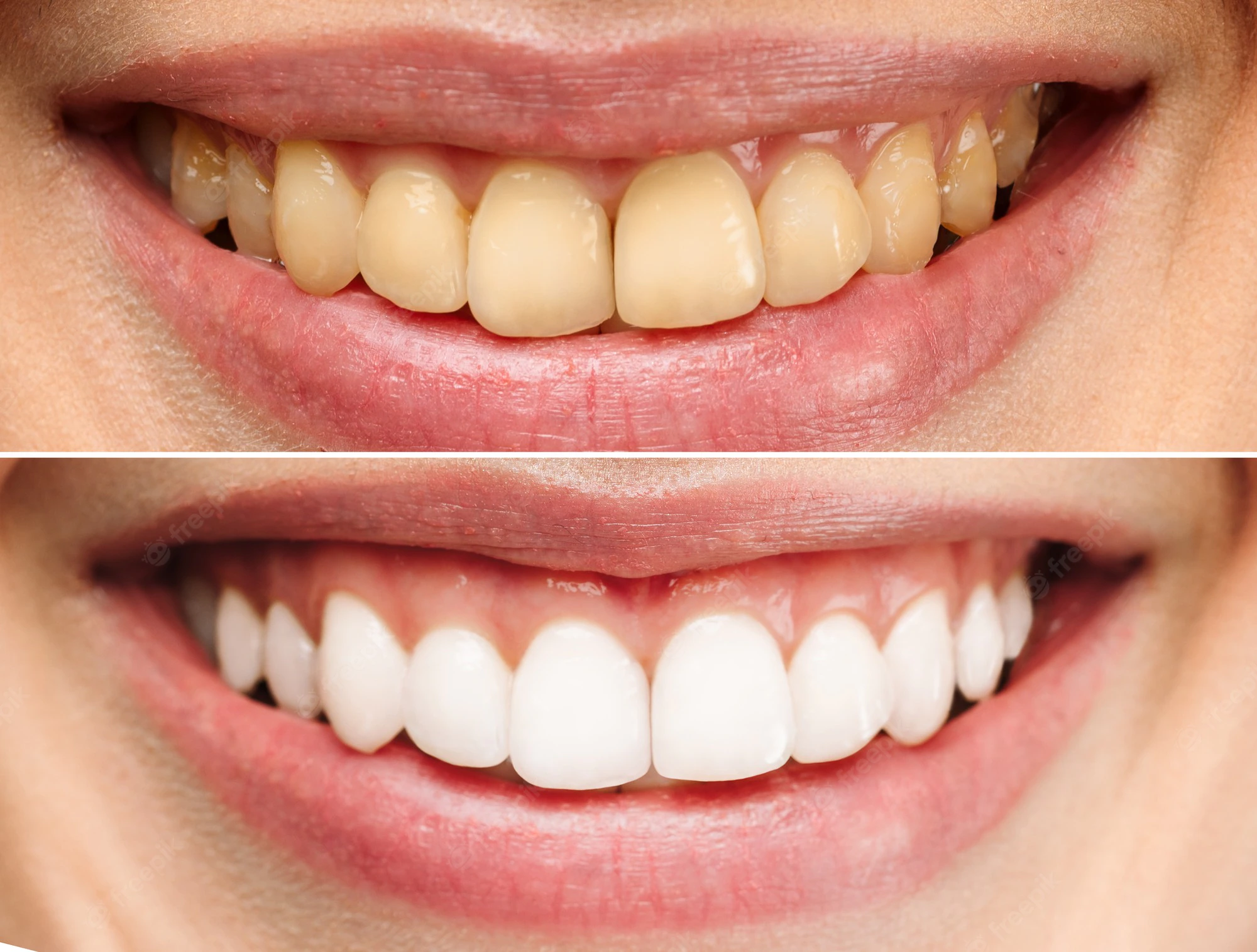
Scaling and teeth whitening are different procedures. Cleaning removes plaque and hard tartar. Polishing can help reduce some surface stains caused by tea, coffee or tobacco.
The procedure that aims to lighten the natural color of the tooth is teeth whitening. After a scaling, teeth can look cleaner and brighter, but this result is not the same as whitening.
Can You Remove Tartar at Home?
Home care can reduce plaque build-up, but it cannot safely remove tartar that has already formed. Trying to scrape tartar with sharp or pointed tools can injure the gum and damage the tooth surface.
Vinegar, lemon and similar acidic substances can erode tooth enamel. Frequent, uncontrolled use of baking soda can also cause surface wear. These methods do not replace professional cleaning.
To limit new plaque forming:
- Brush your teeth twice a day with a fluoride toothpaste.
- Clean between your teeth once a day with floss or a suitable interdental brush.
- Clean the surface of your tongue gently.
- Avoid tobacco products.
- Keep to the check-up interval your dentist has set.
When Should You See a Dentist?
If gum bleeding does not settle within a few days or recurs often, a dentist should assess it. Persistent bad breath, gum recession and loose teeth can be signs of periodontal disease.
If there is facial swelling, discharge of pus, fever, difficulty swallowing or rapidly increasing pain, seek medical care without delay. These findings may not be explained by tartar build-up alone.
Frequently Asked Questions
How long does a dental scaling take?
With light build-up, the procedure can take about 15–30 minutes. If there is heavy tartar or gum disease, it can take longer and may need more than one session.
How much does dental scaling cost in 2026?
The TDB 2026 guide fee schedule lists 3,000–3,300 TL (Turkish lira) for scaling one jaw, depending on VAT. This is for information only; the exact fee is set after an examination.
Does dental scaling hurt?
During a routine cleaning you may feel vibration, pressure or brief twinges. If deep cleaning below the gum is needed, local anesthesia can be considered.
How often is dental scaling done?
There is no fixed interval that suits everyone. Depending on periodontal risk and how quickly tartar forms, check-ups may be set at three to six months or longer.
Can tartar be removed at home?
Hardened tartar cannot be removed by brushing or flossing. Sharp tools, vinegar and similar methods can damage the teeth or the gums.
Does scaling whiten the teeth?
Scaling is not a whitening procedure. Removing tartar and some surface stains can make the teeth look cleaner.
Does scaling create gaps between the teeth?
The procedure is not intended to create new gaps. When heavy tartar is removed, natural spaces that were covered by it, or areas of gum recession, can become visible.