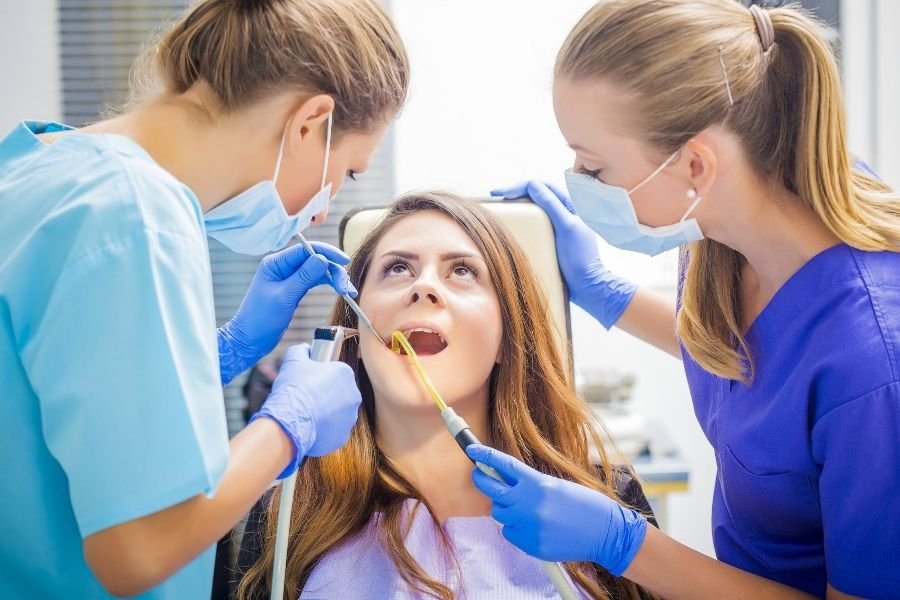
Dental curettage is a periodontal procedure in which plaque and tartar below the gum line are removed professionally. It is also commonly called a "deep gum cleaning". The aim is to reduce the bacterial load in the periodontal pockets and to create a root surface that can be kept clean.
This procedure reaches deeper than standard teeth cleaning (scaling). Current sources also use the terms "root planing" and "subgingival instrumentation". Which method is needed is decided after an examination, pocket measurements and, if necessary, an X-ray.
What Is Curettage and What Does It Mean in Dentistry?
To curette means to remove unwanted tissue or build-up from a surface with a special instrument. In dentistry, the term describes cleaning the deposits below the gum line. Dental curettage is not the same as the curettage procedure used in gynecology.
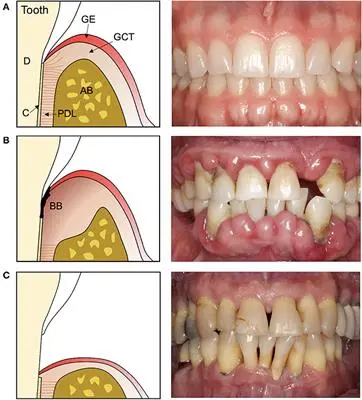
Periodontal pockets are deep spaces that form between the gum and the tooth where a brush cannot reach. When plaque and tartar build up in these areas, gum inflammation can develop. In the treatment plan, tartar, biofilm and any diseased tissue considered necessary are removed in a controlled way.
Not every bleeding gum means that curettage is needed. In early gum inflammation, professional cleaning and correct home care may be enough. In periodontitis, where bone and attachment tissue have been lost, deeper treatment may be required.
Who May Need Curettage?
The decision about curettage is not made on symptoms alone. The dentist measures the gum pockets, assesses bleeding and checks how mobile the teeth are. If bone loss is suspected, an X-ray examination may be carried out.
The following findings may call for a periodontal assessment:
- Repeated gum bleeding during brushing or flossing
- Redness, swelling or tenderness of the gums
- Bad breath or a bad taste that does not go away
- Gum recession and root surfaces becoming visible
- Deep pockets between the tooth and the gum
- Loose teeth or teeth changing position
- Inflammatory discharge from the gum margin
Plaque build-up is the main factor. Smoking, uncontrolled diabetes and inadequate oral care can increase the risk of disease. Genetic tendency and restoration edges that are hard to clean are also taken into account.
| Procedure | Area Reached | General Purpose | Is an Incision Needed? |
|---|---|---|---|
| Teeth cleaning (scaling) | The gum line and surface areas | Removing tartar and surface stains | No |
| Closed subgingival cleaning | Below the gum line and the root surface | Cleaning deposits in the periodontal pockets | Usually no |
| Open periodontal procedure | Deep areas that need direct vision | Providing surgical access to the root surface | Yes |
How Is Dental Curettage Done?
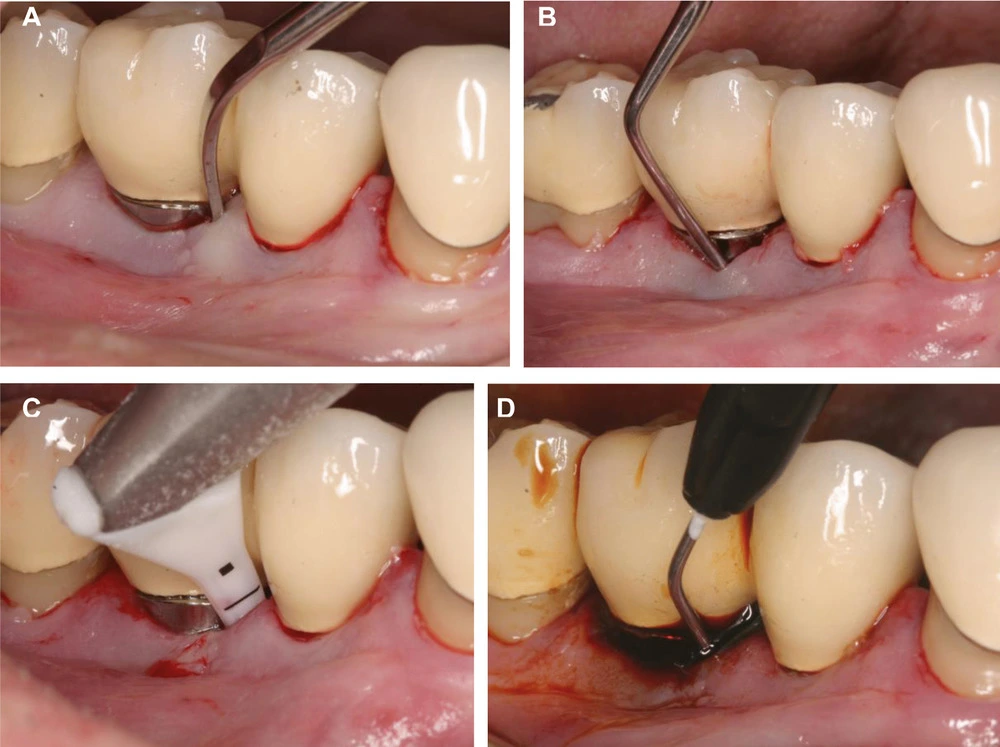
The details of treatment vary with how widespread the disease is. The procedure can be planned for only the affected teeth, for certain areas or for more than one jaw. The following stages are usually followed:
- Examination: The gum pockets are measured, bleeding areas are identified and the medical history is assessed.
- Imaging: Where necessary, an X-ray is taken to examine the bone level.
- Numbing: Local anesthesia may be applied to the area where deep cleaning will be done.
- Cleaning: Plaque and tartar below the gum line are removed with hand instruments or ultrasonic devices.
- Smoothing the root surface: Irregular areas that make it easier for biofilm to stick are cleaned in a controlled way.
- Check: The cleaned surfaces are assessed and home care is explained to the patient.
- Reassessment: After healing, pocket depths and gum bleeding are checked again.
During closed curettage, an incision in the gum is not required. Incisions and stitches come up in surgical procedures that need direct access to the root surface. This distinction should be explained to the patient before treatment.
It is important to tell your dentist about the medicines you use and your current conditions. Blood-thinning medicines should not be stopped without clinical advice. Diabetes, pregnancy, allergies and bleeding disorders can also affect the treatment plan.
What Types of Curettage Are There?
Closed Curettage and Root Surface Cleaning
In the closed method, the gum is not lifted. Fine hand instruments or ultrasonic devices are advanced into the periodontal pocket. The deposits below the gum are removed using the sense of touch and clinical measurements rather than direct vision.
This method is one of the basic steps of non-surgical periodontal treatment. After the procedure, the response of the tissues is followed up. Additional treatment can be planned for pockets that stay deep or keep bleeding.
Open Curettage and Flap Surgery
In deep pockets or pockets that are hard to reach, the gum can be lifted in a controlled way. This allows the root surface and surrounding tissues to be seen directly. Once cleaning is complete, the gum is put back in place and stitches may be used.
Not every deep pocket needs a surgical procedure straight away. The response to non-surgical treatment is assessed first. The decision about surgery is based on pocket depth, bone structure, the condition of the tooth and oral care.
Laser Gum Curettage
A laser can be used in selected cases in addition to conventional instruments or at certain stages. However, using a laser is not necessary for every patient. The method used depends on how widespread the disease is, on the tissues and on the dentist's treatment plan.
The word "laser" does not mean that the procedure will definitely be more successful or completely painless. The expected benefits and the alternative methods should be assessed after an examination.
How Long Does Curettage Take?
Non-surgical deep cleaning of the whole mouth can take about one to two hours. The procedure can be completed in a single appointment or split into two or more sessions. Local anesthesia and the number of areas to be treated affect the time.
Treating only a few teeth can take less time. Widespread tartar, deep pockets and difficulty reaching the root surface can make it take longer. Open periodontal procedures also need time for surgical preparation and stitches.
One of the questions we often come across in our clinic is whether all the teeth can be cleaned on the same day. This decision is based on the patient's general condition and the scope of treatment. The number of appointments becomes clear after the examination.
What Is Healing Like After Curettage?
After non-surgical curettage, most people can return to daily life the same day. For the first day or two, there may be mild pain, tenderness and gum bleeding. Sensitivity to hot and cold can continue for about a week.
The response of the gums to treatment is not complete straight away. The results of non-surgical periodontal treatment are usually assessed more reliably a few weeks later. At the follow-up appointment, pocket depths and bleeding are measured again.
When inflammatory swelling goes down, the teeth may look longer or the gaps between them may look wider. This does not always mean that a new gap has formed. The reduction of tartar and swollen tissue that previously filled the area can change the appearance.
If an open procedure has been carried out, the healing process is different. Special instructions may be given for stitches, a periodontal dressing and care of the surgical area. These instructions replace the advice given for non-surgical curettage.
What Should You Watch For After Curettage?
- Until the numbness wears off, avoid hot foods and biting the treated area.
- If you have sensitivity in the first days, choose warm and soft foods.
- Brush your teeth with gentle movements, as described by your dentist.
- Continue cleaning between your teeth at the recommended time and with the right tool.
- Use prescribed medicines or oral care products only as directed.
- Do not start antibiotics or change your current treatment without a prescription.
- Avoid cigarettes and other tobacco products.
- Do not miss your planned check-up and periodontal maintenance appointments.
The dentist decides whether a painkiller or a mouthwash is needed after the procedure. Antibiotics do not have to be given routinely to every patient. Mixtures prepared at home do not replace professional treatment.
The Benefits and Possible Risks of Curettage
Curettage and root surface cleaning can help to control the disease factors below the gum line. The outcome of treatment depends on plaque control at home and regular periodontal maintenance. The procedure alone does not prevent future gum disease.
The expected benefits are:
- Helping to reduce gum bleeding and swelling
- Removing plaque and tartar from the periodontal pockets
- Creating conditions in which daily oral care can be more effective
- Contributing to treatment aimed at reducing the risk of the disease progressing
- Reducing the deposits below the gum line that contribute to bad breath
Temporary sensitivity, soreness, slight bleeding and gum recession becoming visible are possible. In rare cases, infection or prolonged bleeding can develop. The risks vary according to whether the procedure is surgical or not.
Curettage Prices 2026
The Turkish Dental Association's guide fee schedule, valid from 1 January 2026, includes two relevant procedures. In the ranges below, in Turkish lira (TL), the lower limit is the guide amount excluding VAT and the upper limit the amount including VAT.
| Procedure | 2026 TDB Guide Range | Fee Unit |
|---|---|---|
| Subgingival curettage | 1,700–1,870 TL | Single tooth |
| Flap surgery, including subgingival curettage | 4,750–5,225 TL | Single tooth |
These figures are not firm treatment fees given by MFS Dent. They are shared for information only, based on the 2026 TDB guide fee schedule. The final fee becomes clear after the examination and once the procedure to be carried out is decided.
The total fee can vary with the number of teeth to be treated, whether the procedure is open or closed and the number of sessions. Imaging, additional periodontal procedures and the materials used can also affect the treatment plan.
How Should You Read Reviews About Dental Curettage?
Patient reviews online describe individual experiences, but they do not show medical necessity. Under the same name "curettage", a different number of teeth, different pocket depths and different methods may have been involved. For this reason, healing and sensitivity times vary from person to person.
When reading reviews, you need to distinguish whether the procedure was closed cleaning or open surgery. The use of local anesthesia, the number of sessions and how widespread the disease was also affect the experience. Another person's treatment plan cannot be applied directly to you.
The confusion we meet most often in clinical practice is the belief that the gum is cut in every curettage procedure. In the closed method there is usually no incision or stitching. An open procedure, on the other hand, requires separate surgical planning.
When Should You See a Dentist?
If there is repeated gum bleeding, swelling, bad breath or gum recession, an examination should not be put off. Loose teeth, inflammatory discharge or a change in your bite can point to more advanced periodontal problems.
If bleeding does not stop after curettage, or if swelling increases or fever develops, contact your dentist. Pain that does not ease and swelling that affects swallowing should also be assessed without delay.
The level of gum disease cannot be determined by looking inside the mouth alone. By having a dental examination in Bursa, Turkey, or in the city where you live, you can get information about the treatment options that suit you.
Frequently Asked Questions
What is dental curettage?
Dental curettage is the cleaning of plaque and tartar below the gum line with professional instruments. The aim is to reduce the disease factors in the periodontal pockets.
Are curettage and teeth cleaning the same?
No. Standard teeth cleaning (scaling) focuses on more superficial areas. Curettage, or root surface cleaning, reaches the periodontal pockets below the gum line.
Is dental curettage painful?
Because local anesthesia can be used during the procedure, discomfort can be controlled. Afterwards there may be mild soreness for a few days and sensitivity for about a week.
How long does curettage take?
Non-surgical deep cleaning of the whole mouth can take about one to two hours. Treatment may be split into several appointments depending on how widespread the disease is.
How many days does healing take after curettage?
After a non-surgical procedure, most people return to daily life the same day. Sensitivity can last a few days or about a week; the tissues are reassessed a few weeks later.
Is laser gum curettage more effective?
A laser can be used in selected cases, but it is not necessary for every patient. The choice of method depends on the structure of the pockets, how widespread the disease is and the dentist's assessment.
How much does dental curettage cost in 2026?
The TDB 2026 guide lists a range of 1,700–1,870 TL excluding and including VAT for subgingival curettage on a single tooth. This is for information only; the final fee is set after an examination.
Can you decide on treatment based on curettage reviews?
No. Reviews reflect individual experiences and the scope of the procedure may have been different. The need for curettage is determined by pocket measurements, an examination and, if necessary, an X-ray.