
Short answer: The main approach that helps gum inflammation is removing bacterial plaque with regular oral care and professional cleaning. Taking medication alone for swelling or bleeding does not remove the cause of the problem.
Brushing gently and cleaning between your teeth can help early symptoms settle. If there is repeated bleeding, pus, severe pain or facial swelling, a dental assessment is needed.
What Is Gum Inflammation and How Does It Develop?
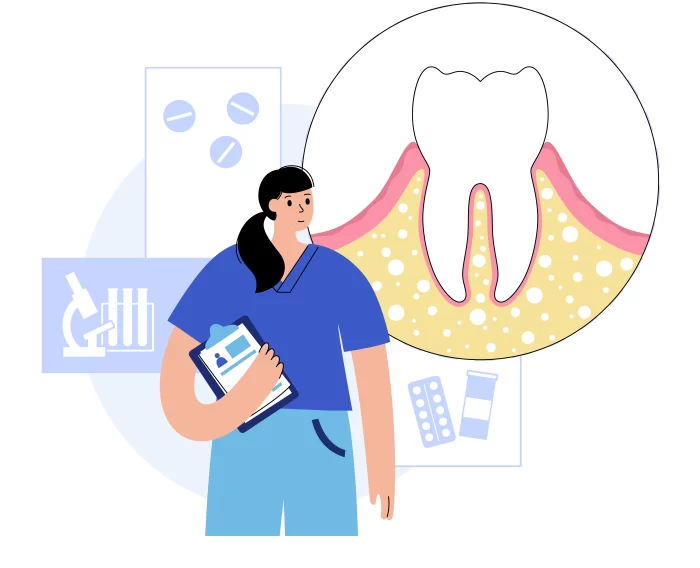
Gum inflammation is a condition in which the gum tissue around the teeth becomes red and swollen and bleeds easily. Its early stage is called gingivitis, and at this stage there is no loss of the bone that supports the tooth.
A sticky layer called bacterial plaque forms constantly on the teeth. When plaque is not removed effectively, it builds up along the gum line and can trigger an inflammatory response.
Over time plaque can harden into tartar. Tartar cannot be removed by brushing or flossing at home. It needs to be cleaned professionally by a dentist.
If gingivitis is not brought under control, it can progress to periodontitis in some people. Periodontitis is not just gum recession. It is a more advanced disease that affects the connective tissue and supporting bone around the tooth.
What Causes Gum Inflammation and Swelling?
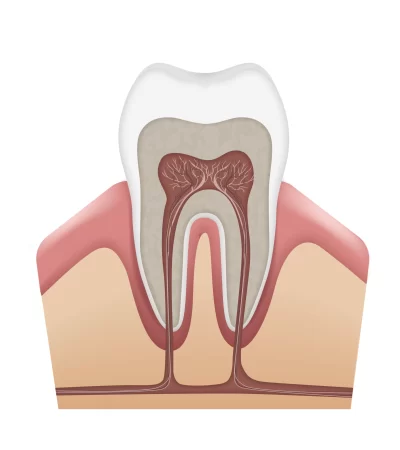
The most common cause of gum inflammation is bacterial plaque that builds up along the gum line. However, the answer to why gums swell is not the same for everyone.
- Insufficient or ineffective brushing
- Not cleaning between the teeth regularly
- Tartar build-up
- Smoking and other tobacco products
- Some systemic conditions, such as diabetes
- Hormonal changes during pregnancy and adolescence
- Dry mouth
- Conditions or treatments that affect the immune system
- Poorly fitting fillings, crowns or removable dentures that irritate the gums
- Crowded teeth that are hard to clean
- Some systemic medicines causing overgrowth of gum tissue
Swelling in a single area can come from local causes such as food packing between the teeth or brushing too hard. Decay, a cracked tooth and an abscess can also look similar.
Swelling of the gums at the back can be linked to an erupting or partly impacted wisdom tooth. The exact cause is determined by an oral examination and, where needed, radiographic imaging.
What Are the Signs of Gum Inflammation?
Gum disease may not cause clear pain in its early stages. For that reason, repeated bleeding while brushing can be an important warning.
- Redness and swelling of the gums
- Bleeding while brushing or cleaning between the teeth
- Tenderness or pain in the gums
- Persistent bad breath or a bad taste
- Gum recession
- Teeth looking longer
- Pus coming from between the tooth and the gum
- Discomfort while chewing
- Gaps opening between the teeth, or loose teeth
What people describe as bleeding from a tooth usually comes from the gum around it. Still, decay, a fracture, a mouth sore or trauma can also cause bleeding.
| Finding | Possible Explanation | First Approach |
|---|---|---|
| Bleeding while brushing | Plaque build-up and gingivitis | Continue gentle cleaning and get an examination if it keeps happening |
| Widespread redness and swelling | Gingivitis, hormonal or systemic factors | Improving oral care and a dental assessment |
| Painful swelling in one spot | Food packing, trauma, a tooth-related infection or an abscess | Do not squeeze the area and get examined soon |
| Pus, fever or facial swelling | An infection with a risk of spreading | Urgent dental assessment |
| Loose teeth | Advanced loss of periodontal support | A periodontal examination without delay |
What Helps Gum Inflammation?
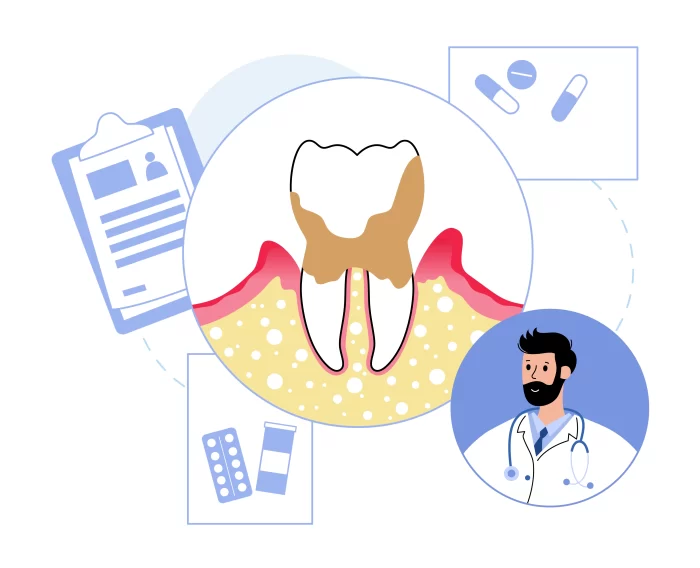
The measures that help gum inflammation aim to control the plaque and tartar that cause the disease. The steps below can ease symptoms and support treatment:
- Clean your teeth at least twice a day with a soft-bristled brush
- Use a fluoride toothpaste
- Clean between your teeth every day with floss or a suitable interdental brush
- Brush the gum line gently, without pressing hard
- Stop smoking and using other tobacco products
- If you have diabetes, keep up your blood sugar monitoring
- Have check-ups at the intervals your dentist recommends
Stopping brushing altogether because you see bleeding can increase plaque build-up. This is one of the situations we see often at our clinic. The area should be cleaned gently with a soft brush.
Evidence that herbal products clear up gum inflammation is limited. These products do not replace professional cleaning or the treatment planned by a dentist.
How Does Gum Inflammation Heal?
How gum inflammation resolves depends on the stage of the disease and the underlying cause. Early gingivitis can improve with effective plaque control and professional cleaning.
- Examination: The gums, tartar build-up, bleeding and periodontal pocket depths are assessed.
- Oral care guidance: Brushing and interdental cleaning are adapted to the person's mouth.
- Teeth cleaning (scaling): Hard deposits that cannot be removed by brushing are cleaned professionally.
- Deep cleaning: If periodontitis is found, the root surfaces below the gum may need to be cleaned.
- Review appointment: Bleeding, pocket depth and the response to oral care are reassessed.
- Further treatment: In selected cases with loss of supporting tissue, periodontal surgery can be considered.
The treatments for gingivitis and periodontitis are not the same. So it may not be possible to work out the stage of the disease from the look of the swelling alone.
Is Medication Needed for Swollen Gums?
There is no single medicine for swollen gums that suits everyone. In simple plaque-related gingivitis, the priority is removing plaque and tartar.
In some cases a dentist may recommend antimicrobial oral care products as an adjunct. These products do not replace mechanical cleaning. Using them for too long or incorrectly can cause unwanted effects.
Antibiotics are not needed for every case of gum swelling. If there are signs of spread, systemic symptoms or a particular clinical situation, they can be considered on prescription. Leftover antibiotics at home should not be used.
Painkillers and other medicines can also interact with your conditions or the medicines you take. So the type, dose and duration should be decided by a clinician.
Medication can reduce pain or swelling temporarily. Causes such as tartar, an abscess, a poorly fitting restoration or an impacted tooth must also be treated.
How Can Swollen Gums Be Managed at Home?
Home care can help ease mild symptoms. It does not treat an abscess, hardened tartar or advanced periodontal disease.
- Clean your teeth gently with a soft-bristled brush.
- Clean between your teeth with floss or a suitable interdental brush, without forcing it.
- If very hot, hard, spicy or acidic foods irritate the area, limit them.
- Drink enough water and avoid tobacco products.
- If your cheek is swollen, you can apply a cold compress wrapped in a cloth from the outside.
- Do not squeeze or pierce the swelling, or interfere with it using a sharp object.
Rinsing with warm salt water can give short-term relief. This method does not remove plaque and tartar. The salt water should not be swallowed or used to delay an examination.
Vinegar, strong baking soda mixtures or herbal oils applied directly can irritate the tissue. Methods with limited evidence are not an alternative to dental treatment.
What Causes Bleeding Gums and What Helps?
One of the most common causes of bleeding gums is gingivitis. Hard brushing, incorrect flossing, trauma and some systemic conditions can also cause bleeding.
Deliberately making a bleeding area bleed again is not a soothing treatment. It can injure the tissue and increase bleeding. It does not remove the source of the inflammation.
Oral care should not be abandoned when the gums bleed during brushing. Use a softer brush and a gentle technique. If bleeding keeps happening, book a dental examination.
What Causes Swollen Gums at the Back of the Mouth?
Swelling in the back area can be linked to food and plaque collecting around a wisdom tooth. The gum tissue over a partly erupted tooth can be easily irritated.
If it comes with difficulty opening the mouth, pain on swallowing, a bad taste, pus or facial swelling, an examination is needed without delay. These symptoms should not be suppressed with medication at home.
When Should You See a Dentist?
If gum swelling or bleeding keeps coming back, it is a good idea to see a dentist to find the cause. Do not delay an assessment in the following situations:
- Severe or steadily increasing pain
- Pus, or a constant bad taste in the mouth
- Swelling in the face, jaw or neck
- Fever or marked weakness
- Difficulty opening the mouth, swallowing or breathing
- Loose teeth
- Bleeding that starts on its own or does not stop
- A mouth or gum sore lasting longer than three weeks
- Swelling that develops alongside a condition affecting the immune system
Rapidly growing swelling with difficulty breathing or swallowing needs emergency medical assessment.
How Can Gum Inflammation Be Prevented?
- Brush your teeth at least twice a day for about two minutes.
- Clean between your teeth every day with a suitable tool.
- Replace your toothbrush when it becomes worn.
- If tartar has formed, see a dentist for a professional cleaning.
- Avoid smoking and other tobacco products.
- Eat a balanced diet and limit frequent sugar intake.
- Follow the monitoring plan for chronic conditions such as diabetes.
- Agree how often you need check-ups with your dentist, based on your personal risk.
Regular care reduces plaque build-up and makes the gum tissue easier to monitor. When bleeding and swelling are noticed early, more limited treatment may be enough.
Frequently Asked Questions
Which medicine helps gum inflammation?
There is no single gum medicine that suits everyone. Medicines should be used only when needed, on prescription, and as an adjunct to professional cleaning.
What helps gum inflammation?
Regular brushing, cleaning between the teeth and professional removal of tartar are the main approaches. Treatment is planned by a dentist according to the stage of the inflammation.
How can swollen gums be managed at home?
Gentle oral care, avoiding irritating foods and a cold compress from the outside can give temporary relief. Swelling that persists or is painful should be assessed by a dentist.
Does making the gums bleed bring relief?
No. Deliberately making the gums bleed can injure the tissue and does not remove the cause of the inflammation.
What helps bleeding gums?
Continuing gentle cleaning with a soft brush and cleaning between the teeth regularly can help. Repeated bleeding needs an examination for gum disease.
Is gum inflammation dangerous?
Early gingivitis can usually be brought under control. Left untreated, it can progress in some people to periodontitis, which involves loss of supporting tissue and bone.
How long does gum inflammation take to heal?
Healing time depends on the cause, the stage of the disease and oral care. If symptoms continue or keep returning, do not wait for them to settle on their own.
When is a gum sore a concern?
A sore that lasts longer than three weeks, grows, bleeds or keeps coming back should be assessed by a dentist or doctor.