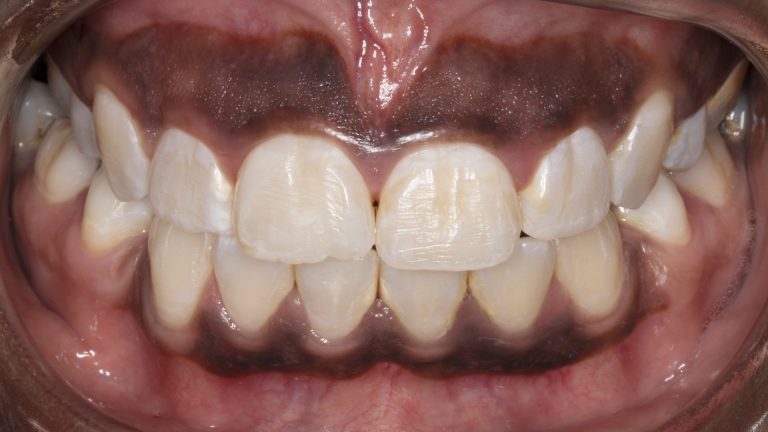
Purple gums means a purple, blue, brown or almost black color change in the gum tissue. This appearance is not always a true bruise. Bleeding inside the tissue after trauma, natural melanin, inflammation, tobacco use or old filling materials can create similar colors.
A color change that is new, unexplained, growing, or comes with pain and bleeding should be assessed by a dentist. Treatment depends on the underlying cause. Home remedies that claim to lighten pigment do not diagnose anything and can irritate the gums.
What Do Purple Gums Look Like?
The appearance of purple gums can vary with the cause. A true bruise usually shows up in a limited area. It can be blue or close to purple and may feel tender to the touch.
Natural pigmentation, on the other hand, mostly looks brown or almost black. It has usually been there for a long time, is symmetrical and does not hurt. A newly developed patch on one side should be assessed differently from natural pigmentation.
The color change may come with the following symptoms:
- Swelling or tenderness in the gum
- Bleeding while brushing or cleaning between the teeth
- Bad breath or a bad taste in the mouth
- A sore, a lump or an uneven surface
- Pain while chewing
- Receding gums or a loose tooth
What Causes Purple Gums?
It may not be possible to explain the color of the gum by looking at it alone. When the patch started, whether it has changed and whether there are other symptoms all matter.
Trauma and Bleeding Inside the Tissue
Hard food, a fall, a knock, incorrect brushing or biting the inside of the mouth can damage small blood vessels. A temporary bruise can also form after dental treatment. Color change caused by trauma is usually limited and tends to fade over time.
Gum Inflammation and Periodontal Disease
Plaque build-up can cause redness, swelling and bleeding in the gum. Inflamed tissue can sometimes look dark red or purple. In advanced periodontal disease, receding gums, bad breath and loose teeth can also occur.
Natural Melanin Pigmentation
Melanin is the natural pigment that gives color to the skin and oral tissues. In some people, healthy gums can be brown, purplish or close to black. Pigmentation that has been unchanged for a long time and looks symmetrical usually does not mean disease.
Tobacco Use
Cigarettes and other tobacco products can increase melanin production in the oral mucosa. This can create brown or dark patches, especially on the gums at the front of the mouth. Even so, the cause of the color change should be confirmed by an examination.
Staining From Filling Materials
Small particles from old metal-containing fillings can leave a blue, gray or black patch in the gum. This appearance is called amalgam pigmentation. Being close to a filling or an old extraction site can help with the diagnosis.
Medicines and Systemic Conditions
Some prescription medicines can cause increased pigment in the oral tissues. You should not stop a medicine without talking to your dentist or the prescribing doctor. In some systemic conditions, such as Addison's disease, widespread darkening can be seen in the mouth.
With systemic causes there may be other symptoms, such as fatigue, weight change or widespread color change in the skin. If this is suspected, an assessment by the relevant medical specialty may be requested.
Lesions of Blood Vessel Origin
Widened blood vessels and benign vascular lesions can look blue or purple. These areas can be raised or may change color under pressure. Squeezing, piercing or scraping the patch is not appropriate, as it can cause bleeding.
Rare Pigmented Lesions
Most dark patches in the mouth are not cancer. However, rare conditions such as oral melanoma can also start as a pigmented lesion. A patch that is new, irregular, growing or bleeding should be examined without delay.
| Appearance | Possible Explanation | Suggested Approach |
|---|---|---|
| Limited bruise after a knock | Bleeding inside the tissue caused by trauma | Healing is monitored; an examination is needed if it increases |
| Symmetrical darkening present for a long time | Natural melanin pigmentation | If unchanged, it is assessed at routine check-ups |
| Swollen, red-purple, bleeding gum | Gum inflammation or periodontal disease | A dental examination and professional care are needed |
| Gray-blue spot near an old filling | Pigmentation caused by filling material | Diagnosis is confirmed by examination and imaging if needed |
| Dark patch that is growing, irregular or bleeding | A pigmented lesion that needs a definite diagnosis | Clinical assessment is carried out without delay |
Are Purple Gums and Black Gums the Same Thing?
Bruising, blackening and darkening are often used interchangeably in everyday speech. However, these words can describe different processes. A purple color can come from trauma or blood vessels, while a brown-black appearance can be linked to melanin or foreign material.
One thing we see often at our clinic is people noticing natural pigmentation for the first time and thinking it is a bruise. Old photos of the mouth can help work out when the change started. Even so, a newly formed patch should be examined.
Are "Rotting Gums" and Purple Gums the Same Thing?
"Gum rot" is not a disease defined in medicine the way tooth decay is. Decay develops in the hard tissues of a tooth. In the gum, you can see inflammation, recession, ulcers or, in advanced cases, tissue loss.
Not every area that looks black means decay. If the dark area comes with severe pain, a bad smell, a sore, a fever or rapidly increasing swelling, see a dentist without delay.
When Should You See a Dentist?
For a new color change with no clear cause, get a dentist's opinion rather than waiting for it to heal. A bruise believed to come from trauma should also be assessed if it is not shrinking or is getting darker.
An earlier examination is needed in the following situations:
- The patch grows, changes shape or contains different colors
- Spontaneous bleeding, an open sore or crusting
- Pain, numbness or difficulty chewing that does not go away
- Clear swelling or pus discharge in the gum
- Loose teeth or a change in your bite
- A new lump in the mouth, jaw or neck
- Difficulty swallowing, speaking or breathing
Difficulty breathing, bleeding that cannot be controlled or rapidly spreading facial swelling needs emergency assessment.
How Are Purple Gums Diagnosed?
Your dentist will ask how long the patch has been there and about any history of trauma, tobacco use, medicines and existing conditions. The teeth, gums, tongue, inside of the cheeks and palate are examined together.
Measuring the gum pockets and checking for bleeding helps identify periodontal disease. X-rays may be taken if filling material or bone tissue needs to be assessed.
If the clinical findings are not enough for a definite diagnosis, you may be referred to a relevant specialist. For suspicious pigmented lesions, a biopsy and pathology assessment may be needed. Not every dark patch is biopsied; the decision is based on the examination findings.
How Do Purple and Black Gums Clear Up?
Treatment for purple gums targets the cause of the color change. No single procedure can remove every purple, brown or black patch.
- Bruising from trauma: The area is protected and healing is monitored. If bleeding continues or swelling increases, treatment may be needed.
- Gum disease: Plaque and tartar removal can be carried out. In advanced cases, periodontal treatment below the gum line may be planned.
- Tobacco-related pigmentation: Stopping tobacco use supports oral health. How much the color lightens varies from person to person.
- Staining from filling material: If the diagnosis is certain and the area is not changing, monitoring alone may be enough. Any decision about an esthetic procedure is made after an examination.
- Systemic causes: You may be referred to a physician for assessment and treatment of the underlying condition.
- Suspicious lesions: A biopsy or further investigation is planned if considered necessary.
What Can You Do at Home for Purple Gums?
Home care can support gum health but may not remove the cause of the discoloration. It is not appropriate to try to lighten a new, unexplained patch at home.
- Brush your teeth twice a day with a fluoride toothpaste, using gentle movements.
- Clean between your teeth every day with suitable floss or an interdental brush.
- If you had a knock recently, you can apply a cold pack wrapped in cloth on the outside of the cheek.
- Temporarily avoid hard, very hot foods and anything that irritates the area.
- Do not use cigarettes or other tobacco products.
- Do not squeeze, pierce, scrape or brush the patch hard.
Do not apply substances such as baking soda, lemon, hydrogen peroxide, clove, essential oils or heated oil to the gum. These do not treat the cause of the color change and can irritate the tissue.
If you take a blood thinner or another prescription medicine, do not stop it on your own. Tell your doctor and your dentist about your tendency to bruise.
Can Purple Gums Be Prevented?
Natural pigmentation is not a disease that needs preventing. The risk of color change linked to trauma and inflammation, however, can be reduced with better oral care.
- Use a soft-bristled toothbrush.
- Clean between your teeth regularly but without forcing.
- Use a suitable mouthguard if there is a risk of impact during sport.
- Stay away from tobacco products.
- Do not put off dealing with bleeding gums and tartar build-up.
- Keep up regular dental check-ups.
What Does Bruising on the Palate, Jaw or a Tooth Mean?
Bruising on the palate may not have the same cause as a color change in the gum. Hard foods, hot food, suction or trauma can leave a temporary mark on the palate. Palate patches that are persistent, growing or unexplained should be examined.
Bruising of the jaw is mostly related to the soft tissues outside the mouth. If after a knock you cannot open your mouth, your bite has changed, or you have numbness or severe pain, a jaw injury should be assessed.
A bruised tooth is different from a bruised gum. A tooth that has taken a knock can turn gray or dark over time. This can mean the pulp tissue inside the tooth has been affected and needs a dental check-up.
Frequently Asked Questions
What causes purple gums?
Trauma, gum inflammation, natural melanin pigmentation, tobacco use or old filling materials can cause a color change. Less commonly, systemic conditions and pigmented lesions may be investigated.
What helps purple gums?
The right approach depends on the cause of the discoloration. Gentle oral care is supportive, but a patch that is new, growing or painful should be assessed by a dentist.
What can you do at home for purple gums?
Brushing without irritating the area and cleaning between the teeth supports oral health. Do not use pigment-lightening substances at home; get an examination for bruising that is not caused by trauma.
How do black gums clear up?
Natural pigmentation may not need any treatment. Where the cause is inflammation, tobacco use or filling material, the procedure to be carried out is decided based on the examination.
Are purple gums a sign of cancer?
Most dark patches in the gums are not cancer. However, a patch that is new, growing, irregular, bleeding or not healing should be examined without delay.
Which doctor should you see for purple gums?
You can see a dentist for the first assessment. If a systemic cause is suspected, you may be referred to the relevant medical specialty.
What causes bruising on the palate?
Trauma, hot food or irritation of the area can cause bruising on the palate. Palate patches that are unexplained, growing or persistent should be assessed by a dentist.
Sources
- Oral Pigmentation in Physiologic Conditions, Post-inflammatory Affections and Systemic Diseases
- Black and Brown: Non-neoplastic Pigmentation of the Oral Mucosa
- American Dental Association – Home Oral Care
- NHS – Gum Disease
- NHS – Symptoms of Mouth Cancer
- American Dental Association – Clinical Practice Guidelines and Dental Evidence