
"Yellow gums" is not the name of a disease on its own. The yellow appearance usually comes not from the gum but from plaque, tartar or surface stains built up at the necks of the teeth. A new color change in the gum tissue itself, however, should be examined.
How the yellow look resolves depends on where it comes from. Plaque can be reduced with daily care, while hardened tartar does not come off with brushing. If there is a yellow-white bump, pain or swelling, a dentist should assess it for infection.
What Are Yellow Gums?
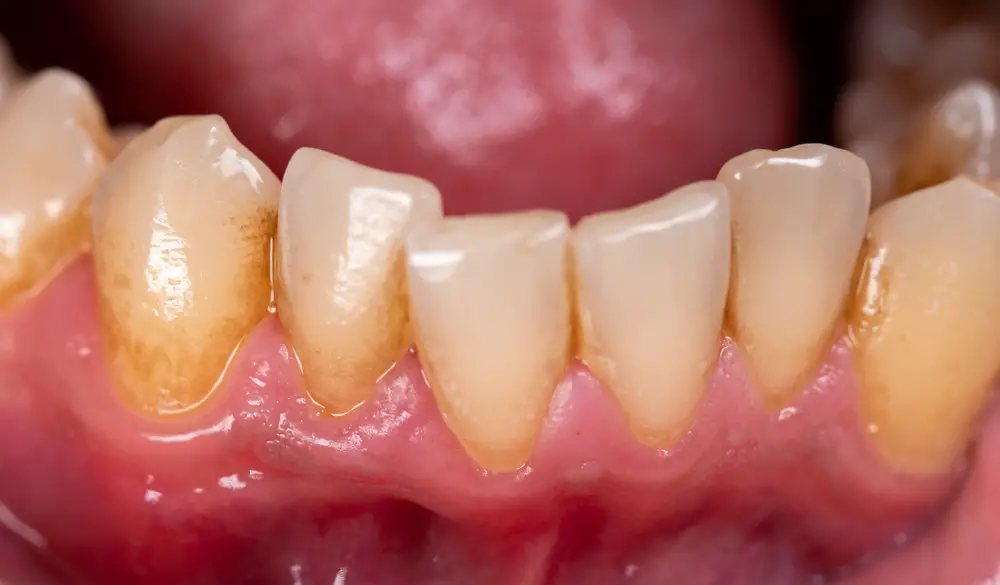
Healthy gums are not the same color in everyone. The natural color can range from pale pink to brown tones depending on the amount of melanin, tissue thickness, age and individual features. For that reason, a diagnosis cannot be made from color alone.
Where the appearance described as "my gums have turned yellow" is located matters. The yellow layer may be on the tooth, along the gum line or between the teeth. Sometimes there is a limited bump or color change directly on the gum.
One situation we see often in our clinic is that what is thought to be yellow gums turns out to be tartar. During the examination, the gum tissue and the deposits on the tooth surface are told apart.
| Appearance | Possible Source | What to Do |
|---|---|---|
| Hard yellow layer at the gum line | Plaque or tartar | Review of oral care and assessment for professional cleaning |
| Widespread yellowness on the teeth | Surface stains, natural dentin color or enamel wear | Examination of tooth color and enamel structure |
| Yellow-white bump on the gum | Possible inflamed focus or abscess | Dental examination without delay |
| Newly developed, irregular color change | Irritation or an oral lesion | Clinical assessment if it persists |
| A white area that does or does not wipe off | Fungal infection or another mucosal lesion | See a dentist without scraping it |
What Causes Yellow Gums?
The yellow appearance around the gums can have more than one cause. How widespread it is, whether it can be cleaned off the surface and the accompanying symptoms all matter in telling the causes apart.
Plaque and Tartar Build-Up
Plaque is a sticky layer of bacteria that constantly forms on the teeth. If it is not cleaned regularly, it can harden into tartar. Tartar can look yellow, cream or brown and is most often noticed along the gum line.
Tartar can irritate the gum and lead to redness, swelling and bleeding while brushing. The typical look of gum inflammation is red and swollen rather than yellow. The yellow color usually belongs to the deposit on the neighboring tooth surface.
Gum Recession and Exposure of the Root Surface
When the gum recedes, the root surface of the tooth can become visible. The root area can look more yellow than the enamel. This is not the gum turning yellow, but a surface that used to be covered by the gum being exposed.
Recession can be accompanied by sensitivity, teeth looking longer or plaque building up around the root. To identify the cause, the gums and the brushing technique should be assessed.
Tobacco Use
Cigarettes and other tobacco products can create yellow or brown surface stains on the teeth. The stains can be more noticeable on tartar in particular. Tobacco use is also among the factors that increase the risk of gum disease.
Gum Abscess
A yellow-white bump on the gum that looks like a pimple may be where an inflamed focus is draining into the mouth. A bad taste, throbbing, pain on chewing, swelling or fever can accompany it.
A dental abscess does not resolve permanently on its own. Squeezing or piercing the bump does not remove the source of infection. The tooth and surrounding tissues need to be assessed without delay.
White or Yellowish Lesions in the Mouth
A limited white-yellow area on the gum may be related to irritation, infection or another oral lesion. The exact cause cannot be determined from its appearance. If the area does not go away, grows or keeps returning, an examination is needed.
The Difference Between Yellow Gums and Yellow Teeth

Yellow gums describe a color change in the soft tissue or at the gum line. Yellow teeth relate to the enamel, the dentin or stains on the tooth surface. Because they appear in the same area, the two are easy to confuse.
Surface yellowing of the teeth can be linked to tea, coffee, tobacco and foods rich in color pigments. Plaque and tartar can also make the yellow look stronger. Some of these stains can be reduced with oral care or professional cleaning.
Discoloration coming from inside the tooth is different. As enamel thins with age, the yellow dentin underneath can become more visible. Structural features formed during tooth development, trauma and some medical processes can also affect the color.
Why Do Teeth Look Yellow Despite Brushing?
Brushing removes surface plaque and some stains, but it does not change the natural color of the tooth. Hardened tartar cannot be removed with a brush either. That is why a yellow look can persist despite regular brushing.
If the natural dentin color, thinning enamel or internal discoloration is involved, whitening toothpastes have limited effect. Decay, sensitivity, cracks and gum health should be assessed first.
Yellowing Behind and Between the Teeth
The back surfaces of the teeth and the areas between them are hard for a brush to reach. Yellowness in these areas can come from plaque or tartar build-up. The choice between an interdental brush and floss should be made according to your own needs.
Why Do Gums Turn White?
White gums are a different finding from yellow gums. White layers that can be wiped off may be linked to conditions such as oral thrush. After wiping, a red and tender surface can remain underneath.
White patches that do not wipe off can be seen in different conditions, such as chronic irritation or leukoplakia. Not every white area means a serious disease. Still, it is important to have persistent white areas examined by a dentist.
Brushing a white area hard, scraping it or applying chemicals to it can irritate the tissue. If there is pain, an ulcer, bleeding or growth, assessment should not be delayed.
How Are Yellow Gums Treated?
The approach depends on whether the yellow appearance is in the gum or on the tooth surface. Teeth whitening is not used for every color change. Applying a whitening procedure to the gums is also not a standard approach for this complaint.
- Examination: The gums, tooth surfaces, fillings and root areas are reviewed. A radiographic assessment can be planned when needed.
- Plaque control: Brushing and interdental cleaning are adjusted to suit you.
- Teeth cleaning: Hardened deposits are removed with clinical instruments. Trying to scrape them off at home can damage the gum.
- Gum treatment: If there is bleeding, pocket formation or loss of bone support, a plan is prepared according to the stage of the disease.
- Clearing the infection: If there is an abscess, the source of the infection is identified. Procedures such as drainage, root canal treatment or extraction can be considered based on the examination.
- Managing tooth discoloration: Professional cleaning or teeth whitening can be considered when the type of discoloration and your oral health are suitable.
The color of restorations such as crowns, fillings, veneers and implant-supported crowns does not change with whitening. For that reason, the color match between natural teeth and restorations should be assessed before the procedure.
What Helps Yellow Teeth?
Regular oral care helps reduce new surface stains and plaque build-up. Home care, however, does not remove tartar or discoloration from inside the tooth.
- Brush your teeth gently twice a day with fluoride toothpaste.
- Clean between your teeth every day with floss or a suitable interdental brush.
- Drink water after tea, coffee and colored drinks.
- Stay away from tobacco products.
- Do not try to scrape tartar off with metal tools.
- Have your teeth and gums checked before using any whitening product.
Acidic substances such as lemon and vinegar can erode tooth enamel. Charcoal and abrasive mixtures can also increase enamel loss. When enamel thins, the yellow dentin underneath becomes more visible.
Mouthwash does not replace brushing and interdental cleaning. If a particular rinse is needed, the product and how long it is used should be decided on a dentist's advice.
How Can the Yellow Look Around the Teeth and Gums Be Prevented?
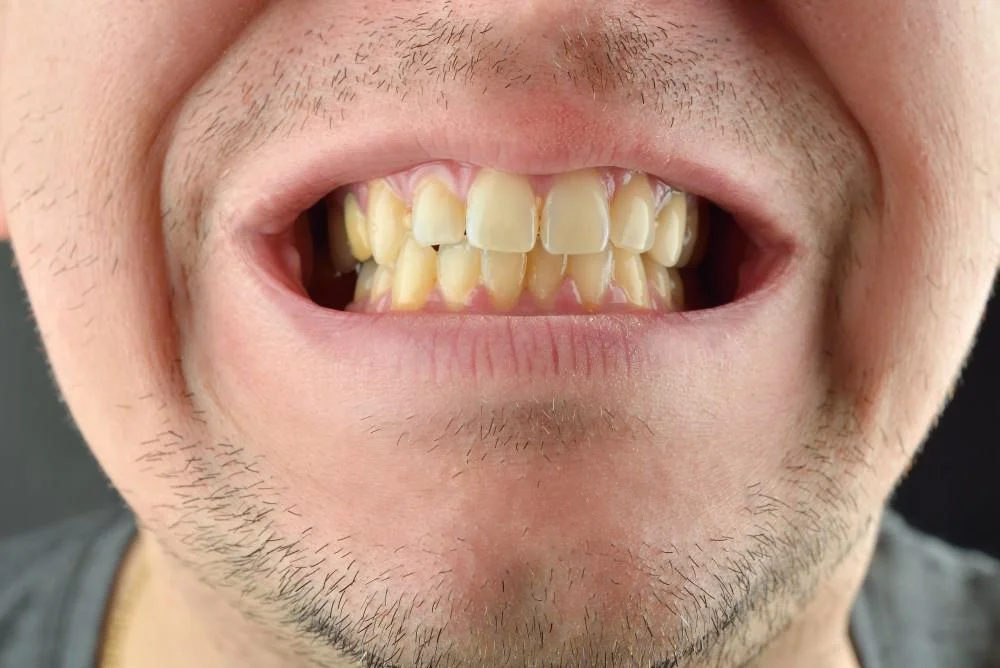
Regular care helps control plaque and external stains. The natural color of teeth varies from person to person, and healthy teeth do not have to be bright white.
- Brush all surfaces of the teeth twice a day without pressing too hard.
- Clean between the teeth daily.
- If your gums bleed, ask a dentist instead of stopping cleaning.
- Avoid having sugary and acidic foods frequently through the day.
- Get health support to quit using tobacco.
- If you have a dry mouth, ask for an assessment of the cause and care options.
- Agree your check-up interval with your dentist based on your oral health.
When Should You See a Dentist?
If the yellow layer at the gum line does not come off with brushing, it may be tartar. If bleeding, bad breath, recession or loose teeth accompany it, a gum examination should be planned.
- A yellow-white bump or discharge on the gum
- Severe tooth or gum pain
- Swelling in the face or jaw
- Fever, a bad taste or difficulty opening the mouth
- A white, red or irregularly colored area that does not go away
- A single tooth changing color after trauma
Difficulty breathing or swallowing, swelling spreading toward the eye or rapidly growing swelling in the mouth require emergency assessment.
Which Disease or Vitamin Deficiency Is Linked to Yellow Teeth?
Yellow teeth are not a sign of a specific disease on their own. In most cases the natural dentin color, surface stains, tartar or thinning enamel is involved. A color change developing in a single tooth may be related to decay, trauma or a problem in the tooth pulp.
A particular vitamin deficiency is not considered a typical or direct cause of generalized yellow teeth. If the color change comes with general fatigue, mouth sores or other systemic symptoms, a medical assessment is needed.
Frequently Asked Questions
How are yellow gums treated?
First it must be established whether the yellow look comes from the gum or from plaque and tartar. If there is tartar, professional cleaning is needed; if the tissue has changed, assessment aimed at the cause is required.
How do you get rid of yellow teeth?
Surface stains can be reduced with regular care and professional cleaning. For internal discoloration or the natural tooth color, options such as teeth whitening can be considered after an examination.
Why do teeth turn yellow despite brushing?
The yellow look can come from the natural dentin color, thinning enamel, internal discoloration or tartar that a brush cannot remove. Brushing does not change every type of discoloration.
What helps yellow teeth?
Regular brushing with fluoride toothpaste, interdental cleaning and avoiding tobacco help reduce surface stains. Hard tartar and internal discoloration need a dentist's assessment.
Why do gums turn white?
White layers that wipe off may be linked to a fungal infection, while areas that do not wipe off can relate to irritation or other mucosal lesions. Persistent white areas should be examined.
Which disease causes yellow teeth?
Yellow teeth usually do not point to a single disease. If a single tooth changes color suddenly or there is pain or sensitivity, decay, trauma and pulp problems should be assessed.
Which vitamin deficiency causes yellow teeth?
Generalized yellow teeth are not a typical finding of a particular vitamin deficiency. Tartar, surface stains, enamel structure and the natural dentin color are more common causes.
Does smoking make teeth yellow?
Yes. Tobacco products can create yellow or brown stains on the tooth surface and make discoloration on tartar more noticeable.