
Gentle oral care, cleaning between the teeth, rinsing with warm salt water and a cold compress on the outside can bring temporary relief for swollen gums. However, these measures do not remove causes such as decay, an abscess or gum disease.
The most common answer to why gums swell is the bacterial plaque that builds up around the teeth. If the swelling is in one area only, trapped food, trauma, an abscess or a wisdom tooth are also considered. If there is fever, facial swelling or difficulty swallowing, seek medical care without delay.
What Are Swollen Gums?
Swollen gums means the soft tissue around the teeth looks puffier, tender or redder than normal. Swelling can come with bleeding, bad breath, a bad taste and pain while chewing.
The everyday phrase "swollen tooth" usually describes swelling in the gum or surrounding tissues. The hard structure of a tooth does not swell. The problem can develop in the gum, around the tooth root, in the palate, cheek or jaw tissues.
Where the swelling is, how long it has been there and the accompanying symptoms all give clues about the likely cause. The exact cause is determined by an oral examination and, where needed, X-rays.
Why Do Gums Swell?
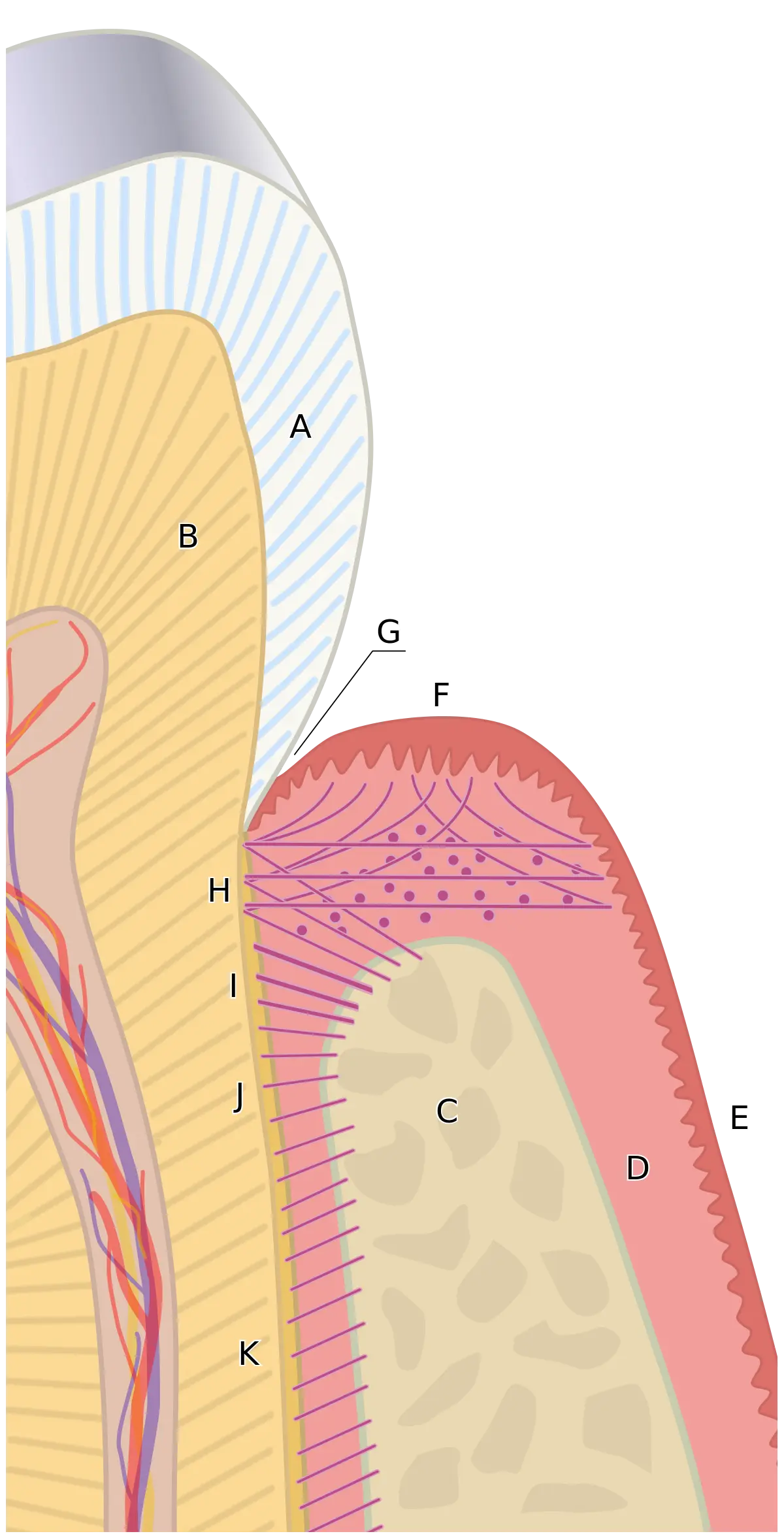
Swollen gums are not specific to a single disease. Widespread swelling is usually linked to plaque, while a lump around a single tooth can point to a more local problem.
Plaque Build-up and Gum Inflammation
Bacterial plaque left on the tooth surface can irritate the gum margin and cause gum inflammation (gingivitis). The gums can look red, become puffy and bleed while brushing.
Plaque that is not removed can turn into tartar over time. Tartar cannot be removed with a brush and may need professional teeth cleaning. Untreated gum inflammation can progress to the deeper supporting tissues in some people.
Problems Around a Single Tooth
- Trapped food: Food left between teeth or in a gum pocket can cause local tenderness and swelling.
- Decay and abscess: Infection around a tooth root can cause a pimple-like lump on the gum or swelling of the face.
- Wisdom tooth: Food and plaque building up under the tissue over a partly erupted tooth can make the gum at the back swell.
- Trauma: Hard brushing, sharp foods or foreign objects pressing on the gum can irritate the tissue.
- A poorly fitting restoration: An overhanging filling margin, a removable denture or another appliance can press on the gum.
Factors Linked to General Health and Lifestyle
Hormonal changes such as those in pregnancy can increase how strongly the gum reacts to plaque. Dry mouth, tobacco use and poorly controlled diabetes can also make gum problems more likely.
Some groups of medicines can cause gum overgrowth or dry mouth. Do not stop your medicine on your own. Your dentist and the doctor who prescribed it should assess this together.
Nutritional deficiencies can be linked to gum symptoms. However, it is not right to put every case of swollen gums down to a vitamin deficiency. A doctor decides which tests are needed.
What Are the Symptoms of Swollen Gums?
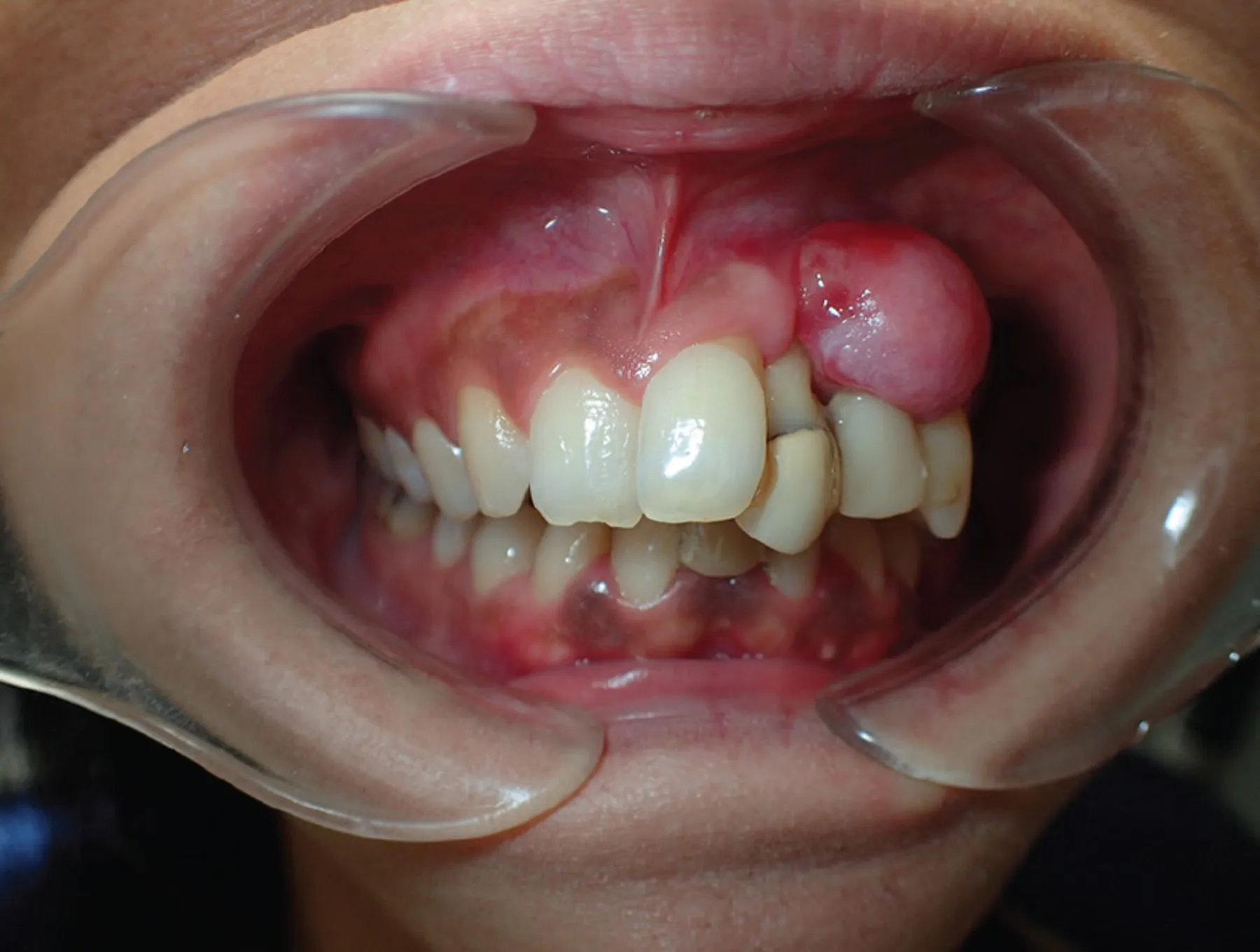
Healthy gum tissue is usually firm and hugs the teeth. When swelling develops, one or more of the following symptoms can appear:
- Gums that look red, dark or shiny
- Bleeding while brushing or cleaning between the teeth
- Tenderness that increases with touch and chewing
- Bad breath or a bad taste in the mouth
- A pus-filled or pimple-like lump at the gum margin
- Receding gums or loose teeth
- Pain in the gum at the back and difficulty opening your mouth
| Finding | Possible Explanation | Suitable Approach |
|---|---|---|
| Widespread redness and bleeding | May be plaque-related gum inflammation | Dental examination and a review of oral care |
| A lump beside a single tooth | May be trapped food, root infection or an abscess | A dental check-up soon |
| Swelling in the very back of the mouth | May be inflammation around a wisdom tooth | Gentle cleaning of the area and an examination |
| Palate pain after hot food | May be a superficial burn or irritation | Cool, soft foods and monitoring the symptoms |
| Swelling spreading to the face with fever | Possible spreading infection | Emergency assessment |
What Helps Swollen Gums?
The point of home measures is to keep the area clean and reduce discomfort temporarily. Squeezing or piercing the swelling, or applying irritating substances to it, can make the problem worse.
Supportive Measures You Can Try at Home
- Brush gently twice a day with a soft-bristled brush and a fluoride toothpaste.
- Clean between your teeth with floss or an interdental brush that suits you. Do not force the painful area.
- You can rinse gently with warm salt water. Do not swallow the mixture and do not gargle vigorously.
- If your cheek is swollen, apply a cold compress wrapped in cloth on the outside at short intervals.
- Choose soft, cool foods. Avoid very hot, hard, spicy or acidic foods.
- Drink enough water. Tobacco products and alcohol can increase irritation and healing problems.
- Do not try to remove an object trapped between the gum and tooth with a needle, toothpick or sharp tool.
These steps can bring relief for mild irritation. If there is tartar, an abscess or advanced gum disease, they do not replace professional treatment.
Are Medicines Used for Swollen Gums?
There is no single medicine for swollen gums that suits everyone. Whether a painkiller, an antiseptic mouth care product or an antibiotic is needed depends on the cause of the swelling.
Antibiotics are not used for every case of swollen gums, and they do not on their own remove the source of an abscess. These products should be used only after assessment and on prescription from a dentist or doctor.
Do not use leftover antibiotics at home. Do not crush painkiller tablets and place them on the gum. These practices can cause chemical irritation of the oral tissue.
How Do Swollen Gums Clear Up?
Treatment is planned according to the cause of the swelling. Your dentist assesses the gum pockets, tartar, decay and any problematic restorations. X-rays may be requested where needed.
- For gum inflammation: Professional cleaning and personalized oral care coaching can be provided.
- For advanced gum disease: Cleaning the surfaces below the gum line and follow-up sessions may be needed.
- For a tooth abscess: Drainage, root canal treatment or tooth extraction can be considered, depending on the source of infection.
- For a wisdom tooth problem: The surrounding tissue can be cleaned and the position of the tooth examined. Where it recurs, surgical options can be discussed.
- For a poorly fitting filling or denture: The margins irritating the gum may need adjusting, or the denture may need refitting.
- For general health factors: Assessment together with the relevant physician is arranged where necessary.
What Helps a Swollen or Painful Palate?
A swollen palate is a different finding from swollen gums. Very hot foods, hard foods, a canker sore, denture irritation or an infection in a nearby tooth can cause pain in the palate.
For superficial irritation after hot food, cool drinks and soft foods can be soothing. Keep the area clean. Temporarily avoid very hot, sour, spicy and sharp-edged foods.
A clear lump on the palate in line with a tooth can be a sign of an abscess from a tooth root. Do not squeeze or pierce such a swelling. Book a dental examination.
Assessment is needed if palate swelling is growing, recurring or not settling within a few days. A sore or lump lasting more than three weeks should not be ignored either.
Swollen Gums at the Back and Wisdom Teeth
Swelling of the gum at the back can develop around a partly erupted wisdom tooth. Food and bacteria building up under the tissue covering the tooth can cause inflammation called pericoronitis.
Clean the area as far as you can reach with a small, soft brush. Do not force your mouth open. If swelling recurs, the position of the tooth and the surrounding tissues should be assessed with X-rays.
One thing we see often at our clinic is swelling at the back being mistaken at first for simple trapped food. If there is a bad taste, discharge or limited mouth opening, do not put off an examination.
How Many Days Do Swollen Gums Take to Clear?
How long swollen gums take to settle depends on the cause. So it is not possible to give a single number of days that applies to every situation.
| Situation | Expected Course |
|---|---|
| Mild brushing or food irritation | Can start to ease within a few days once the irritation is removed |
| A small canker sore or superficial palate burn | Mostly heals within one to two weeks |
| Plaque-related gum inflammation | Can continue or recur without effective cleaning |
| Inflammation around a wisdom tooth | Can recur even if it eases temporarily, and needs an examination |
| Tooth abscess | Should not be expected to clear on its own and needs prompt assessment |
If swelling is not going down, is growing or keeps coming back, do not wait with home care alone. See a dentist to find the cause.
When Should You See a Dentist?
If bleeding, pain or swelling recurs, a dental examination is needed. The following symptoms need faster assessment:
- Swelling that gets worse or spreads to the face and neck
- Fever, marked fatigue or a decline in general health
- Pus, a constant bad taste or a pimple-like lump on the gum
- Clear difficulty opening your mouth
- A loose tooth or loss of chewing function
- Recurring swelling around a wisdom tooth
- A mouth sore or lump lasting more than three weeks
Difficulty breathing or swallowing, swelling spreading toward the eye, or rapidly worsening facial swelling is an emergency. Go to the nearest emergency department.
How Can Swollen Gums Be Prevented?
- Brush your teeth twice a day with a fluoride toothpaste.
- Clean between your teeth every day with a tool that suits you.
- Have regular check-ups for tartar and poorly fitting restorations.
- Do not use tobacco products.
- If you have diabetes, keep monitoring your blood sugar as your doctor advises.
- During pregnancy, do not accept bleeding and swelling as normal and put off treatment.
- Take care to keep removable dentures and oral appliances clean.
Regular care helps reduce plaque build-up. Even so, swelling that persists calls for professional assessment of the underlying cause.
Frequently Asked Questions
What helps swollen gums at home?
Gentle brushing, cleaning between the teeth, rinsing with warm salt water and a cold compress on the outside can bring temporary relief. If swelling continues, a dental examination is needed.
Why do gums swell?
The most common cause is gum inflammation from bacterial plaque. Trapped food, an abscess, a wisdom tooth, trauma, hormonal changes and some general health problems can also cause swelling.
What helps a swollen tooth?
It is the gum or facial tissues around the tooth that swell, not the tooth itself. Home care only brings temporary relief; if an abscess is possible, see a dentist without delay.
How many days do swollen gums take to clear?
Mild irritation can start to ease within a few days. Canker sores and small mouth sores mostly heal in one to two weeks, while an abscess or gum disease can persist without treatment.
How does a swollen palate clear up?
For mild irritation from hot food, cool soft foods and gentle oral care can help. If there is a clear lump on the palate or toothache, an examination for a root infection is needed.
Are antibiotics needed for swollen gums?
Not every case of swollen gums needs antibiotics. They should be used only after assessment by a dentist or doctor and on prescription.
Can swollen gums at the back come from a wisdom tooth?
Yes, food and plaque building up around a partly erupted wisdom tooth can cause swelling. If you have recurring pain, a bad taste or difficulty opening your mouth, a dental check-up is needed.
What are swollen gums a sign of?
They can be a sign of gum inflammation, a tooth abscess, trapped food or a wisdom tooth problem. The exact cause cannot be stated without assessing where the swelling is and the accompanying findings.