
Short answer: Restorative dentistry aims to repair tooth tissue lost to decay, fracture, wear or problems around an old restoration. Methods such as fillings, inlays, onlays and crowns rebuild the integrity, chewing function, cleanability and appearance of the tooth.
Treatment is not just about filling a visible hole. Your dentist first assesses the cause of the problem and how much healthy tissue is left. They then choose a method that preserves the tooth as far as possible.
What Does "Restorative" Mean?
Put simply, restorative means "repairing" or "bringing back closer to former function". In dentistry, the term describes preserving and rebuilding tooth tissue damaged by disease or trauma.
A "restoration" is the repair itself. A composite filling, a porcelain onlay or a crown are all examples of restorations. When patients say "resto", they usually mean a shortened form of restoration or restorative treatment.
The main goal of the restorative approach is to bring the problem under control without removing healthy tooth tissue unnecessarily. Alongside the shape of the tooth, the bite relationship and how easy it is to clean every day are also taken into account.
What Is Restorative Dental Treatment?
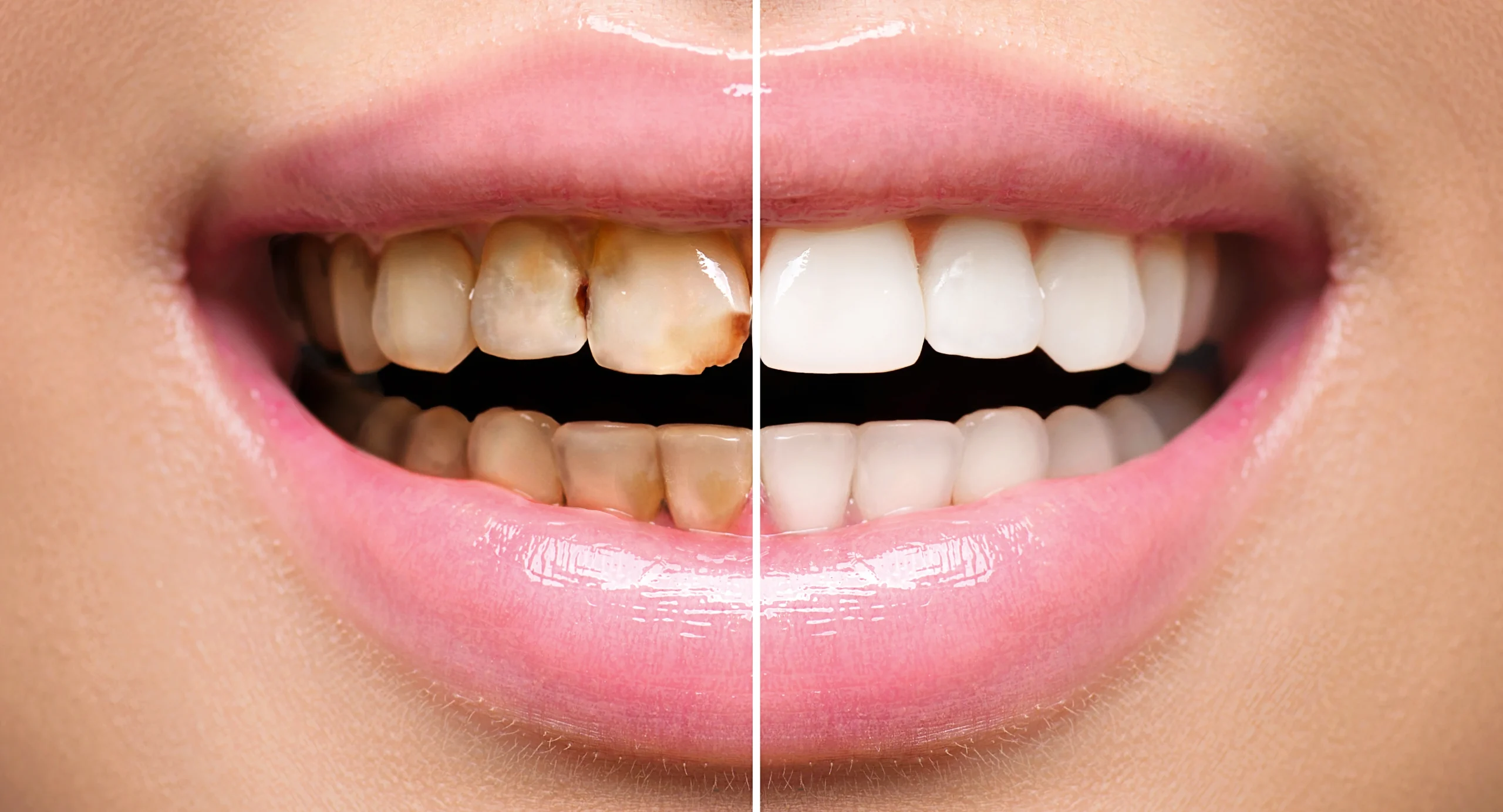
Restorative dental treatment means assessing hard tissue loss in natural teeth and repairing it with suitable materials. Decay, fractures, cracks, wear and shape irregularities are among the common issues in this field.
In some early-stage decay lesions, a permanent cavity may not have formed yet. In that case, preventive approaches such as oral hygiene, dietary changes, fluoride support and regular monitoring can be considered. Once there is permanent tissue loss in the tooth, a filling or another restoration may be needed.
In a broad sense, restorative dentistry is also linked to treatment plans that replace missing teeth. Bridges, dentures and implant-supported crowns can require different fields of dentistry to work together. Placing the implant in the bone is the surgical stage; the crown or bridge on top is the restorative part.
When Is Restorative Dental Treatment Used?
The need for restorative treatment does not only show up when there is pain. Some decay and problems with old fillings can progress without causing a clear complaint. Regular examinations help identify problems before more tooth tissue is lost.
- Tooth decay or tissue loss caused by decay
- A tooth that is fractured, cracked or chipped at the edge
- An old filling that has fractured, worn down or lost its marginal fit
- Wear linked to teeth clenching, grinding or an incorrect bite
- Erosion caused by acidic foods, drinks or stomach acid
- Damage to the shape and integrity of a tooth after trauma
- Congenital differences in tooth shape or enamel structure
- Rebuilding the upper part of a tooth after root canal treatment
Decay is a multifactorial process in which certain bacteria in the mouth use sugars and starches to produce acid. Frequent sugar intake, poor plaque control, dry mouth and personal risk factors can all influence the process.
One thing we see often at our clinic is old restorations that cause no pain but need assessment at a check-up. Not every color change or line means decay. Clinical examination and, where needed, X-rays are used to tell them apart.
Methods Used in Restorative Dentistry
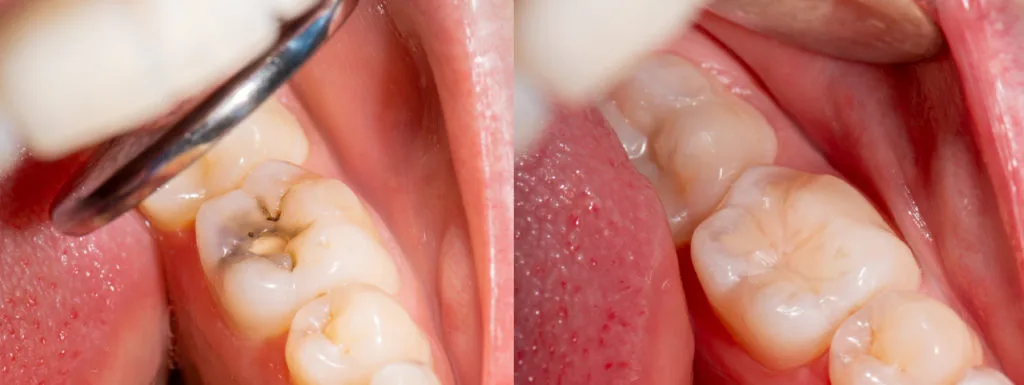
The method is chosen according to the healthy tissue left in the tooth and where the damage is. Chewing forces, the bite, esthetic expectations and oral care habits also affect planning.
Direct Composite Fillings
A composite filling is placed by shaping a tooth-colored material directly in the mouth. It can be considered for small and medium-sized decay, limited fractures or some shape irregularities.
After the decayed tissue is removed, the tooth surface is prepared. The composite is placed in layers, cured with a light and shaped to fit the bite. In the final stage, the surface is finished and polished.
Inlay and Onlay Restorations
Inlays and onlays can come up where tissue loss is too extensive for a filling but may not need a full crown. They are made outside the mouth or through a digital production process. The custom-made piece is then bonded to the tooth.
An inlay usually restores loss in the inner part of the tooth. An onlay can cover one or more chewing cusps. Suitability is decided after assessing the strength of the remaining tooth tissue.
Crowns
A crown is a restoration that encircles the visible part of a tooth with extensive tissue loss. It can be considered because of large fractures, extensive fillings or structural weakness after root canal treatment.
Not every root-treated tooth automatically needs a crown. The decision depends on the position of the tooth, the remaining tissue, the risk of cracking and chewing forces.
Restoration After Root Canal Treatment
When decay or a crack reaches the pulp of a tooth, root canal treatment may be needed. After infected or damaged tissue inside the canal is cleaned out, the root canals are filled. The upper part of the tooth is then restored with a filling, onlay or crown.
Root canal treatment and the restoration on top are complementary but separate procedures. Delaying the restoration can affect the risk of the remaining tooth tissue fracturing.
Bridges and Implant-Supported Restorations
When one or more teeth are missing, options such as a bridge, a removable denture or an implant-supported restoration can be considered. A bridge takes support from the neighboring teeth. An implant-supported restoration attaches to an implant placed in the jawbone.
These methods are not equally suitable for every patient. Bone and gum condition, neighboring teeth, general health and oral hygiene are assessed together.
| Method | Usually Considered For | Approximate Process |
|---|---|---|
| Composite filling | Small or medium tissue loss | Mostly a single appointment |
| Inlay or onlay | Extensive but partial tissue loss | One or more appointments, depending on how it is made |
| Crown | Advanced tissue loss or fracture risk | Several stages, depending on preparation and production |
| Root canal treatment and final restoration | Teeth where the pulp is affected | One or more appointments, depending on the tooth |
| Bridge | One or more missing teeth | Requires planning and laboratory stages |
| Implant-supported crown or bridge | Missing teeth in suitable patients | Can take longer because of surgical healing and restorative stages |
How Is Restorative Dental Treatment Carried Out?

The steps vary with the restoration chosen. Even so, treatment generally involves examination, diagnosis, preparing the tooth, placing the restoration and a follow-up check.
- An examination is carried out: The tooth, gums, bite and existing restorations are assessed. X-rays are requested when needed.
- The source of the problem is identified: Decay, trauma, wear, cracks or forces from the bite are told apart.
- Treatment options are explained: Options suited to the amount of healthy tissue, durability expectations and personal needs are discussed.
- The tooth is prepared: Decay and unsupported tissue are removed in a controlled way. Unnecessary tissue loss is avoided.
- The restoration is placed: A filling can be shaped directly, or an impression can be taken so a custom restoration is made.
- The bite is checked: The contact of the restoration with the opposing teeth and its relationship during chewing are examined.
- Finishing and follow-up: The surface is adjusted and polished, and the check-up interval is agreed.
Whether local anesthesia is needed depends on how deep the lesion is and what is being done. Temporary sensitivity can occur after treatment. Complaints that get worse or last a long time need a dentist's assessment.
How Long Does Restorative Dental Treatment Take?
A simple composite filling can mostly be completed in a single appointment. The time in that session varies with the size of the decay, the position of the tooth and moisture control. Separate appointments can be planned for treating several teeth.
Inlays, onlays and crowns can involve an impression or digital scan and a production stage. That may call for a temporary restoration and an extra appointment. Root canal treatment, bridges and implant-supported restorations are part of a longer plan.
It is not right to state an exact number of sessions without an examination. Active infection, gum problems, the depth of a fracture and the need for extra treatment can all change the total time.
Is Restorative Dentistry the Same as Fillings?
Restorative dentistry is not only fillings. Fillings are one of the most frequently used methods in the field. Inlays, onlays, crowns and the final restoration after root canal treatment also serve to rebuild the tooth.
Teeth cleaning (scaling), on the other hand, is not a restorative filling procedure. Removing plaque and tartar falls under periodontal care aimed at protecting gum health. Gum health may need to be brought under control before a restoration.
Teeth whitening also does not on its own repair lost tooth tissue. So not every esthetic dental procedure counts as restorative treatment. In some treatment plans, esthetic and restorative procedures are handled together.
Who Can Have Restorative Dental Treatment?
Restorative options can be considered for children and adults with decay, fractures, wear or a developmental tissue problem. Age alone does not determine the treatment decision. The developmental stage of the tooth, oral hygiene and general health are taken into account.
If you are pregnant, have a chronic condition or a bleeding disorder, or take regular medication, tell your dentist. These situations are not always a barrier to treatment. The timing of the appointment, anesthesia and other precautions are planned for you personally.
Poor oral hygiene, active gum disease or uncontrolled teeth clenching can affect how a restoration performs. These problems need to be addressed alongside the restoration.
What Should Home Care Look Like After Treatment?
Caring for restorations should not be thought of separately from caring for natural teeth. Plaque does not cause the restoration itself to decay. However, new decay can develop at the margins where the restoration meets the natural tooth.
- Brush your teeth twice a day with a fluoride toothpaste.
- Clean between your teeth with floss or the interdental brush your dentist recommends.
- Limit how often you have sugary foods and drinks.
- Do not use your teeth to open packaging or crack hard objects.
- Tell your dentist about any signs of teeth clenching or grinding.
- Book a check-up if you feel a fracture or a high bite in a restoration.
If anesthesia was used, take care not to bite your cheek, lip or tongue until the numbness wears off. When you can eat again varies with the material used and the procedure carried out. Follow your dentist's aftercare advice.
When Should You See a Dentist?
Repeated sensitivity to cold, heat or sweetness, pain while chewing and a feeling of food catching in a tooth may all call for an examination. If a filling has broken, a tooth edge is sharp or there is a visible gap, book an appointment without delay.
Severe, constant pain, fever, a bad taste and swelling of the face or jaw can be linked to infection. These symptoms need urgent dental assessment. If swelling comes with difficulty breathing or swallowing, seek emergency care.
Frequently Asked Questions
What does "restorative" mean?
Restorative means repairing and rebuilding function. In dentistry it describes rebuilding damaged tooth tissue with fillings or other restorations.
What does restorative dental treatment do?
It aims to repair tooth tissue lost to decay, fracture, wear and similar causes. The method used is decided after an examination and, where needed, X-rays.
Does restorative dentistry include fillings?
Yes. Composite fillings are one of the core methods used in restorative dentistry. However, restorative treatment is not only fillings; it can also cover inlays, onlays and crowns.
How long does restorative dental treatment take?
Simple fillings can mostly be completed in a single appointment. Crowns, root canal treatment or restorations made in a laboratory can need several appointments.
Is restorative dental treatment painful?
Because local anesthesia can be given when needed, discomfort during the procedure can be reduced. Sensitivity afterwards varies with the person and the depth of treatment.
What problems does the restorative department deal with?
Mainly decay, fractures, wear, problems with old fillings and shape irregularities in the hard tissues of teeth. In complex cases, planning can be shared with other fields of dentistry.
Does restorative dentistry include teeth cleaning?
Teeth cleaning (scaling) is not a filling or hard tissue restoration. It falls under periodontal care aimed at protecting gum health.
Can every broken tooth be repaired with restorative methods?
Whether it can be repaired depends on the depth of the fracture and the healthy tooth tissue left. Fractures that affect the root or extend below the gum may need different treatment.