
An amalgam filling is a metal-based filling material used to rebuild tooth tissue lost to decay or fracture. Because its color resembles silver, people often call it a silver filling, a gray filling or, once it darkens over time, a black filling.
Amalgam fillings contain mercury. However, current scientific evidence does not show that sound amalgam fillings cause disease in the general population. Mercury-free options may be preferred in certain risk groups. Removing a sound amalgam filling purely out of concern is not recommended.
What Is an Amalgam Filling?
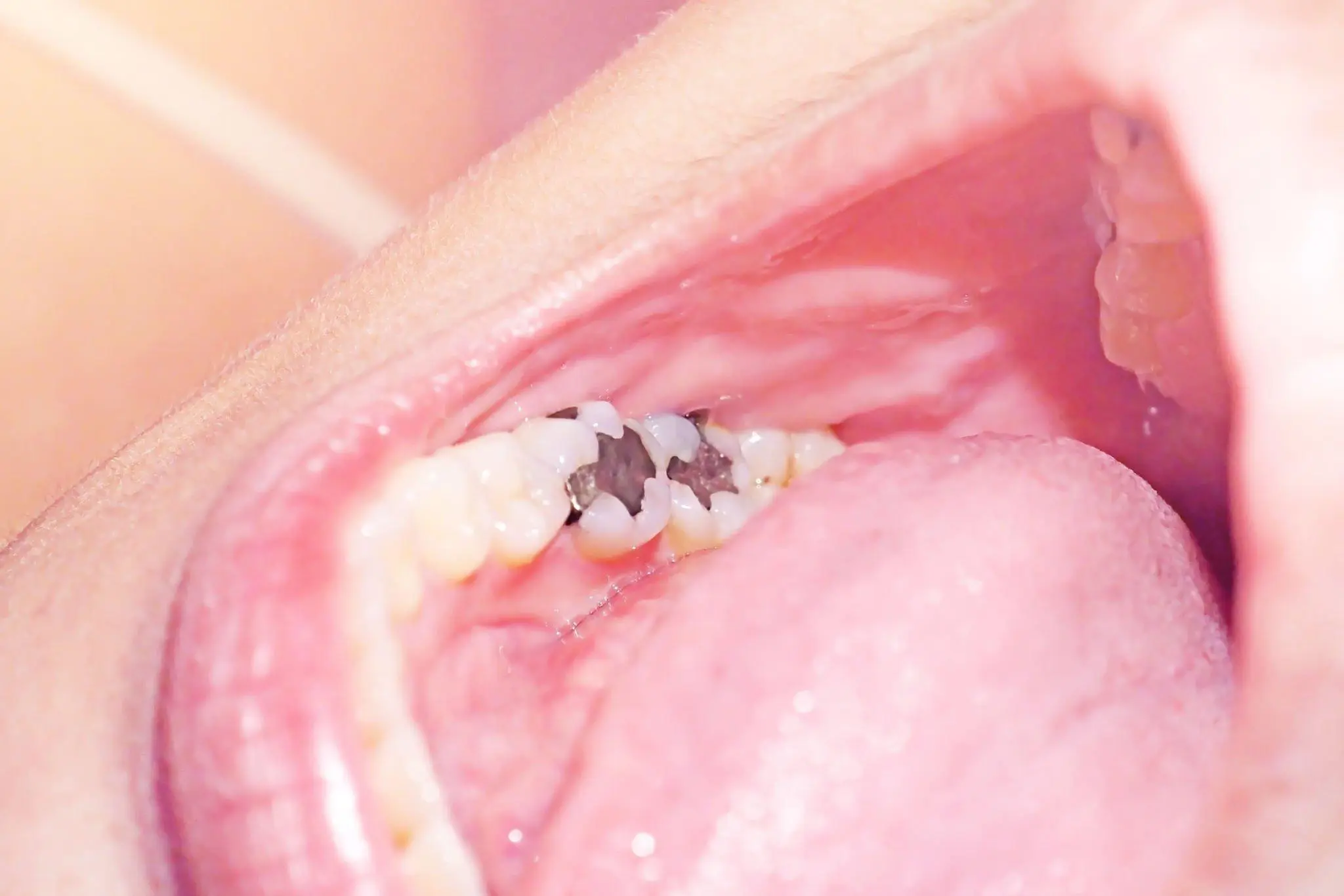
Amalgam means a mixture in which different metals are combined. Dental amalgam is prepared by combining elemental mercury with a metal alloy containing silver, copper and tin. Mercury makes up roughly half of the material by weight.
Mercury binds the other metal particles together, creating a filling material that can be shaped. The prepared amalgam is placed into the tooth once the decayed tissue has been cleaned away. When the material hardens, the result is a restoration that supports the chewing function of the tooth.
Amalgam is not tooth-colored. For that reason it may not meet esthetic expectations, especially in areas visible when you speak or smile. In the past it was used mainly in back teeth, which are exposed to high chewing forces.
Are Silver, Gray and Black Fillings the Same Thing?
The terms silver filling and gray filling usually describe an amalgam filling. That said, amalgam is not made of silver alone. The name "silver filling" comes from the metallic appearance of the material.
Older amalgam fillings can look dark gray or nearly black because of surface changes. However, not every black area on a tooth is amalgam. Decay, surface staining and other restorations can also look dark.
An amalgam filling can usually be recognized by the metallic surface in the back teeth. A definitive assessment requires an oral examination and, when needed, a dental X-ray.
What Are the Dental Filling Materials?
Amalgam is not the only material that can be used for a dental filling. The choice of filling is made by considering the position of the tooth, the amount of tissue lost, chewing forces and oral hygiene. Esthetic expectations, allergy history and whether the tooth can be kept dry also matter.
| Filling Material | Appearance | Key Feature | Point to Consider |
|---|---|---|---|
| Amalgam | Gray and metallic | Durable against chewing forces | Contains mercury and does not match tooth color |
| Composite resin | Tooth-colored | Bonds to tooth tissue and blends esthetically | Moisture control during placement is important |
| Glass ionomer | Close to tooth color | Can be used in certain small restorations and on root surfaces | May not suit every case in high-force areas |
| Ceramic restoration | Tooth-colored | Can be produced in a laboratory or digitally | Usually an indirect procedure requiring more than one stage |
It is not accurate to say that one filling material is healthier for all patients and all teeth. A small cavity in a front tooth and extensive loss in a back tooth are not assessed in the same way. The amount of remaining sound tooth tissue should also be examined during the check-up.
Why Are Amalgam Fillings Placed?
Amalgam fillings have been used to close the cavity that remains after decay is removed. Small fractures and the replacement of an old restoration are also among the reasons for their use.
The main properties that made the material a common choice in the past are:
- it can withstand chewing forces, particularly in the back teeth,
- it can be applied in some teeth with extensive tissue loss,
- it is less sensitive to moisture than composite fillings,
- it has many years of clinical use behind it.
Today the range of uses for composite and other mercury-free materials has widened. Amalgam is therefore placed less often. Because some current comparisons are based on older-generation composites, durability cannot be predicted from the material name alone.
Amalgam Filling Safety and the Mercury Question
Are Amalgam Fillings Harmful?
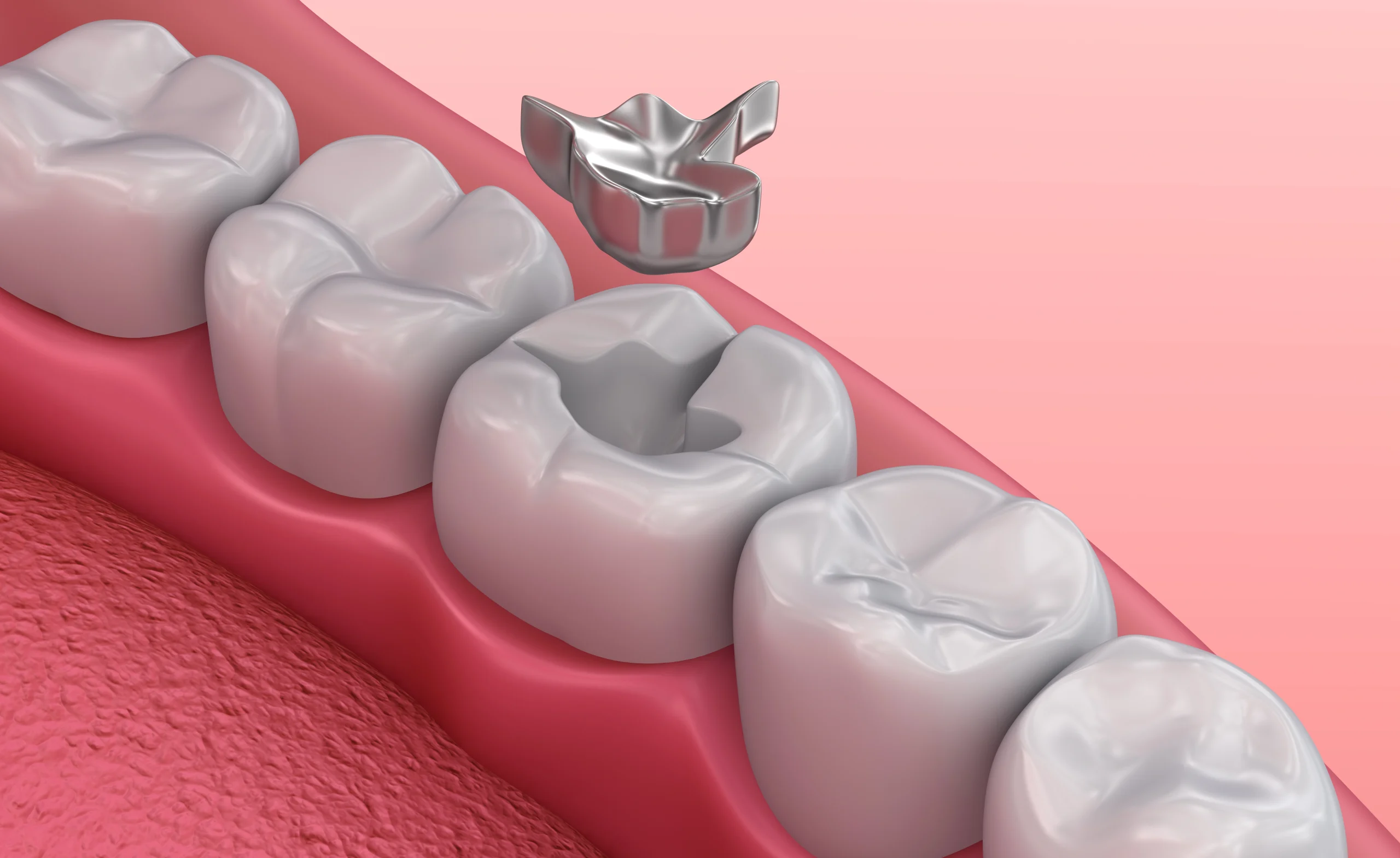
Amalgam fillings can release small amounts of mercury vapor. Current scientific evidence has not conclusively shown that this exposure causes adverse health outcomes in the general population. Even so, a cautious approach is advised for people who may be more sensitive to mercury exposure.
The worldwide reduction in amalgam use is not driven only by individual health concerns. The environmental impact of mercury during production, transport, placement, removal and waste handling is also among the main reasons.
For that reason, both "amalgam is completely safe" and "every amalgam filling is toxic" are overgeneralizations. The condition of the filling, the person's medical history and the suitability of alternative materials should be assessed together.
Who Might Consider Alternative Fillings?
The FDA recommends considering restorations other than amalgam in certain groups when this is possible and appropriate for the tooth:
- people who are pregnant or planning a pregnancy,
- people who are breastfeeding,
- children, especially those under six years of age,
- people with impaired kidney function,
- people with a pre-existing neurological condition,
- people with a known sensitivity to mercury or the other metals in amalgam.
Belonging to one of these groups does not mean that sound amalgam fillings already in the mouth should automatically be removed. New fillings and existing fillings should be assessed separately.
What Are the Symptoms of an Amalgam Filling Allergy?
A contact reaction to the components of amalgam can develop. Suspected symptoms usually appear in the cheek, tongue or gum tissue next to the filling. On their own, they do not prove an allergy.
- persistent redness or white lines in the tissue next to the filling,
- burning, sensitivity or pain,
- recurring sores or erosion-like changes,
- unexplained swelling of the lip or around the mouth.
The dentist first examines the tissues in contact with the filling and other possible causes. A dermatology or allergy assessment may be requested if needed. Difficulty breathing and rapidly increasing facial swelling require emergency care.
Are Amalgam Fillings Banned?
There is no single, uniform treatment ban on amalgam that took effect in every country at the same time. The rules on its use vary by country and health system.
In the European Union, the use of amalgam has been ended as of 1 January 2025, except where a dentist considers it necessary for a specific medical need. A limited transitional exemption ended on 30 June 2026. This regulation does not require sound fillings already in the mouth to be removed.
In November 2025, the parties to the Minamata Convention agreed to end the manufacture, import and export of dental amalgam globally by 2034. Countries are expected to reduce use by that date and to support mercury-free options.
International decisions do not mean that existing amalgam fillings in Turkey should automatically be removed. When a new treatment is planned, current national rules and the patient's clinical situation should be taken into account.
Advantages and Disadvantages of Amalgam Fillings
Advantages
- It is durable against the heavy chewing forces in the back teeth.
- It can be placed in some areas where moisture control is difficult.
- There is many years of usage data for large restorations.
- The placement technique can be less sensitive than with some alternatives.
Disadvantages
- Its metallic color does not provide a natural tooth appearance.
- Because it contains mercury, it requires environmental waste management.
- As it does not bond to the tooth, a cavity that provides mechanical retention must be prepared.
- It can transmit temperature changes to the tooth tissue and cause temporary sensitivity.
- It may not be suitable for people with a metal allergy or a local contact reaction.
When choosing a new filling, durability or appearance alone should not decide the matter. The vitality of the tooth, whether a crack is present and the contact with the opposing teeth also matter.
Should Amalgam Fillings Be Removed?
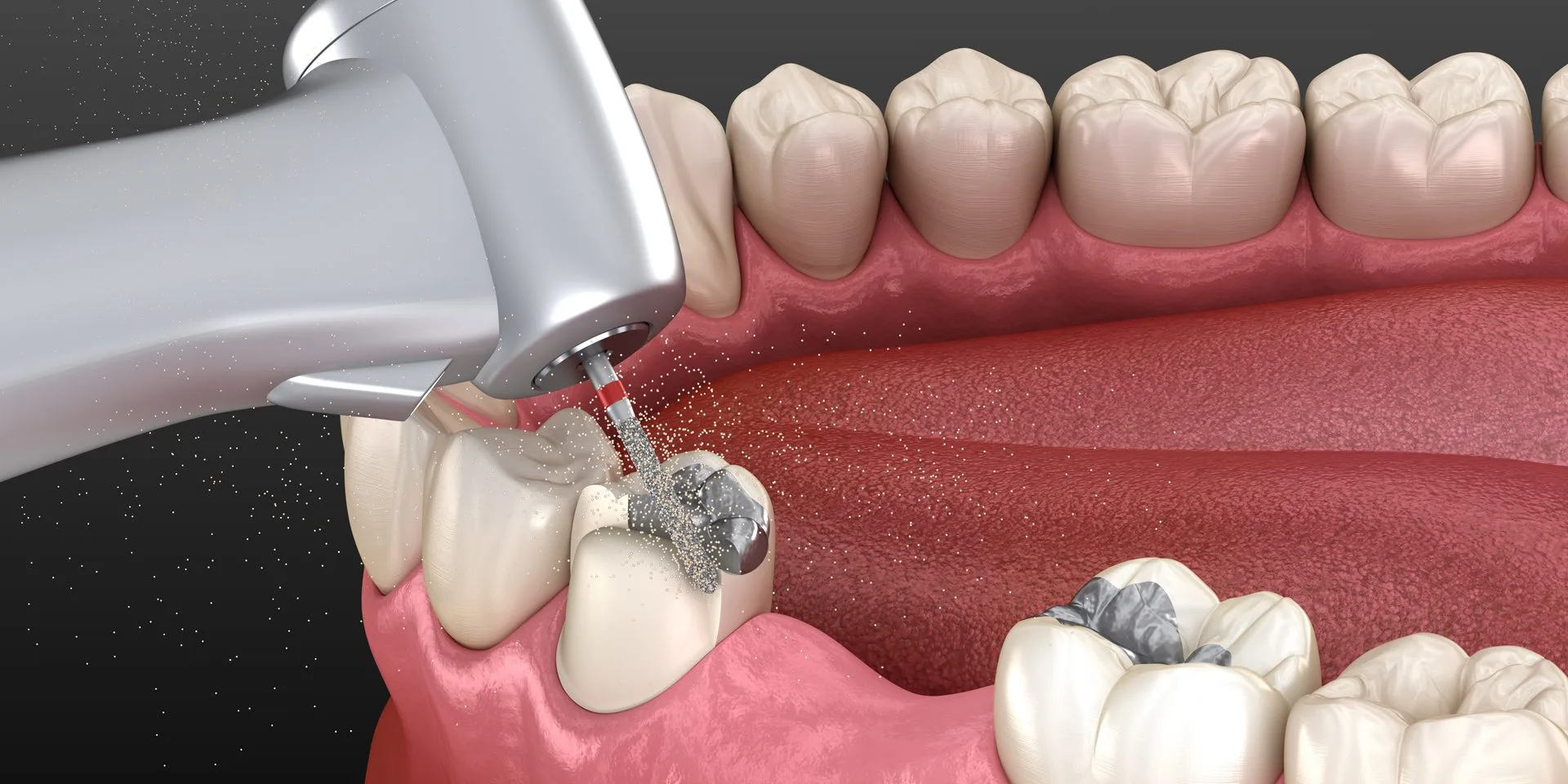
Removing amalgam fillings that are sound, well sealed at the margins and free of decay underneath, solely to prevent disease, is not recommended. Healthy tooth tissue can be lost during removal. Exposure to mercury vapor can also increase temporarily during the procedure.
One situation we see often in our clinic is the wish to urgently replace fillings that look dark but still work. The decision should not be made on color alone.
Repairing or replacing a filling may be considered in the following situations:
- the filling fractures, falls out or wears down noticeably,
- there is a gap at the margin of the filling or new decay,
- a crack or fracture is detected in the tooth,
- there is ongoing pain and sensitivity when chewing,
- a confirmed reaction is present in the tissue touching the filling,
- the restoration needs to be removed for another treatment.
If removal is decided on, the procedure should be carried out under controlled conditions. The dentist plans appropriate isolation, water cooling and suction methods to protect the tooth and the surrounding tissues.
How Is Extracting a Tooth With an Amalgam Filling Assessed?
The presence of amalgam in a tooth is not on its own a reason for extraction. The decision to extract is based on whether the tooth can be restored, the condition of the roots, infection, cracks and bone support.
If extraction is considered necessary, the amalgam filling usually comes out with the tooth. Before the procedure the dentist assesses the X-ray findings and the size of the filling. The extracted tooth and the metal-containing pieces are handled according to the appropriate medical waste rules.
What Should You Pay Attention to After an Amalgam Filling?
The setting time of a freshly placed amalgam can vary with the product used. Follow your dentist's instructions about eating and using the treated side. Take care not to bite your cheek, lip or tongue before the numbness wears off.
- Do not chew hard foods on the treated tooth for the stated period.
- Brush your teeth regularly and clean between them.
- If the filling feels high, do not wait for it to settle on its own.
- Report any lasting hot, cold or chewing sensitivity to your dentist.
No fixed number of years can be given for how long a filling will last. The size of the filling, teeth clenching, oral hygiene and decay risk all affect its lifespan.
When Should You See a Dentist?
A change of color in an amalgam filling is not an emergency on its own. However, the following symptoms call for an examination:
- tooth pain that starts spontaneously or wakes you at night,
- sharp pain when biting, or a filling that feels high,
- a filling that fractures, moves or falls out,
- swelling in the gum or face, fever or a bad taste,
- a sore near the filling that does not heal,
- a crack or missing piece noticed in the tooth.
During the examination, the margins of the filling, the surrounding tooth tissue and the bite relationship are checked. When needed, an X-ray is taken to look for decay under the filling or infection around the root.
Frequently Asked Questions
What is an amalgam filling?
Amalgam is a gray dental filling material made of metals such as mercury, silver, copper and tin. It is used to rebuild lost tooth tissue after decay has been removed.
Are silver, gray and black fillings the same?
The terms silver filling and gray filling usually describe an amalgam filling. Older amalgam fillings can darken over time, but not every black area on a tooth is amalgam.
Are amalgam fillings harmful?
Current evidence does not show that sound amalgam fillings cause disease in the general population. For some sensitive groups, mercury-free options can be considered for a new filling.
Are amalgam fillings banned?
There is no single, immediate worldwide ban. In the European Union amalgam has not been used since 1 January 2025 outside specific medical needs, and global manufacture, import and export are set to end by 2034.
How can you tell if a filling is amalgam?
It is usually recognized by its gray, silver or dark metallic appearance in the back teeth. A definitive identification is made by a dental examination and, when needed, an X-ray.
What are the symptoms of an amalgam filling allergy?
Burning, redness, white lines or a non-healing sore may appear in the tissue next to the filling. These signs do not confirm an allergy; a dentist and, if needed, an allergy specialist should assess them.
Should sound amalgam fillings be removed?
Removing sound amalgam fillings with no decay underneath, solely to prevent disease, is not recommended. A decision to replace should follow an assessment of the filling and the tooth.
Can a tooth with an amalgam filling be extracted?
An amalgam filling is not an obstacle to extraction, but it is not a reason for one either. The decision is based on whether the tooth can be restored, its roots, infection and the surrounding bone support.