
Dental bonding is a direct restorative procedure in which tooth-colored composite resin is bonded to the tooth surface and shaped. It can be used to address small chips, limited gaps, differences in shape and some color defects. Whether it suits you is decided by examining the tooth and your bite.
The word bonding means joining or attaching. In dentistry, it usually describes the direct composite bonding procedure. Crowns, veneers, implants and splinting loose teeth are not the same treatment.
What Is Dental Bonding?
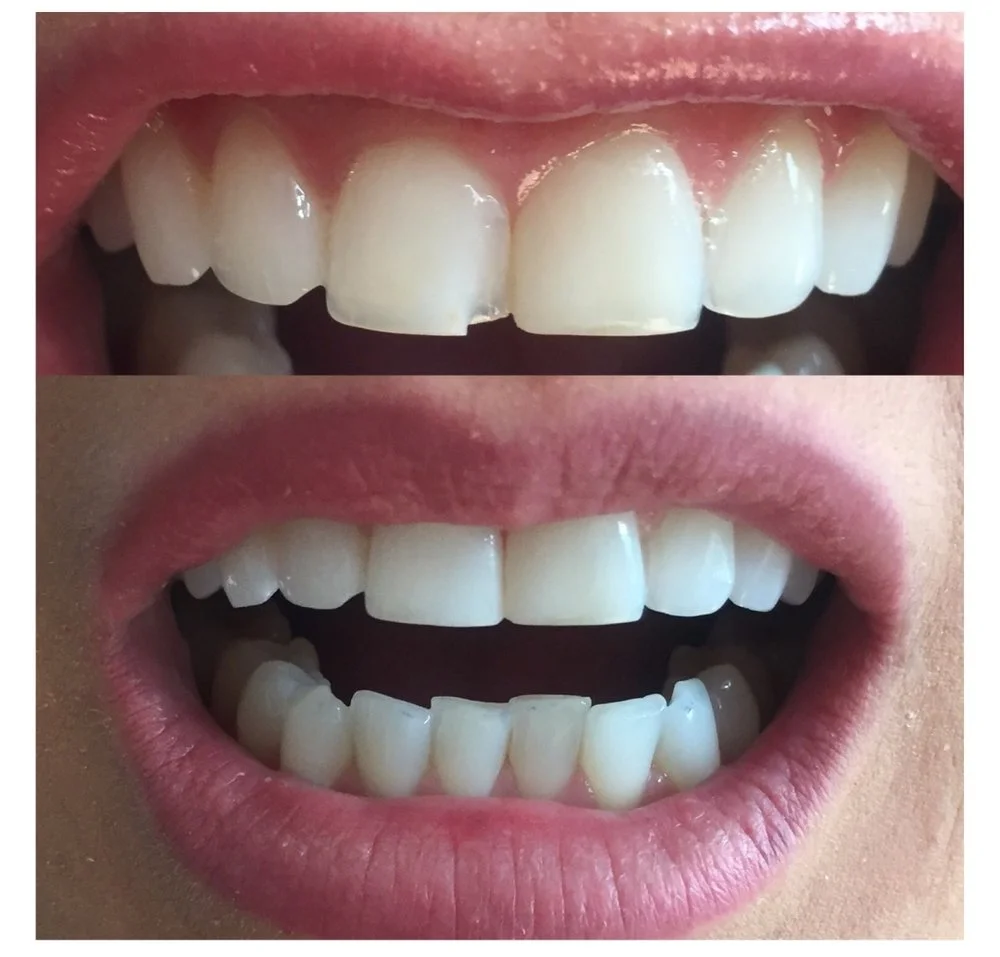
In bonding, composite resin — the same kind of material used in white fillings — is added to the tooth surface in a controlled way. The material is chosen to match the tooth color, shaped and then hardened with a special LED light. In the final stage, the surface is smoothed and polished.
The procedure is usually considered for limited problems in the visible part of a tooth. Bonding is not a prosthesis that replaces a missing tooth. Standard composite bonding should also not be confused with a crown, which surrounds the whole tooth.
Bonding is not always done for appearance alone. It can also be used to cover the sharp edge of a small chip or to rebuild a limited loss of tooth structure. A composite filling, where decayed tissue is removed, uses similar material but serves a different clinical purpose.
When Can Dental Bonding Be Used?
The decision to use bonding is not based on a photo or on how the tooth looks from the outside. The vitality of the tooth, existing fillings, gum health and the bite relationship are assessed together. Bonding may be considered in the following situations:
- Small losses of tooth structure and surface chips in a front tooth,
- Limited edge irregularities, often described as a chipped tooth,
- Small, suitably positioned gaps between teeth,
- A tooth that looks shorter or differently shaped than the others,
- Selected tooth surfaces with limited wear,
- Some localized color differences that whitening cannot resolve,
- Suitable defects on a root surface exposed by gum recession.
If the fractured natural tooth fragment can be found, it may be reattached. This approach differs from classic bonding, where composite is added. Keeping the broken fragment in milk or saliva and bringing it to the dentist can be helpful.
When May Dental Bonding Not Be Suitable?
Not every crack, chip or color change should be covered with bonding. The cause of the problem should be identified first. In the following situations, a different procedure or preliminary treatment may be needed:
- Active decay, gum disease or poor oral hygiene,
- A deep fracture close to the tooth nerve or ongoing severe sensitivity,
- Loss of tooth structure affecting a large part of the tooth,
- Cracks suspected of extending into the tooth root,
- Heavy teeth clenching, nail biting or a habit of biting hard objects,
- Excessive load on the front teeth when the jaws close,
- Wide gaps or marked crowding that require orthodontic movement,
- Advanced color and shape changes affecting many teeth.
If teeth whitening is planned, the order of the procedures should also be considered. Composite resin does not lighten after whitening. For this reason, the shade is chosen together with the other planned treatments.
How Is Dental Bonding Done?
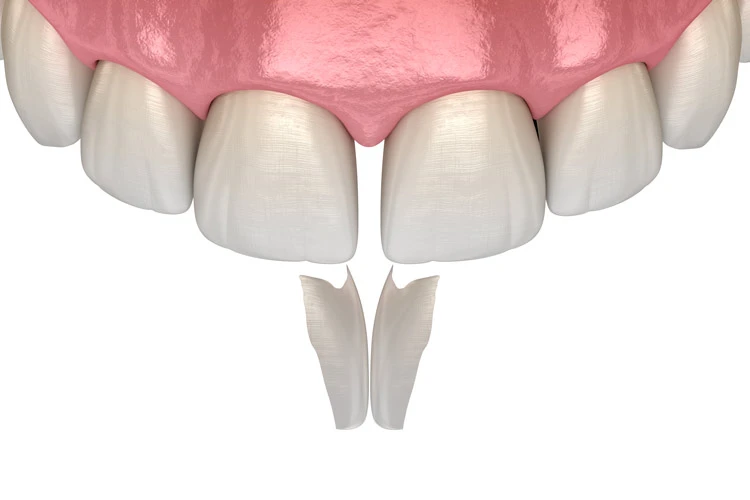
Bonding starts with an examination and treatment planning. If needed, an X-ray is used to check the depth of a crack, decay or the area around the root. The main stages of the procedure are as follows:
- Examination and planning: Tooth structure, gums, bite and your expectations are assessed.
- Shade selection: The shade of the composite resin is chosen with a shade guide that matches the natural tooth color.
- Surface preparation: The tooth is cleaned and the working area is protected from saliva. The enamel surface is prepared to support bonding.
- Applying the adhesive: An adhesive system is applied to the tooth surface. Its steps can vary with the product and the clinical situation.
- Shaping the composite: The tooth-colored resin is added to the area in small layers.
- Curing: Each layer is hardened with an LED light of the appropriate wavelength.
- Bite check: The points where the teeth contact each other are examined and any high spots are adjusted.
- Finishing and polishing: The margins are refined, the surface is smoothed and a shine close to the natural look is achieved.
For surface applications, local anesthesia is often not needed. Anesthesia may be used if decay is to be cleaned, the fracture is deep or the tooth is sensitive. The decision is based on examination findings.
How Long Does Bonding Take and How Many Visits Are Needed?
The time needed depends on the number of teeth, the size of the addition and the color layers used. A limited application on a single tooth can often be completed in 30 to 60 minutes. When several teeth are planned, the appointment can take longer.
In suitable cases, bonding can be done in one visit. If there is decay, a gum problem or a bite issue, these may need to be addressed first. For more extensive changes, try-in, planning or additional review appointments may be arranged.
Differences Between Bonding, Fillings, Veneers and Crowns
Bonding can be confused with some procedures mentioned for similar purposes. The treatment is chosen according to the remaining healthy tooth structure and chewing loads, not appearance alone.
| Procedure | Main purpose | Approach to tooth structure | Key difference |
|---|---|---|---|
| Composite bonding | To address small shape, gap, color or chip problems | Usually limited preparation is done | The material is shaped directly in the mouth |
| Composite filling | To repair the cavity left by decayed or damaged tissue | Unhealthy tissue is removed | Similar material may be used, but the clinical purpose differs |
| Porcelain veneer | To change the color and shape of the front surface more extensively | Depending on the type, enamel preparation may be needed | Mainly covers the front surface of the tooth |
| Crown | To cover a tooth with advanced loss of structure all around | Preparation is done on several tooth surfaces | Covers a wider area than composite bonding |
| Dental splint | To support a loose or traumatized tooth temporarily | Support can be taken from neighboring teeth | Not the same procedure as composite bonding |
Advantages and Limitations of Dental Bonding
Advantages Bonding May Offer
- In selected cases, most of the healthy tooth structure can be preserved.
- It is usually applied directly in the mouth and completed in one visit.
- The color and shape of the composite can be adjusted to the neighboring teeth.
- Small chips and limited gaps can be shaped with the same material.
- Minor wear or chips that develop later can sometimes be repaired.
- Finishing and polishing can be renewed at review appointments.
Limitations of Bonding
- Composite may not resist wear as well as natural tooth enamel or ceramic.
- Biting hard objects can cause the material to crack or break away.
- Coffee, tea, tobacco and similar factors can cause color change over time.
- Large fractures or heavy chewing loads may require other restorations.
- Surface shine can decrease over the years and re-polishing may be needed.
- If the natural teeth are whitened later, a color difference with the composite can appear.
One issue we see often at our clinic is a small front tooth chip being treated as a color problem only. If the bite contact that caused the chip is not corrected, the composite can be damaged again.
Is Splinting a Loose Tooth the Same as Bonding?
Stabilizing a loose tooth to the neighboring teeth with composite is called splinting. Although adhesive materials are used, this is not the same as cosmetic composite bonding. The aim is to support the mobile tooth and create suitable conditions for healing.
A permanent tooth that is loose or displaced after trauma should be assessed without delay. When mobility is due to gum disease, splinting alone may not be enough. Infection, bone support and bite loads should also be examined.
Household glues are not suitable for oral tissues. Do not try to stick a loose, knocked-out or broken tooth back with such products. Treating an injury yourself, especially after trauma, can damage the tissues around the tooth.
How Long Does Dental Bonding Last?
There is no single lifespan that applies to everyone. Patient information sources often mention a range of three to ten years. This range is not a promise of a specific duration for any individual.
How long it lasts is affected by the size of the application, the position of the tooth and bite forces. Clenching, biting hard objects, oral hygiene and regular check-ups also matter. In clinical studies, fracture, color change and loss of shape are among the main reasons for renewal.
Before the bonding is fully renewed, a small repair or polish may be enough. The decision is made by examining the condition of the composite, its margin fit and the tooth structure beneath it.
How Should You Care for Teeth After Bonding?
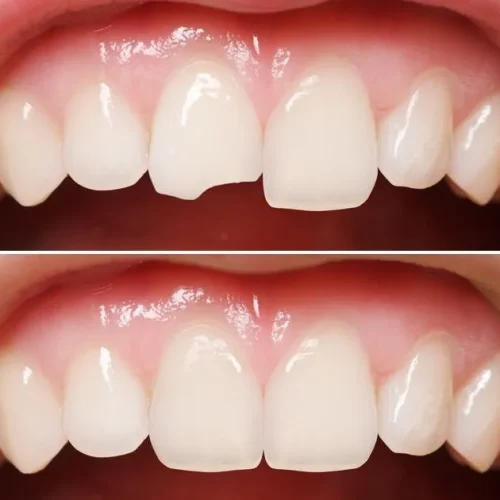
Because the composite material is cured with an LED light, no long healing period is expected. If local anesthesia was used, take care not to bite your cheek or tongue until the numbness wears off. If your dentist gives different advice, follow that advice.
- Brush your teeth gently twice a day with fluoride toothpaste.
- Clean between your teeth every day with dental floss or a suitable interdental product.
- Do not bite hard objects such as nails, pens or ice.
- Do not use your teeth to open packaging or snap thread.
- Use the mouthguard your dentist recommends for contact sports.
- If you think you clench your teeth, discuss the need for a night guard with your dentist.
- Remember that tea, coffee and tobacco can contribute to staining over time.
- Do not skip check-up and professional cleaning appointments.
A bonded tooth can still decay. Plaque build-up should be prevented, especially at the margins where composite meets the natural tooth. Do not use abrasive products or home polishing methods without asking your dentist.
Which Problems Can Occur After Bonding?
Short-term sensitivity can occur after the procedure. You may notice an edge that feels rough to your tongue or an early contact when biting. If these problems continue, the surface and the bite need to be checked.
Over time, staining, loss of shine, wear or a small fracture can develop in the composite. If a piece comes away, the tooth should be checked for decay or a new crack underneath. Do not file or glue the affected area at home.
When Should You See a Dentist?
Even a small chip that does not hurt should be assessed by a dentist. After trauma, the tooth nerve or the area around the root can be affected. Some findings call for faster assessment before any procedure:
- Severe tooth pain that starts on its own or wakes you at night,
- Swelling in the face or gums,
- A tooth becoming loose or shifting position after trauma,
- A large part of the tooth breaking off,
- A red or bleeding point visible on the fractured surface,
- Sensitivity to cold and heat that lasts a long time,
- A piece of bonding coming away or leaving a sharp edge,
- New pain when biting or an abnormal contact feeling.
The decision to use bonding rests on identifying the cause of the problem, not simply covering a small defect. When tooth structure, gums and the bite are examined together, composite bonding or alternative procedures can be considered.
Frequently Asked Questions
What does bonding mean?
Bonding means joining or attaching. In dentistry, it usually refers to shaping tooth-colored composite resin that is bonded directly to the tooth.
What is dental bonding?
Dental bonding is the use of composite resin to address small chips, limited gaps and some shape or color differences. Whether it is suitable is decided by a dental examination.
What do "bond" or "bonded teeth" mean?
These terms are usually short forms or spelling variations of bonding. If you are researching dental treatment, the procedure meant is most often composite bonding.
How is bonding done?
The tooth surface is prepared, an adhesive system is applied and tooth-colored composite is shaped in layers. After the material is cured with an LED light, the bite is checked and the surface is polished.
Does bonding hurt?
For surface bonding, local anesthesia is often not needed. Anesthesia may be required if there is decay, sensitivity or a deep fracture.
How many years does bonding last?
Sources often mention a range of three to ten years. How long it lasts depends on the size of the application, bite forces, habits and oral care.
Can bonding be done on a single tooth?
A suitable small chip or shape problem can be addressed with composite bonding on one tooth only. If the fractured natural fragment is available, reattaching it can also be considered.
Can a loose tooth be bonded in place?
Stabilizing a loose tooth with support from neighboring teeth is called splinting, and it differs from cosmetic bonding. Causes of mobility such as trauma or gum disease must also be treated.
Sources
- American Dental Association — 8 Ways to Improve Your Smile
- Cleveland Clinic — Dental Bonding
- NHS — Chipped, Broken or Cracked Tooth
- PubMed — Long-Term Survival and Reasons for Failure in Direct Anterior Composite Restorations
- PubMed — IADT Guidelines for Fractures and Luxations
- American Dental Association — Veneers