
Tooth decay is a loss of hard tooth tissue that develops when bacteria in the mouth turn sugars from food into acid. At first there is only mineral loss, but decay that progresses can create a cavity in the tooth.
Tooth decay does not always cause pain. Depending on how deep the decay is, treatment can include preventive measures, a filling, root canal treatment, a crown or tooth extraction.
What Is Tooth Decay?
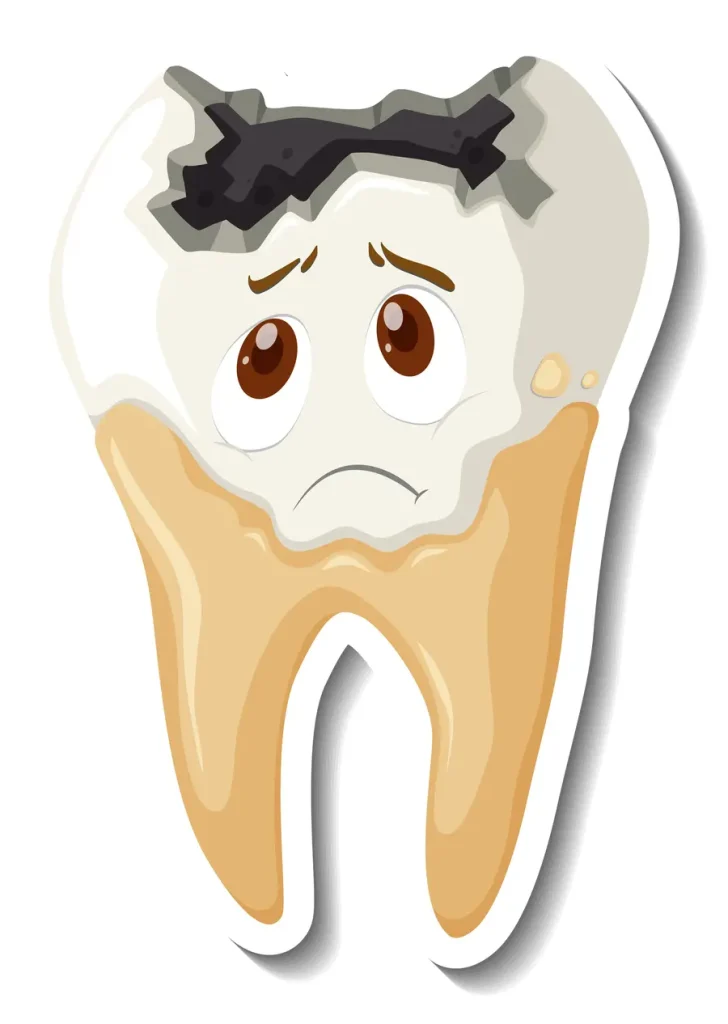
Tooth decay is not simply a visible black spot or hole. It is a disease process that begins with mineral loss on the tooth surface and can progress over time into deeper tissue.
The outer part of the tooth is a hard layer of enamel. Beneath the enamel is dentin, which is more sensitive to external factors. The pulp in the center of the tooth contains the nerves and blood vessels.
While decay is limited to the enamel, it may cause no symptoms at all. When it reaches the dentin, sensitivity to hot, cold or sweet foods can develop. If the pulp is affected, pain that starts on its own and infection can follow.
| Stage of decay | Possible findings | General approach |
|---|---|---|
| Early mineral loss | A white or dull appearance, usually no pain | Risk control and fluoride application if the dentist considers it suitable |
| Enamel decay | Color change or a small loss of surface | Monitoring or restorative treatment depending on the lesion |
| Dentin decay | A cavity, sensitivity or food packing | Removal of the decayed tissue and a filling |
| Pulp involvement | Prolonged pain, night pain or an abscess | Root canal treatment or extraction depending on the tooth |
Not every white, brown or black spot means decay. The cause of the discoloration and whether the lesion is active should be assessed at a dental examination.
How Does Tooth Decay Form and Why Do Teeth Decay?
A sticky biofilm called plaque forms on the teeth constantly. The bacteria in plaque use sugars and easily broken down carbohydrates to produce acid.
When these acid attacks are repeated often, mineral loss from the tooth enamel begins. Saliva and fluoride can help regain some of the lost minerals. But if the acid attacks outweigh that balance, decay progresses.
A cavity forming in a tooth is usually not down to a single cause. How often you eat, oral care, the amount of saliva, tooth structure and fluoride exposure all play a part together.
- Frequent sugar intake: Having sugary drinks or snacks often through the day leads to repeated acid attacks.
- Inadequate plaque removal: Not cleaning the teeth and the spaces between them regularly leaves bacterial plaque on the tooth.
- Dry mouth: Less saliva makes it harder to neutralize acids and wash away food debris.
- Gum recession: An exposed root surface is more vulnerable to decay than enamel.
- Deep pits and grooves: The chewing surfaces of the back teeth in particular can be areas where plaque collects.
- Edges of old restorations: New decay can develop around worn fillings and crowns that no longer fit well.
- Crowded teeth: Surfaces between the teeth that are hard to clean can increase the risk of decay.
- Reflux and repeated acid contact: Stomach acid can weaken the enamel. In this case a medical assessment may also be needed.
One thing we often see at our clinic is decay that is not visible from the outside because it has developed between the teeth. Regular brushing matters, but the areas the brush cannot reach also need cleaning.
What Are the Symptoms of Tooth Decay?

The symptoms of tooth decay vary with the location and depth of the lesion. There may be no complaints at all in the early stage.
- White, brown or black discoloration on the tooth surface
- A visible hole, pit or fracture
- Sensitivity triggered by sweet, hot or cold
- Pain when biting or chewing
- Food constantly packing between the teeth
- Toothache that starts on its own or wakes you at night
- A bad taste or bad breath in a particular area
- Swelling of the gum or the face
- Infected discharge from around a tooth
Can Tooth Decay Be Painless?
Yes, decay that is limited to the enamel or progressing slowly may cause no pain. A lack of pain does not mean the tooth is healthy or that treatment is unnecessary.
Decay between the teeth and lesions under old fillings can go unnoticed for a long time. Waiting until pain starts before seeing a dentist can reduce the chance of early treatment.
What Causes Pain From a Decayed Tooth?
When decay progresses into the dentin, stimuli such as temperature and sugar reach the nerve more easily. This can cause short-lived sensitivity.
When decay approaches the pulp, or the pulp becomes inflamed, the pain can last longer. Pain that starts on its own, throbs or increases at night can suggest deeper involvement.
How Is Tooth Decay Treated?

Treating tooth decay is not simply removing the dark part. The aim is to control the disease process, protect healthy tissue and maintain the function of the tooth.
The choice of treatment depends on the depth of the lesion, whether the tooth is vital, how much sound tissue remains and the person's risk of decay. Not every decayed tooth needs extraction and not every discoloration needs a filling.
Early-Stage Decay
In early lesions where no cavity has formed yet, it may be possible to stop the mineral loss. Adjusting how often you eat, plaque control and professional fluoride applications can be considered.
This approach applies only to suitable lesions selected by a dentist. A cavity that has already formed is not expected to close with home care or toothpaste.
Fillings
If there is a cavity that needs cleaning, the damaged tissue is removed in a controlled way. The resulting space is restored with a filling material suited to the structure and position of the tooth.
With deep decay, the dentist may use controlled removal techniques that preserve sound tooth tissue in order to protect the pulp. The method used depends on the clinical and radiographic findings.
Root Canal Treatment
If decay has affected the pulp irreversibly or caused infection, root canal treatment may be needed. The canal system is cleaned, shaped and filled with a suitable material.
After root canal treatment, a filling or a crown can be planned depending on how much tooth structure has been lost. Whether the tooth can be restored is assessed separately.
Crowns
If a large part of the tooth has been lost to extensive decay or a fracture, a crown can be considered. The decision depends not only on the size of the decay but also on the strength of the remaining tissue.
Tooth Extraction
Extraction can be considered if the tooth cannot be restored, there is serious damage to the root or the infection cannot be brought under control. The decision is made after an examination and any necessary imaging.
What Does Removing Tooth Decay Involve?
Removing tooth decay means the controlled removal of diseased tissue by a dentist. Teeth cleaning removes surface deposits but does not treat a cavity that has already formed.
Scraping decay at home with a sharp object does not treat the tooth. Doing so can injure sound tissue, the gum or the pulp.
How Is Tooth Decay Diagnosed?

Diagnosis starts with listening to your complaints and an intraoral examination. The teeth are checked for discoloration, loss of surface, sensitivity, fractures and the edges of restorations.
The surfaces between the teeth and the area under fillings may not be directly visible. If the dentist considers it necessary, a dental radiograph can be used to assess the location and depth of the decay. A radiograph is not needed at every examination.
With deep lesions, pulp tests such as a cold test, tapping and a bite assessment may be used. These findings help in deciding between a filling, root canal treatment or extraction.
A tooth looking dark does not on its own establish a diagnosis of decay. Old fillings, surface stains, cracks and developmental color changes can create a similar appearance.
What Helps a Decayed Tooth?
Methods used at home do not remove decay. They can only help reduce pain or discomfort temporarily until you can see a dentist.
- Keep cleaning your teeth with gentle movements.
- Carefully remove food packed between the teeth with floss or a suitable interdental product.
- Rinse your mouth gently with warm water.
- Avoid chewing hard foods with the painful tooth.
- Limit very hot, cold or sugary foods that increase sensitivity.
- If there is swelling, apply cold to the outside of the cheek at short intervals.
Do not place a painkiller tablet on the tooth or the gum. Caustic chemicals and sharp objects can damage the tissue. Ask a doctor or pharmacist about using medication.
Even if the pain eases, the decayed tissue can remain. The complaint going away does not mean the disease process has stopped.
What Happens If a Decayed Tooth Is Not Extracted?
Not every tooth with decay needs to be extracted. For teeth that can be restored, options such as a filling, root canal treatment or a crown can be considered.
With advanced decay where extraction is indicated or treatment is postponed, pain, an abscess, swelling and tooth fracture can develop. The infection can spread to the surrounding soft tissues and the jawbone.
An untreated tooth can become impossible to restore over time. On the other hand, it cannot be said that decay directly causes flu, diabetes or rheumatism.
When Should You See a Dentist?
An examination should be arranged when you notice a cavity, discoloration, sensitivity or repeated food packing. An assessment before pain starts can help preserve more sound tissue.
See a dentist without delay if you have the following signs:
- Pain that starts on its own or wakes you at night
- Swelling of the face, jaw or gum
- Fever, a bad taste or infected discharge
- A fractured or clearly loose tooth
- Pain that prevents you from biting
If there is swelling together with difficulty breathing or swallowing, seek emergency medical care. Swelling that spreads to the neck or around the eye also needs urgent assessment.
How Can Tooth Decay Be Prevented?
The risk of tooth decay cannot be controlled with a single product. Effective prevention rests on regular oral care, eating habits and dental check-ups suited to you, carried out together.
- Brush your teeth twice a day with fluoride toothpaste.
- Clean between your teeth every day with floss or a suitable interdental brush.
- Do not spread sugary foods and drinks across the day in frequent portions.
- Stay hydrated and have the cause of any dry mouth assessed.
- Do not let children fall asleep with drinks containing sugar.
- Take care to clean around orthodontic appliances and restorations.
- Set your check-up interval according to the personal risk plan your dentist sets.
In people at high risk of decay, professional fluoride applications or fissure sealants can be considered. Whether these are needed depends on age, tooth structure and current risk factors.
Frequently Asked Questions
Does tooth decay go away on its own?
Early mineral loss, before a cavity has formed, can be halted with a professional assessment and suitable preventive measures. A cavity that has already formed does not close on its own.
Should painless tooth decay be treated?
Yes. Decay may cause no pain while it is limited to the enamel or sits between the teeth. An early assessment can help preserve more tooth tissue.
What happens if a decayed tooth is not extracted?
Not every decayed tooth needs extraction, and teeth that can be restored are treated in other ways. Advanced decay left untreated can lead to pain, an abscess, fracture and tooth loss.
How is tooth decay removed?
The decayed tissue is removed in a controlled way by a dentist and a filling is placed if needed. Scraping at home or applying chemicals does not treat the tooth.
What helps a decayed tooth?
Rinsing with warm water, careful cleaning between the teeth and not chewing with the painful tooth can bring temporary relief. Because these methods do not remove the decay, a dental assessment is needed.
Does a decayed tooth need a filling or root canal treatment?
Decay limited to the enamel or dentin is usually treated with a filling. If the pulp has been irreversibly affected or infected, root canal treatment may be needed.
Is tooth decay contagious?
The cavity in a tooth does not pass from person to person. However, some oral bacteria linked to decay can be shared through saliva; hygiene, diet, saliva and many other factors play a part in how the disease develops.