
A dental cyst is a pathological cavity that mostly develops in the jawbone or around a tooth root and can fill with fluid or semi-solid content. Small cysts may cause no symptoms and are often noticed on a routine dental X-ray.
A dental cyst cannot be removed with home remedies. Treatment is planned according to the type, size and position of the cyst and the condition of the tooth involved. Root canal treatment, surgical removal, procedures that relieve pressure or tooth extraction may be needed.
What Is a Dental Cyst?
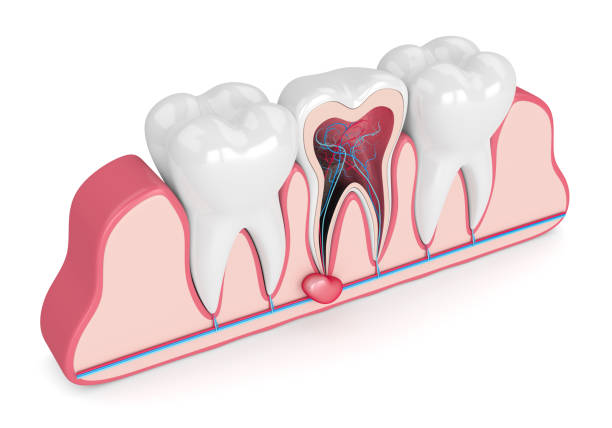
Cysts that arise from teeth or from the tissues that form teeth are called odontogenic cysts. These growths have a cellular lining in their wall. The content of the cyst and its effect on surrounding tissues can vary with the type.
A dental cyst is not the same as an abscess, a granuloma or a tumor. However, these lesions can look similar on an X-ray. For that reason, a definite diagnosis cannot be made from an image alone.
As cysts grow, they can thin the surrounding bone. They can cause nearby teeth to shift, become loose or fail to erupt. If infection develops, pain and swelling can appear.
One situation we see often at our clinic is a lesion found on an X-ray being postponed because there is no pain. The absence of symptoms does not remove the need for a dental assessment.
What Causes a Cyst on the Gum?
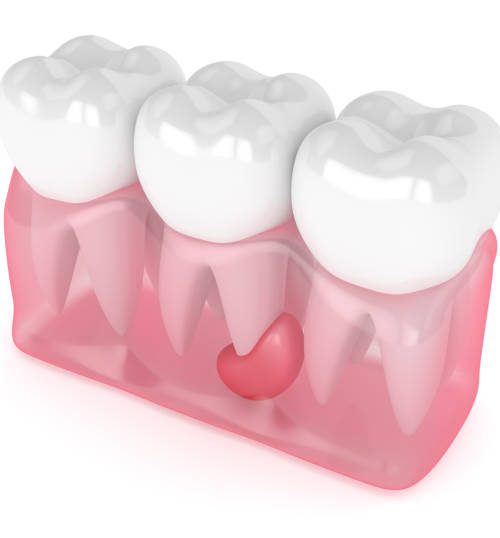
Not every bump that looks like a cyst on the gum is a true cyst. A drainage tract from a tooth root infection, a gum abscess, a mucocele or another soft tissue growth can look similar.
When a cyst that starts at a tooth root thins the bone, it can be noticed as a swelling on the gum. In children, a blue or translucent bump over an erupting tooth may be an eruption cyst.
Main Causes of Cysts Around Teeth and Gums
- Deep decay: Infection reaching the pulp can cause the tooth to lose vitality and an inflammatory lesion to develop at the root tip.
- Dental trauma: A tooth that takes a blow can lose vitality over time. Chronic inflammation at the root tip can be linked to the formation of a periapical cyst.
- Impacted or unerupted teeth: A dentigerous cyst can develop around the crown of an unerupted tooth. This can be linked to wisdom teeth.
- Cell remnants from tooth development: Some cysts arise for developmental reasons, independent of inflammation.
- A previously extracted tooth: If cyst tissue remains in the area, a residual cyst can appear in the extraction site.
A mucocele in the lip or cheek is usually linked to the minor salivary glands. A mucocele is not the same growth as a tooth root cyst.
What Are the Symptoms of a Dental Cyst?
The symptoms of a dental cyst vary with its size, whether it is infected and the structures around it. Small cysts may cause no complaints for a long time.
- Slowly developing swelling in the gum or jaw
- Tenderness when biting and chewing
- Throbbing pain if there is infection
- A loose or displaced tooth
- Delay in a tooth that is expected to erupt
- A bad taste or discharge in the mouth
- Noticeable asymmetry on one side of the face
- Rarely, numbness in the lip or jaw
A small opening on the gum that looks like a pimple may be a tract where infection around the root drains into the mouth. Even if the discharge eases the pain, the underlying cause can continue.
Which Symptoms Need Urgent Assessment?
If there is rapidly increasing facial swelling, fever or a decline in general condition, seek medical care without delay. The following symptoms require urgent assessment:
- Difficulty breathing, speaking or swallowing
- Rapidly increasing swelling in the floor of the mouth or the neck
- Clear difficulty opening the mouth
- Swelling, pain or vision changes around the eye
- Widespread facial swelling with a high fever
What Are the Types of Dental Cyst?

Dental cysts are not a single disease. The common types differ in where they appear and why they form.
| Type of cyst | Usual location | Main feature |
|---|---|---|
| Periapical or radicular cyst | Root tip of a tooth that has lost vitality | Linked to chronic inflammation from deep decay or trauma. |
| Dentigerous cyst | Around the crown of an unerupted tooth | Can be linked to an impacted tooth and may prevent it from erupting. |
| Eruption cyst | The gum over an erupting tooth | Seen mostly in children as a blue, purple or translucent swelling. |
| Residual cyst | A site where a tooth was previously extracted | Linked to inflammatory cyst tissue that was left in the area. |
| Odontogenic keratocyst | The jawbone | Developmental in origin and may require regular clinical and radiographic follow-up. |
| Gingival cyst | Soft tissue of the gum | Usually forms a small bump. It must be told apart from lesions that look similar. |
How Does a Dental Cyst Look on an X-ray?
On an X-ray, a dental cyst can usually be seen as a well-defined round or oval dark area. Some lesions appear as a single cavity, others look divided into compartments.
This image only gives information about possible diagnoses. Granulomas, some benign growths and other jaw lesions can create a similar appearance.
Pictures of dental cysts on the internet are not enough for anyone to diagnose their own swelling. A definite assessment can use the following methods:
- Examination of the mouth and jaws
- Vitality tests on the teeth involved
- Periapical or panoramic X-rays
- Three-dimensional imaging where needed
- Pathological examination of the removed tissue
Three-dimensional imaging is not required for every patient. It can be chosen when the cyst's relationship with nerves, the sinus, tooth roots and surrounding bone needs to be examined.
How Is a Dental Cyst Treated?

There is no single answer to how a dental cyst is treated. Treatment is planned individually, based on the diagnosis and on whether the tooth involved can be saved.
Root Canal Treatment
If the periapical lesion comes from a tooth that has lost vitality, root canal treatment can be carried out. The aim is to remove the source of infection in the root canals and support healing of the tissues.
Not every root tip lesion resolves with root canal treatment alone. After the procedure, healing needs to be monitored with clinical examination and follow-up X-rays.
Surgical Removal of the Cyst
Removing the whole cyst together with its surrounding capsule is called enucleation. The removed tissue can be sent for pathological examination to confirm the diagnosis.
Apical surgery can be considered for root tip lesions that persist despite root canal treatment. During this procedure, part of the root tip and the pathological tissue around it are removed.
Marsupialization or Decompression
With large cysts, the pressure can be reduced gradually to protect the surrounding nerves, teeth or bone. Marsupialization or decompression can help the cavity shrink over time.
These procedures require regular care and review. Once the cyst has become smaller, a second surgical procedure may be planned.
Tooth Extraction
If the tooth involved cannot be restored or the root support is severely damaged, extraction may be considered. The cyst tissue may also need to be cleaned out and examined properly.
Follow-Up
For some small lesions without symptoms, the dentist may recommend follow-up with imaging. A decision to monitor should only be made once the diagnosis and the behavior of the lesion have been assessed adequately.
Use of Antibiotics
Antibiotics do not remove the cyst cavity on their own. If there is widespread infection or systemic signs, a dentist may add them to treatment with a prescription.
Unnecessary antibiotic use is not appropriate. The source of infection must be controlled with methods such as root canal treatment, drainage, surgery or extraction.
Is a Dental Cyst Dangerous?
A small, uninfected cyst may not cause serious symptoms right away. However, growing cysts can weaken bone, affect teeth or press on nerve tissue.
Delaying treatment does not lead to the same outcome in every patient. The type of cyst, its tendency to grow and whether it is infected all matter in assessing the risk.
Can a Dental Cyst Be Fatal?
A dental cyst itself is usually not a life-threatening condition. In contrast, serious dental infections spreading from an infected lesion can rarely affect the airway.
If rapidly increasing swelling, fever, or difficulty swallowing or breathing occurs, get emergency help. These symptoms should not be monitored at home.
Is a Cyst on the Gum Cancer?
Most odontogenic cysts are not cancer. Even so, it is not correct to judge every swelling in the mouth as a cyst from its appearance.
Different lesions that resemble a cyst can appear on an X-ray. In suspicious cases, the distinction is made by examining the removed tissue under a microscope.
A mouth sore lasting more than three weeks, a red or white patch, or an unexplained lump should be assessed. These findings do not mean cancer, but they do need an examination.
What Should You Pay Attention To After Dental Cyst Surgery?
Advice after surgery can vary with the extent of the procedure and where the cyst was. Above all, follow the personal instructions of the dentist who carried out the surgery.
- Keep the gauze given for bleeding control in place for the time recommended.
- On the first day, avoid vigorous rinsing, spitting and disturbing the wound area.
- Choose warm, soft foods and stay away from very hot food.
- Continue gentle oral care around the wound.
- Do not use cigarettes or tobacco products, as they can affect healing.
- Use prescribed medication only as your dentist has directed.
- Do not miss review appointments or the pathology result appointment.
Mild swelling and discomfort can occur after the procedure. See your dentist if swelling keeps increasing, bleeding does not stop, or there is fever, foul-smelling discharge or difficulty breathing.
What Helps a Dental Cyst at Home?
There is no home method shown to shrink or remove a dental cyst. Trying to pierce, squeeze or cut a cyst can increase the risk of infection and tissue damage.
Until your appointment, keeping the area clean and not irritating it with hard foods can help. Even if the pain goes away, do not postpone the planned dental check-up.
There is no reliable evidence that baking soda, garlic or similar substances treat a cyst. These substances can irritate the tissues in the mouth.
Can Dental Cysts Be Prevented?
It is not possible to prevent all developmental cysts. To reduce the risk of cysts caused by decay and infection, the following steps can help:
- Have tooth decay treated before it progresses
- Have teeth that took a blow checked even if there is no pain
- Have impacted teeth monitored as your dentist advises
- Brush your teeth regularly and clean between them
- Attend regular dental examinations based on your personal risk
If you notice unexplained swelling, discharge or a color change on your gum, arrange an examination. Early assessment can make it easier to determine the scope of treatment needed.
Frequently Asked Questions
How is a dental cyst treated?
A dental cyst cannot clear up on its own at home. Depending on the type, root canal treatment, surgical removal, decompression, follow-up or tooth extraction may be planned.
Can a dental cyst be fatal?
A dental cyst itself is usually not life-threatening. However, if serious swelling spreading from an infected lesion affects breathing or swallowing, urgent assessment is needed.
Is a cyst on the gum cancer?
Most bumps on the gum are not cancer, and not every bump is a cyst. Examination, imaging and, where needed, pathological analysis give the definite answer.
What helps a dental cyst?
There is no home method proven to remove a cyst. Keep the area clean without squeezing it and do not delay a dental examination.
Does a tooth with a cyst always have to be extracted?
No. If the tooth can be restored and the lesion is suitable, it may be possible to save it with root canal treatment or apical surgery. The decision is based on examination and X-ray findings.
How does a dental cyst look on an X-ray?
Most cysts appear as a well-defined dark area on an X-ray. Because other lesions can look similar, an X-ray alone does not give a definite diagnosis.
Do antibiotics cure a dental cyst?
Antibiotics do not remove the cyst cavity. If there is widespread infection or systemic signs, a dentist may add them to treatment with a prescription.