
A tooth extraction is the removal of a tooth from its socket when the tooth cannot be saved or risks damaging the surrounding tissues. The procedure can be done with a simple or a surgical technique after an examination and radiographic assessment. The need for extraction is judged together with the position of the tooth and your overall oral health.
Not every painful or decayed tooth has to come out. If a filling, root canal treatment or another protective option is suitable, those are considered first. When the tooth cannot be preserved, extraction may be planned to stop infection and damage to nearby tissue from progressing.
Why Is a Tooth Extracted?

The decision to extract a tooth is not based on the severity of pain alone. The dentist considers whether the tooth can be repaired, its bone support, root anatomy and your overall treatment plan.
The main reasons for extraction are:
- Decay too advanced to be repaired with a filling or root canal treatment
- Severe loss of bone support caused by gum disease
- Fractures and cracks that extend below the gum line
- Teeth seriously damaged by trauma
- Repeated infection, abscess or problems around the root
- Impacted or partially impacted teeth that harm the neighboring tooth
- The need to create controlled space during orthodontic treatment
- Teeth that block a denture or other oral treatments
Before an extraction, the dentist checks whether any option could still save the tooth. One situation we see often in our clinic is a tooth that looks broken being assumed to need extraction before its root structure has been examined. A clinical examination is required for a firm decision.
What Is Assessed Before a Tooth Extraction?
The dentist examines the mouth and requests a radiograph when needed. The number and shape of the roots, their relationship with the bone and the nearby anatomical structures are reviewed. With impacted wisdom teeth, proximity to the nerve canal matters as well.
You need to report all of your medications and existing conditions in full. Blood thinners, diabetes, immune problems, pregnancy and treatments that affect bone metabolism are particularly important. You should not stop a prescribed medicine on your own decision.
Most extractions are done under local anesthesia. If your anxiety level, the scope of the procedure and your health status are suitable, options such as sedation may also be considered. General anesthesia is not a routine requirement.
How Is a Tooth Extracted?
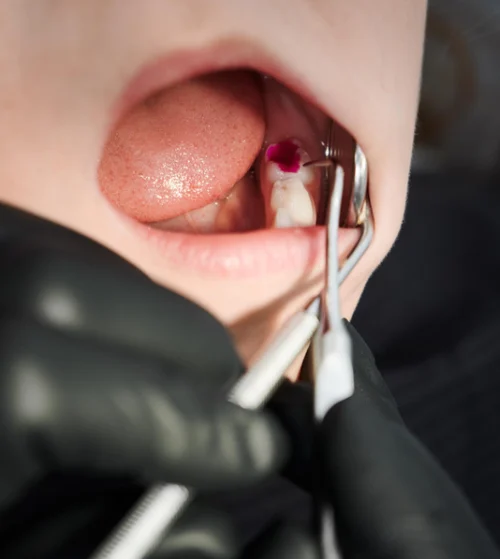
The area is numbed with local anesthesia. You may feel pressure and movement during the procedure. If you feel sharp pain, tell the dentist right away.
Instruments such as elevators and forceps may be used to loosen the tooth in its socket in a controlled way. Depending on the root anatomy and the position of the tooth, a simple or a surgical extraction is performed.
| Type of Extraction | When It May Be Used | General Process |
|---|---|---|
| Simple extraction | Teeth visible in the mouth that can be gripped with an instrument | The tooth is loosened and lifted out of its socket with controlled movements. |
| Surgical extraction | Impacted or broken teeth, teeth left under the gum or with complex roots | Access through the gum may be created, a limited amount of bone may be removed and the tooth may be sectioned. |
After the tooth is removed, the socket is checked. The area is cleaned and stitched if needed. Not every extraction requires an incision, bone removal or sutures.
How Long Does a Tooth Extraction Take?
The active part of a simple extraction can take a few minutes. With more complex teeth, the procedure may extend to roughly 30 to 40 minutes. The examination, waiting for the anesthesia to take effect and the post-procedure checks add to the total appointment time.
The time needed to extract a decayed tooth does not depend on the size of the cavity alone. The angle of the roots, how brittle the tooth is, its position in the mouth and the bone structure are more decisive. If several teeth are to be removed, the schedule is planned accordingly.
Which Tooth Is the Hardest to Extract?
There is no single "hardest tooth" that applies to everyone. Lower wisdom teeth lying horizontally in the bone, molars with curved roots and teeth that fracture below the gum line can be more complex.
Extracting a molar is not always difficult. A molar that has fully erupted and has favorable roots can be removed with the simple technique. The root anatomy seen on the radiograph matters more than the name of the tooth when difficulty is assessed.
What Is Wisdom Tooth Extraction Like?
Wisdom teeth usually start to erupt in late adolescence or in the early twenties. However, the timing and the position in the jaw vary from person to person. Some erupt completely, while others stay partly or fully impacted.
Does a Wisdom Tooth Always Have to Be Removed?
No. A wisdom tooth that is healthy, can be cleaned and does not harm the surrounding tissues can be monitored with regular check-ups. The thought that it might cause trouble later is not, on its own, a reason to extract it in every patient.
Extraction may be considered if there is recurring gum infection, decay that cannot be repaired, an abscess, a cyst, damage to the neighboring tooth or an inability to clean the area. The decision is based on the examination and radiographic findings.
How Is an Impacted Wisdom Tooth Removed?
A controlled incision may be made in the gum over the impacted tooth. A limited amount of bone may need to be removed for access. The tooth may be divided into several pieces to protect the surrounding tissues.
If the roots of a lower wisdom tooth lie close to the nerve canal, detailed imaging may be requested. The surgical technique and possible risks are explained according to your own anatomy. Where necessary, different treatment options are considered.
What Does the Area Look Like After Wisdom Tooth Removal?
In the first hours, a dark blood clot may be visible in the socket. In the following days, a lighter healing layer may form. This area should not be disturbed with the tongue, a finger or any object.
Swelling and temporary limits on jaw movement can occur, especially after surgical extractions. The symptoms are expected to ease gradually after the first few days. Increasing pain or a bad taste needs to be assessed.
Can a Painful or Infected Tooth Be Extracted?
Pain or a local infection alone does not rule out extraction. If the tooth cannot be saved, it may be removed to eliminate the source of infection. However, widespread swelling, fever, difficulty opening the mouth and your general health affect the timing.
Not every infected tooth needs antibiotics. The need for antibiotics is decided by the dentist after assessing how far the infection has spread and whether there are systemic symptoms. You should not start medication yourself or use leftover pills.
What Should You Pay Attention to After a Tooth Extraction?
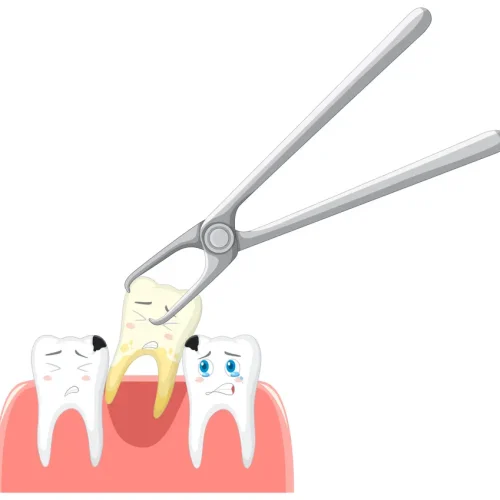
The blood clot that forms in the socket is the first stage of healing. Protecting the clot for the first 24 hours helps reduce the risk of bleeding, dry socket and delayed healing.
- Bite down on the gauze placed by your dentist for the stated time.
- Avoid vigorous rinsing, spitting and using a straw for the first 24 hours.
- Do not eat or drink anything very hot until the numbness wears off.
- Choose soft foods in the first days and chew on the other side.
- Do not touch the extraction site with your tongue or finger.
- Avoid heavy exercise on the first day; stay away from smoking and alcohol.
- Brush your other teeth, but do not touch the socket directly.
- Use the medicines prescribed by your dentist only as directed.
After the first 24 hours, you can continue with gentle oral hygiene as advised by your dentist. When and how you rinse may change according to the scope of the procedure.
| Period | What Is Usually Expected | What to Watch For |
|---|---|---|
| First 24 hours | Slight oozing, numbness and clot formation | Avoid vigorous rinsing and spitting. |
| First 2-3 days | Pain and swelling may rise and then start to ease. | See your dentist if symptoms worsen quickly. |
| 1-2 weeks | The gum tissue recovers noticeably. | The deeper part of the socket may not be filled in yet. |
| Following weeks | The extraction gap shrinks step by step. | Healing speed varies with the scope of the extraction. |
What Is Dry Socket?
Dry socket (alveolar osteitis) is a painful condition that can develop when the clot does not form or is lost early. The pain usually intensifies within the first few days instead of easing. Pain radiating to the ear or jaw and a bad taste can occur.
If you suspect dry socket, do not try to scrape the socket or apply any substance at home. The area needs to be assessed by a dentist.
When Should You See a Dentist?
- Noticeable bleeding that does not stop despite pressure
- Pain that increases after the first days or becomes hard to bear
- Swelling of the face or neck that keeps growing
- Fever, fatigue, a bad taste or foul-smelling discharge
- Difficulty breathing or swallowing
- Numbness that lasts longer than expected or gets worse
Difficulty breathing or swallowing requires emergency assessment. People taking blood thinners should not stop their medication on their own if bleeding occurs after an extraction.
Tooth Extraction Prices 2026

The guide fee schedule of the Turkish Dental Association (TDB), valid from 1 January 2026, has been published for all provinces and districts including Bursa. The guide fees below are in Turkish lira (TL), include VAT and vary by the type of procedure.
| Procedure Group | 2026 TDB Guide Range (VAT Included) |
|---|---|
| Simple and complicated tooth extraction | 2,475–4,950 TL |
| Surgery for impacted and bone-retained teeth | 7,975–11,715 TL |
These ranges are for information only; the final fee is set after an examination. They are not the clinic's fixed prices. The position of the tooth, the extraction technique, the need for imaging and the scope of the procedure can affect the fee plan.
How Is the Gap From an Extracted Tooth Restored?
Apart from wisdom teeth, the gap left by an extracted permanent tooth usually does not fill in with a new tooth on its own. Neighboring teeth may drift over time and the opposing tooth may over-erupt.
Whether the gap needs to be restored depends on the position of the tooth, your bite and the condition of the other teeth. Dental implant, bridge or removable denture options can be planned after healing and the bone structure are assessed.
Frequently Asked Questions
Is having a tooth pulled difficult?
The difficulty depends on the position of the tooth, the shape of the roots, whether it is broken and how it sits in the bone. Simple extractions can be short, while impacted teeth or complex roots may require surgery.
What instruments are used and how is a tooth extracted?
After local anesthesia, the tooth is loosened in a controlled way with special instruments such as elevators and forceps, then removed. A surgical extraction may require access through the gum or sectioning the tooth.
How many minutes does it take to extract a decayed tooth?
A simple extraction can take a few minutes; complex procedures may extend to about 30-40 minutes. Root anatomy, brittleness and the position of the tooth affect the time more than the depth of the decay.
How many teeth can be extracted in one day?
There is no fixed number that applies to everyone. A personal plan is made after assessing your general health, the anesthesia to be used, the position of the teeth and healing conditions.
Is a painful tooth always extracted?
Not every painful tooth is extracted; the dentist first assesses whether it can be saved with a filling or root canal treatment. Extraction may be planned for teeth that cannot be saved.
Is wisdom tooth extraction difficult?
A fully erupted wisdom tooth can be removed with the simple technique. The process can be more complex for teeth that stay in the bone, lie horizontally or sit close to the nerve.
Does a wisdom tooth definitely have to be removed?
No. Wisdom teeth that cause no problems and can be cleaned may be monitored with regular check-ups. Extraction may be considered if there is infection, decay, a cyst or damage to the neighboring tooth.
How many days does it take for an extraction site to heal?
In most people the gum tissue recovers noticeably within 1-2 weeks. Filling of the deeper part of the socket with bone takes longer and varies with the scope of the procedure.
Sources
- Turkish Dental Association (TDB) 2026 Guide Fee Schedule Booklet
- NHS: Wisdom Tooth Removal
- University College London Hospitals: Dental Extractions Post-operative Instructions
- Mayo Clinic: Dry Socket
- PubMed: Reasons for Tooth Removal in Adults—A Systematic Review
- PubMed: Diagnosis and Indications for the Extraction of Third Molars