
Fluoride is the ion form of the element fluorine, which occurs in nature. When it contacts the tooth surface, it supports the enamel against acid attacks and can slow the progress of early decay.
Used in the right amount, fluoride helps protect teeth against decay. The risk of harm depends on the dose, the length of exposure and whether the product is swallowed. Using the recommended amount of fluoride toothpaste is not the same as high environmental fluoride exposure.
What Is Fluoride?
Fluoride is an ion found naturally in soil, rocks, water and some foods. It appears as "fluoride" on product labels and in scientific publications.
Fluorine and fluoride are not the same thing. Fluorine is a chemical element. Fluoride is the negatively charged ion formed when a fluorine atom gains an electron, or a compound containing that ion.
When a label says "contains fluoride", it means the product includes fluoride. Toothpastes may contain different fluoride compounds, such as sodium fluoride, stannous fluoride or sodium monofluorophosphate.
What Does Fluoride Do?

Bacteria in the mouth produce acid by using sugar and other fermentable carbohydrates. These acids can cause mineral loss from tooth enamel, a process called demineralization.
Together with the calcium and phosphate in saliva, fluoride supports the mineral balance at the enamel surface. In this way it can help early mineral loss be regained.
The main effects of fluoride on teeth are as follows:
- It supports the resistance of tooth enamel to acid attacks.
- It helps remineralization in early decay lesions.
- It can limit acid production by plaque bacteria to a certain extent.
- Combined with regular oral care, it can lower the risk of new decay.
Fluoride alone does not prevent every cavity. Effective protection also needs regular brushing, cleaning between the teeth and less frequent sugar intake.
What Are the Harms of Fluoride?
The possible harms of fluoride are mostly linked to swallowing more than needed or to long-term high environmental exposure. Not every fluoride source and pattern of use carries the same risk.
| Possible Problem | When the Risk Increases | Likely Signs |
|---|---|---|
| Dental fluorosis | Swallowing excess fluoride over a long period while the teeth are developing | White lines or patches; in severe cases brown discoloration and an irregular surface |
| Acute overdose | Swallowing a large amount of a fluoride product in a short time | Nausea, vomiting, abdominal pain or diarrhea |
| Skeletal fluorosis | High environmental fluoride exposure over many years | Stiffness, pain or restricted movement in bones and joints |
| Irritation of the oral tissues | Developing a sensitivity to an ingredient in the toothpaste | Burning, redness, peeling or sore-like changes |
Dental Fluorosis
Dental fluorosis can occur when developing permanent teeth are exposed to more fluoride than needed over a long period. One of the most common causes is young children regularly swallowing too much toothpaste.
Mild fluorosis may appear only as fine white lines. More obvious color and surface changes need a dental assessment so they can be told apart from other enamel development disorders.
Swallowing Large Amounts of Fluoride
Toothpaste is not made to be eaten or swallowed. Swallowing a large amount at once can cause stomach and bowel complaints.
If a child develops nausea, repeated vomiting, abdominal pain or marked weakness, urgent medical assessment is needed. The product packaging should be shown to the health care team.
Long-Term High Environmental Exposure
Skeletal fluorosis is usually linked to regions where water with naturally high fluoride levels has been consumed for years. It is not the same type of exposure as normal toothpaste use.
People who use well water, or who suspect the mineral content of their water, can have it analyzed. The results should be reviewed by a health professional together with all fluoride sources.
Fluoride and the Neurodevelopment Debate
The effects of fluoride on neurodevelopment are being studied in scientific research. In its 2024 review, the US National Toxicology Program reported an association between high estimated exposure and lower IQ scores in children.
Most of these findings relate to drinking water levels above the World Health Organization guideline value. For lower exposure levels the results are not clear. An observational association alone does not prove cause and effect.
For that reason, saying "fluoride has been proven harmful at every amount" does not reflect the scientific data correctly. The source, level and duration of exposure must be considered together.
Is Fluoride Toothpaste Harmful?
Fluoride toothpaste is not considered harmful for most people when it is used in the right amount and spat out. Systematic reviews show that fluoride toothpastes reduce decay more than fluoride-free products.
The risk rises mainly when young children use too much paste and swallow it regularly. Adults should also avoid swallowing toothpaste and follow the usage warnings on the packaging.
Burning or peeling in the mouth after toothpaste is not always caused by fluoride. Flavorings, foaming agents and preservatives can also cause sensitivity. If the complaint keeps coming back, review the product ingredients with your dentist.
Is Sodium Fluoride Harmful?
Sodium fluoride is one of the common compounds that provide fluoride in toothpaste. At a suitable concentration and with correct use, its purpose is to support enamel against decay.
The risk from sodium fluoride also depends on the total amount taken in. Swallowing the product, children eating paste from the tube, or uninformed use of several fluoride sources at once can increase that risk.
How Should Children Use Fluoride Toothpaste?
With children, the aim is to deliver enough fluoride to the tooth surface while reducing how much paste is swallowed. Brushing should start after the first tooth appears and should be done or supervised by an adult.
| Age Group | General Amount of Toothpaste | Key Precaution |
|---|---|---|
| From the first tooth to age 3 | A thin smear the size of a grain of rice | An adult should apply the paste and supervise brushing |
| Ages 3-6 | A pea-sized amount | The child should be taught to spit the paste out |
| Older children | As stated in the product instructions and advised by the dentist | Supervision should continue until brushing skills are good enough |
The fluoride concentration of a product is shown on the packaging as a "ppm" value. The child's age, decay risk and other fluoride sources matter when choosing a suitable product.
Young children should not be allowed to eat paste from the tube. Toothpaste should be kept out of their reach, and only the necessary amount should be used when brushing.
Differences Between Fluoride and Fluoride-Free Toothpaste
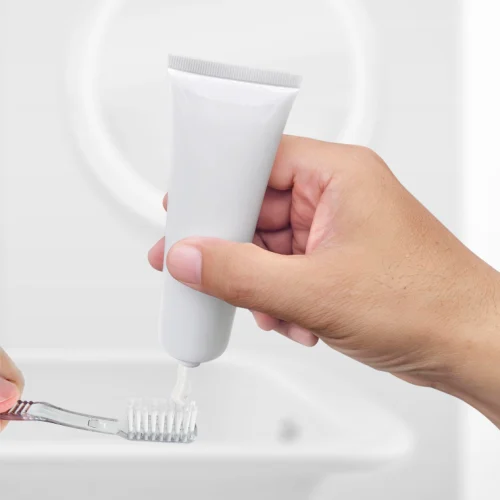
Thanks to their abrasive ingredients, fluoride-free toothpastes can help remove plaque and food debris physically. However, they do not provide the anti-decay effect fluoride has on enamel.
| Feature | Fluoride Toothpaste | Fluoride-Free Toothpaste |
|---|---|---|
| Contribution to plaque removal | Yes | Yes |
| Support for enamel remineralization | Supports it through fluoride | Does not provide the same fluoride effect |
| Evidence for decay prevention | Stronger | More limited |
| Fluorosis risk from swallowing | Present with excessive use in young children | No fluoride-related fluorosis risk |
| Who is it considered for? | Most children and adults | People with special needs, on a dentist's advice |
Does Fluoride-Free Toothpaste Have Harms?
Fluoride-free toothpaste does not have to be harmful in itself. Its main drawback is the loss of the decay protection that fluoride provides.
That gap can matter more in people who get frequent decay, have a dry mouth, wear orthodontic appliances or cannot keep up adequate oral care. The choice should be based on individual decay risk.
People who want to use a fluoride-free product should read the ingredient list. The word "natural" does not mean a product will not irritate anyone or that it will prevent decay.
Is Professional Fluoride Application Harmful?
Fluoride varnish, gel or similar professional applications are not routinely needed for every patient. The dentist assesses the need based on age, existing decay, enamel structure and oral hygiene.
Controlled application of a suitable product is different from using intense fluoride at home without guidance. During the application it is important not to swallow the product and to follow the aftercare advice.
One situation we see often at our clinic is fluoride being dropped altogether without the source and amount being assessed. Yet the decision should be made together with the person's decay risk and habits of use.
When Should You See a Dentist?
A dental assessment is useful in the following situations:
- If there are symmetrical white lines, patches or brown color changes on the teeth,
- If decay keeps occurring despite regular brushing,
- If burning, redness or peeling develops in the mouth after using toothpaste,
- If a child constantly swallows toothpaste or eats it from the tube,
- If a water source with an unknown natural fluoride level, such as well water, is being used,
- If a fluoride mouthwash, supplement or professional application is being considered.
If vomiting, abdominal pain or marked weakness develops after swallowing a large amount of a fluoride product, do not wait. Seek urgent medical assessment.
Tips for Using Fluoride Safely
- Brush twice a day with a fluoride toothpaste suitable for your age.
- Do not swallow the paste; spit out the excess when you finish brushing.
- Do not rinse with plenty of water immediately after brushing.
- For children, have an adult prepare the age-appropriate amount.
- Keep toothpaste out of children's reach.
- Do not combine fluoride mouthwash or supplements without a dentist's advice.
- Check the ppm value and ingredient list on the packaging.
- Reduce how often you have sugary foods and drinks.
It is possible to balance the benefits of fluoride with avoiding unnecessary exposure. That balance comes from using the right product in the right amount and not swallowing the paste.
Frequently Asked Questions
What is fluoride?
Fluoride is the negatively charged ion of the element fluorine, which occurs in nature. It is used in toothpaste to support enamel against acid attacks and reduce the risk of decay.
Is fluoride toothpaste harmful?
Used in an age-appropriate amount and spat out, it is not considered harmful for most people. The risk rises mainly when young children regularly swallow too much paste.
What does "contains fluoride" mean?
It means the product includes fluoride. The amount of fluoride is usually shown on toothpaste packaging as a ppm value.
Are fluorine and fluoride the same?
No. Fluorine is a chemical element, while fluoride is the ion formed when fluorine gains an electron, or a compound containing that ion.
Is sodium fluoride harmful?
Sodium fluoride is one of the fluoride sources used in toothpaste. Any risk depends on the amount used and the total fluoride swallowed, so follow the product instructions.
What are the harms of fluoride-free toothpaste?
Fluoride-free paste does not have to be harmful in itself. However, since it does not offer the decay protection fluoride provides, it can make decay risk harder to manage for some people.
Does fluoride treatment cause harm?
The need for professional fluoride application is assessed according to age and decay risk. Controlled application is not the same as unguided or excessive fluoride use.
Should you use fluoride or fluoride-free toothpaste?
For most people, a toothpaste with a suitable fluoride content has stronger evidence for preventing decay. If you have a particular sensitivity or health condition, choose the product with your dentist.
Sources
- American Dental Association — Toothpastes
- Cochrane — Fluoride Toothpastes of Different Strengths for Preventing Tooth Decay
- World Health Organization — Sugars and Dental Caries
- World Health Organization — Inadequate or Excess Fluoride: A Major Public Health Concern
- National Toxicology Program — Fluoride Exposure and Neurodevelopment and Cognition
- NHS — Baby and Toddler Tooth Care