
Children have a total of 20 baby teeth. Ten of them are in the upper jaw and ten in the lower jaw. Baby teeth consist of incisors, canines and molars. There are no premolars in the baby tooth set.
The first baby tooth usually appears around six months of age. The full set of baby teeth is generally in place between 2.5 and 3 years. They begin to fall out at about age 6, and in most children the process continues until 12–13 years. These ages are approximate and can differ from child to child.
Which Teeth Are Baby Teeth?
There are five baby teeth in the right and left half of each jaw. That makes 20 teeth across the four sections of the mouth. In each section, the teeth are arranged from front to back as follows:
- One central incisor
- One lateral incisor
- One canine
- First primary molar
- Second primary molar
In total there are eight incisors, four canines and eight primary molars. The premolars found in the permanent set do not exist among baby teeth. Permanent premolars come in later, in place of the primary molars.
When Do Baby Teeth Fall Out?
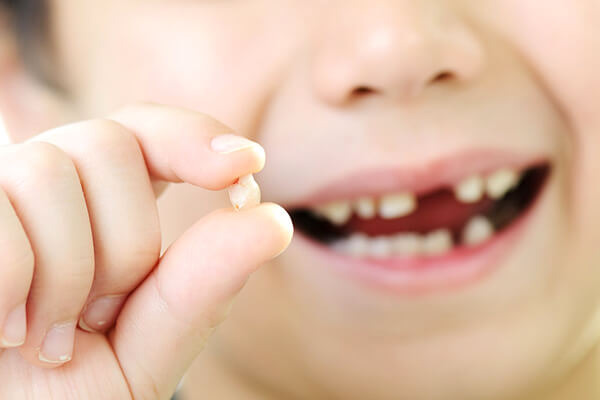
Baby teeth usually start to loosen and fall out at around 6–7 years of age. As the permanent tooth develops, the root of the baby tooth gradually dissolves. With less root support, the tooth first becomes loose and then generally falls out on its own.
The order in which they are lost often mirrors the order in which they came in. The front incisors go first, followed by the lateral incisors. Primary molars and canines are replaced in later years. This period, when both baby and permanent teeth are present, is called the mixed dentition stage.
When Does the First Tooth Fall Out?
The first baby tooth to be lost is usually one of the central incisors in the lower jaw. This change generally happens between the ages of 6 and 7. In most children the upper central incisors fall out in a similar period or shortly afterwards.
Looseness that starts before the age of five does not always mean normal tooth replacement. Decay, a knock or another problem can cause early loss. A tooth lost earlier than expected should be assessed by a dentist.
Do Molars Fall Out?
Primary molars do fall out. The first primary molars are usually replaced between 9 and 11 years, and the second primary molars between 10 and 12 years. Permanent premolars come in where they were.
The first permanent molars, which erupt at around age 6, are different. They come in behind the last primary molars and do not replace any baby tooth. For that reason they should not be confused with baby teeth, which are expected to be shed.
One mix-up we see often in our clinic is that six-year molars are mistaken for baby teeth. Because these teeth are permanent, they should be looked after carefully from the moment they appear.
When Do Permanent Teeth Come In?
The permanent dentition usually begins at around age 6. The first permanent molars and the lower front incisors are generally among the first permanent teeth to appear. The eruption of permanent teeth can continue into adolescence.
Twenty permanent teeth take the place of baby teeth. The permanent molars, on the other hand, come in separately behind them. If the wisdom teeth also develop and erupt, the number of permanent teeth can reach 32.
When Do Baby Teeth Come In?
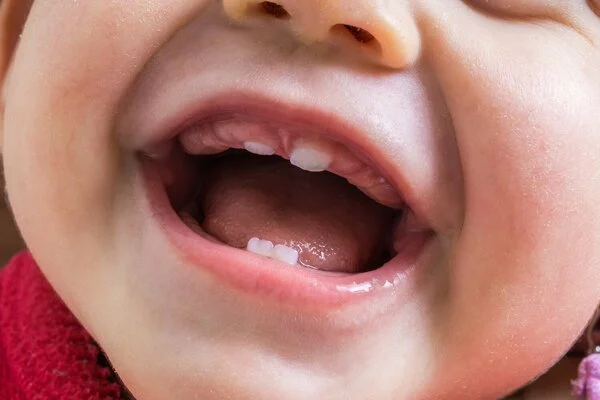
The first baby tooth is usually a lower central incisor, seen between 6 and 10 months. It is followed by the upper front teeth, the lateral incisors, the first molars, the canines and the second molars. In most children all 20 baby teeth are in place by the third year.
The timing and order of eruption are not the same in every child. A family history of late teething, the week of birth and the child's development can all affect the schedule. A difference of a few months on its own usually does not indicate a problem.
During teething, increased drooling, tenderness of the gums and restlessness can occur. High fever, marked diarrhea or a general decline in health should not be put down to teething alone. These symptoms may need to be assessed by a pediatrician.
Baby Tooth Eruption and Loss Timeline
The ranges below are a general guide. The timing for the same type of tooth in the upper and lower jaw can differ by a few months.
| Tooth Group | Total Number | Approximate Eruption Time | Approximate Time of Loss |
|---|---|---|---|
| Central incisors | 4 | 6–12 months | 6–7 years |
| Lateral incisors | 4 | 9–16 months | 7–8 years |
| First primary molars | 4 | 13–19 months | 9–11 years |
| Canines | 4 | 16–23 months | 9–12 years |
| Second primary molars | 4 | 23–33 months | 10–12 years |
A clear departure from this timeline does not by itself mean there is a disease. The number of teeth, their order and their position in the jaw should be assessed together during an examination.
Why Is the Root of a Baby Tooth Not Visible?
Baby teeth do have roots. As the permanent tooth approaches, a natural process called physiological root resorption begins in the root of the baby tooth. This process allows the tooth to become loose and fall out.
A baby tooth that falls out can therefore look like just a small crown fragment. A missing root usually does not mean that the root has stayed in the gum. However, if the tooth was lost through a knock or a fracture, an examination should check whether any fragment remains inside.
Why Are Baby Teeth Important?
Although they are temporary, baby teeth have important jobs in a child's daily life. Healthy baby teeth contribute to:
- biting and chewing food
- forming speech sounds correctly
- supporting jaw and facial development
- preserving the space needed for permanent teeth
- guiding permanent teeth into the right position
Losing a baby tooth earlier than expected can allow the neighboring teeth to drift into the gap. Not every early loss causes a problem. Whether a space maintainer is needed is decided according to the child's age and dental development.
Should Baby Teeth Be Treated?
Decay in a baby tooth should not be neglected just because the tooth will fall out later. Advancing decay can cause pain, infection, difficulty chewing and early tooth loss. The treatment decision is made separately for each tooth.
For some early-stage lesions, oral care, changes to diet and preventive measures planned by the dentist may be enough. If a cavity has formed, a filling or another restorative treatment may be needed. In deep decay, treatments aimed at the living tissue of the tooth may be considered.
Baby teeth that are damaged beyond saving, infected, or blocking a permanent tooth from erupting may be extracted. The decision to extract is not based on age alone. The position of the tooth, its root structure and the development of the permanent tooth are also examined.
What Should You Do With the First Lost Baby Tooth?
A first baby tooth that falls out naturally usually needs no urgent action. You can calmly explain to your child that this is a normal stage of growing up.
- If there is slight bleeding, gentle pressure can be applied with clean gauze.
- Encourage your child not to keep touching the gap with the tongue or a finger.
- Keep cleaning the teeth with a soft brush.
- If bleeding continues or there is clear pain, see a dentist.
Keeping the lost tooth, throwing it away or handling it according to family tradition does not change the medical outcome. If a child has swallowed the tooth and is breathing comfortably, no action is usually needed. If there is coughing, a bluish color or shortness of breath, seek emergency care.
If a tooth is knocked out completely by an impact, it should not be put back in its socket. Replanting a dislodged baby tooth can affect the development of the permanent tooth beneath it. In that situation, see a dentist without delay.
What If a New Tooth Does Not Replace the Lost One?
After a baby tooth falls out, the permanent tooth may not appear right away. Its position in the jaw, its stage of development and the amount of space in the mouth all affect how long eruption takes. A permanent tooth can sometimes appear weeks or months later.
If the matching tooth on the other side has come in but the other one is delayed, an assessment should be made. Lack of space, a different direction of eruption, baby tooth fragments left in the mouth or a missing permanent tooth can be investigated. An X-ray examination is planned if needed.
A permanent tooth can come in behind or on the inner side of a baby tooth. This can happen particularly with the lower front incisors. If the baby tooth is not loose, or there does not seem to be enough space for the permanent tooth, an examination is needed.
What Should Oral Care at Home Look Like?
- Once the first tooth appears, brush twice a day with fluoride toothpaste.
- For children under three, use a smear of toothpaste the size of a grain of rice.
- Between three and six years, a pea-sized amount is enough.
- An adult should help until the child has learned to brush properly.
- Teeth that touch each other should be cleaned between with a suitable method.
- Limit how often sugary foods and drinks are consumed during the day.
How often dental check-ups are needed depends on the child's decay risk and oral findings. Regular check-ups allow newly erupting permanent teeth to be monitored alongside the baby teeth.
When Should You See a Dentist?
Natural tooth replacement usually needs no intervention. Even so, an examination should not be delayed in the following situations:
- Tooth pain that starts spontaneously or wakes the child at night
- Swelling in the gum or face
- Pus discharge, a bad taste or noticeable bad breath
- Fever or a general decline in health along with dental complaints
- A fracture, color change or displacement of a tooth after an impact
- Loss of a baby tooth earlier than expected
- A baby tooth staying in place while the permanent tooth comes in
- A marked difference in eruption between the right and left sides
At the examination, the options of keeping, monitoring or extracting the baby tooth are assessed. The treatment plan is prepared according to the child's development, symptoms and the state of the permanent teeth.
Frequently Asked Questions
How many baby teeth are there?
When the baby teeth are complete, there are 20 teeth in the mouth in total. Ten of them are in the upper jaw and ten in the lower jaw.
Which teeth are baby teeth?
The baby tooth set consists of eight incisors, four canines and eight molars. There are no premolars among the baby teeth.
Do molars fall out in children?
Primary molars usually fall out between 9 and 12 years and are replaced by permanent premolars. The permanent molars that erupt at the very back at around age 6 are not baby teeth.
When does the first baby tooth fall out?
The first baby tooth usually falls out between the ages of 6 and 7. In most children, one of the central incisors in the lower jaw is the first to be replaced.
Do all baby teeth fall out?
In normal development, all 20 baby teeth are replaced over time. In some cases where the permanent tooth has not developed or its eruption is delayed, a baby tooth can stay in the mouth longer.
Where does the root of a lost baby tooth go?
The root of a baby tooth dissolves naturally before the permanent tooth erupts. That is why it is usually normal for a tooth that falls out on its own to show no obvious root.
Should a child's lost tooth be kept or buried?
There is no medical requirement to keep or bury a lost baby tooth. Families who wish to can clean and keep it; for a religious view, the current guidance of the Turkish Directorate of Religious Affairs (Diyanet) can be consulted.
When does the permanent tooth come in after a baby tooth falls out?
A permanent tooth may appear within a few weeks, or eruption may take months. If there is a clear delay, a lack of space or a difference between the two sides, a dental assessment is needed.
Sources
- American Dental Association – Baby Teeth Eruption Charts
- NHS – Baby Teething Symptoms and Tooth Eruption Order
- Turkish Ministry of Health – Oral and Dental Health in Children
- American Academy of Pediatric Dentistry – Vital Pulp Therapies in Primary Teeth
- PubMed – Advances in Physiological Root Resorption in Primary Teeth
- NHS – Knocked-Out Tooth