
Teething in babies is the process in which a baby tooth passes through the gum and becomes visible in the mouth. Most babies get their first tooth at around six months. However, it can also start before four months or after twelve months.
Usually the lower central incisors come in first, followed by the upper central incisors. This order and timing are not the same in every baby. An upper tooth appearing first does not, on its own, mean there is a problem.
What Is Teething and When Does It Start?
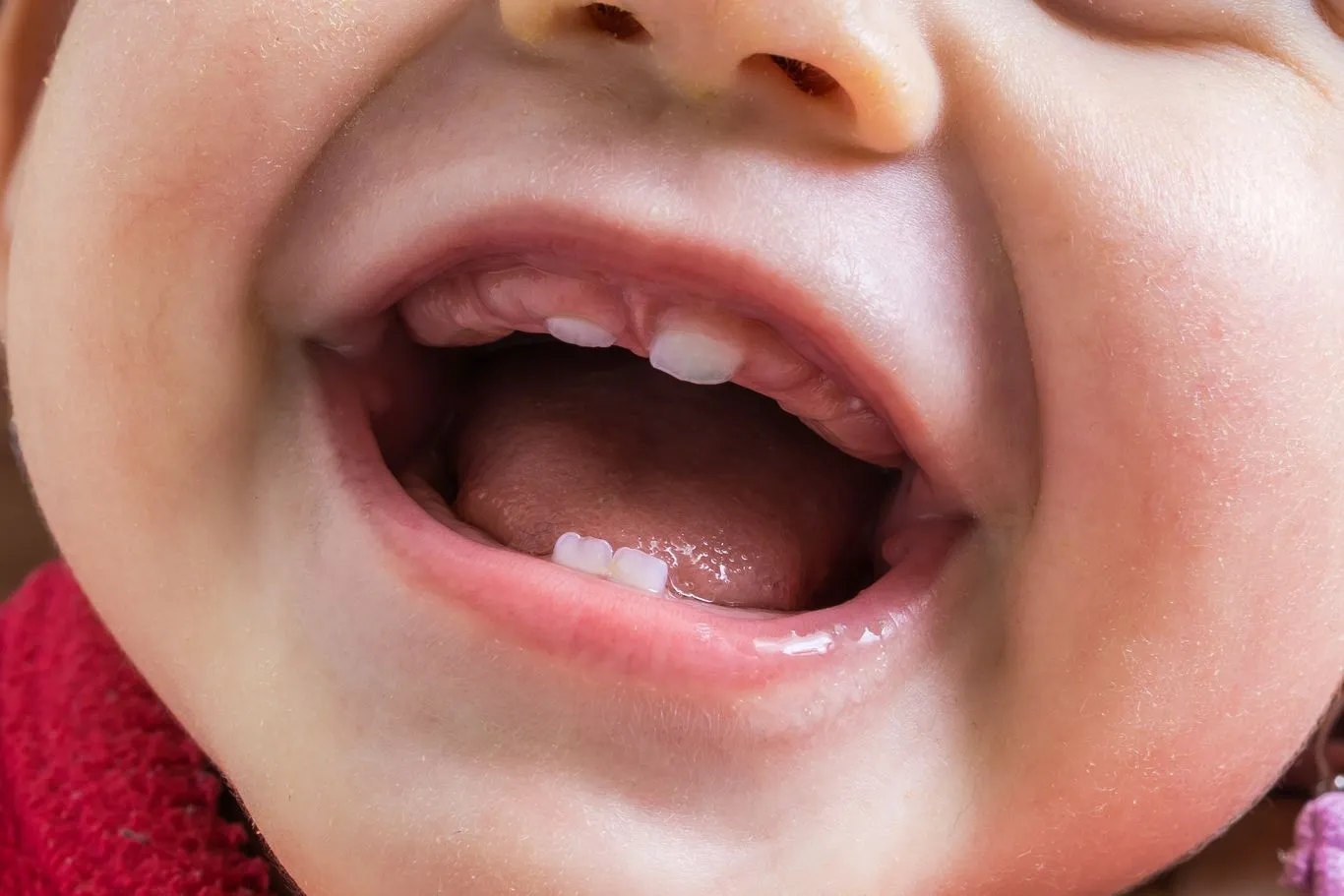
Babies are born with their baby teeth already developing inside the jawbones. Over time the teeth move toward the gum and become visible in the mouth. This natural process is called tooth eruption, or teething.
Babies generally get their first teeth between 6 and 12 months. In some babies the first tooth can appear before the fourth month. In others it may come in after the first birthday.
The timing of eruption can be affected by genetics, the week of birth and overall development. That is why babies of the same age can have different numbers of teeth. Timing alone does not give definite information about a baby's health or development.
Is It Normal for the First Upper Tooth to Come In First?
In most babies the lower central incisors appear first. Even so, a first tooth erupting in the upper jaw can be a normal variation in development. If there is no problem with the shape or color of the tooth or with the surrounding tissues, the order of eruption alone is usually not a cause for concern.
If no tooth has come in by the first birthday, the first dental examination should not be postponed. If no tooth is visible as the baby approaches 18 months, an assessment by a dentist and a pediatrician is needed.
In What Order Do Baby Teeth Come In?
Baby teeth usually start to come in at the lower front of the mouth. The incisors are followed by the first molars, the canines and the second molars. Keep in mind that the first molars usually come in before the canines.
The month ranges below are approximate. A tooth arriving a few months early or late can be a developmental difference if there are no other findings.
| Tooth Type | Approximate Eruption, Lower Jaw | Approximate Eruption, Upper Jaw |
|---|---|---|
| Central incisors | 6–10 months | 8–12 months |
| Lateral incisors | 10–16 months | 9–13 months |
| First molars | 14–18 months | 13–19 months |
| Canines | 17–23 months | 16–22 months |
| Second molars | 23–31 months | 25–33 months |
In most children the 20 baby teeth are complete between 2.5 and 3 years of age. There are ten baby teeth in the upper jaw and ten in the lower jaw. These teeth handle cutting, chewing and speech, and prepare space for the permanent teeth.
When Do the Upper Teeth Come In?
The upper central incisors usually come in between 8 and 12 months, and the upper lateral incisors between 9 and 13 months. A ten-month-old having only lower teeth, or no teeth yet, is not on its own a sign of illness.
When Do the Canines Come In?
The upper canines usually appear between 16 and 22 months, and the lower canines between 17 and 23 months. There is no set number of days for a canine to become fully visible. The time varies with each child and each tooth.
How Do a Teething Baby's Gums Look?
Limited redness, tenderness or slight swelling can be seen where the tooth is about to come through. As the tooth nears the surface, a whitish, firm line or a small bump may be noticed under the gum.
The swelling seen during teething is usually limited to the area involved. Pus, a bad smell, swelling that affects the face or bleeding that does not stop is not part of normal teething. These findings need a dental assessment.
Sometimes a bluish or purplish bump can form over the tooth. Its appearance alone does not give a diagnosis. If the bump grows, bleeds or affects feeding, it should be examined.
What Are the Symptoms of Teething in Babies?
In some babies, teeth come in with no symptoms at all. In others, temporary discomfort can appear in the days before and after the tooth becomes visible. The severity of symptoms can differ from tooth to tooth, even in the same child.
- Limited tenderness, redness or swelling of the gum
- Increased drooling
- Putting hands or safe objects in the mouth
- More interest in biting and chewing
- Temporary fussiness or crying more often
- Short-term changes in sleep patterns
- Temporary reluctance to eat solid foods
- Irritation of the chin and the skin around the mouth from drool
- Rubbing the ear or cheek
More drool does not always mean a tooth is about to come through. Saliva production and exploring objects with the mouth also increase around the same period.
Symptoms of Molars Coming In
Molars have wide chewing surfaces. During this period, gum swelling, the urge to chew and fussiness can be more noticeable. However, there is no separate set of symptoms specific to molars.
The first molars usually come in between 13 and 19 months, and the second molars between about 23 and 33 months. Not every molar is expected to cause intense pain. Marked or persistent pain should be assessed for other causes.
Are Fever and Diarrhea Teething Symptoms?
A small rise in body temperature can be seen during teething. However, a fever of 38°C or above should not be attributed to teething alone. Marked diarrhea, vomiting and a general decline in health can also be signs of another health problem.
One of the questions parents ask us most often in our clinic is whether fever and diarrhea are linked to teething. If these symptoms are pronounced, it is important for the baby to be assessed by a pediatrician.
How Many Days Does a Baby's First Tooth Take to Come In?
There is no fixed time between a tooth starting to move and becoming fully visible. Mild symptoms can usually begin a few days before the tooth appears in the mouth and ease shortly afterwards.
Studies have reported that symptoms can be more frequent in the four days before the tooth erupts, on the day of eruption and in the three days that follow. This eight-day window is not an exact timetable that applies to every baby.
Because the full set of baby teeth takes a few years to complete, periods of fussiness can come back at intervals. Severe pain or fussiness that continues without a break for weeks should not be attributed to teething alone.
What Can Soothe a Teething Baby?
Teething is not an illness and usually needs no specific treatment. The aim is to ease the temporary tenderness of the gums with safe methods and keep the baby's fluid intake up.
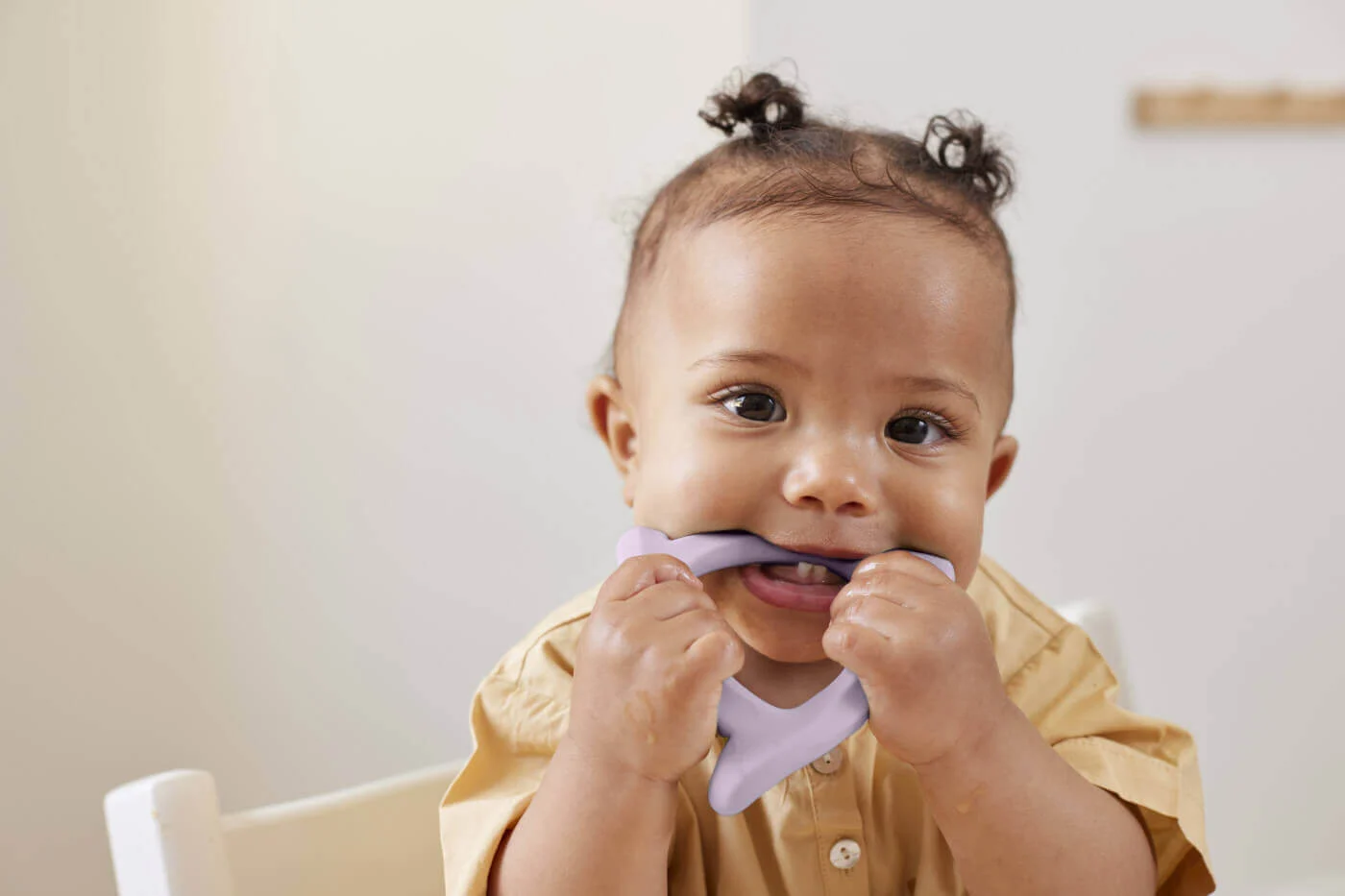
- After washing your hands, you can gently massage the gum with a clean finger.
- You can use a sturdy teether cooled in the refrigerator.
- Do not leave your baby unsupervised while using a teether.
- A clean, cool, damp cloth can be given to chew on.
- You can pat the drool around the mouth dry with a dabbing motion.
- Keep your baby's sleep and feeding routine as steady as you can.
- Calm contact, play and attention can help reduce fussiness.
Chill the teether in the refrigerator rather than freezing it. Very hard and frozen surfaces can injure a sensitive gum. Do not use products that can break or leak the liquid inside them.
Teething necklaces can carry a risk of choking and of wrapping around the neck. No accessory should be placed on a baby's neck, wrist or ankle for teething purposes.
Gels containing a local anesthetic are not recommended for teething. Any medicine should be used only after assessment by a pediatrician or dentist and with a prescription. Products made for adults should not be given to a baby.
When Should You See a Clinician?
During teething, a baby's general condition should remain good. If the following symptoms are present, do not assume they are caused by teething alone:
- A fever of 38°C or above
- Repeated vomiting or marked diarrhea
- Reduced fluid intake or inability to feed
- Unusual sleepiness or lack of response
- Constant, intense crying
- Rapidly increasing swelling of the face or mouth
- Pus coming from the gum, or a bad smell
- A widespread rash or difficulty breathing
- Symptoms that keep getting worse
No teeth at all by the first birthday, a tooth erupting in an unusual way, or a gum sore that does not heal all call for an examination. In babies born prematurely, corrected age can be taken into account during the assessment.
How Should You Care for a Baby's Teeth and Mouth?

Oral care can begin before the first tooth appears, by gently wiping the gums with a clean, damp cloth. As soon as the first tooth is visible, move on to a toothbrush with a small head and soft bristles.
- As the parent, brush the teeth twice a day, in the morning and at night.
- For children under three, use a thin smear of toothpaste the size of a grain of rice.
- Discuss the choice of fluoride toothpaste with your dentist, based on your child's decay risk.
- Bring the brush gently to the front, back and chewing surfaces of the teeth.
- Do not leave a bottle with milk, formula or juice in the mouth overnight.
- Do not dip the pacifier in honey, molasses, sugar or similar sweet foods.
- Do not clean the pacifier in your own mouth, and avoid sharing spoons.
Although baby teeth are temporary, they matter for chewing, speech and the position of the permanent teeth. The first dental visit should be planned when the first tooth appears, or by the first birthday at the latest.
At the first examination, tooth development, oral hygiene, feeding habits and decay risk are assessed. The interval for the next check-up is set by the dentist according to your baby's individual needs.
Frequently Asked Questions
At what age do babies start teething?
Most babies get their first tooth between 6 and 12 months. Starting earlier or later can be a developmental difference if there is no other problem.
Is it normal for a baby's first upper tooth to come in first?
Yes. The lower central incisors usually come in first, but a first tooth in the upper jaw does not on its own mean there is a health problem.
When do canine teeth come in for babies?
The upper canines usually come in between 16 and 22 months, and the lower canines between 17 and 23 months. These month ranges are approximate.
What are the symptoms of molars coming in?
Gum swelling, an urge to chew, more drool and temporary fussiness can be seen. High fever, vomiting or marked diarrhea should not be attributed to a molar.
How many days does a baby's first tooth take to come through?
There is no fixed time that applies to every tooth. Mild symptoms can start a few days before the tooth appears and ease shortly after it comes through.
What helps a teething baby?
Gentle gum massage with a clean finger and a sturdy teether cooled in the refrigerator can bring relief. Frozen products and teething necklaces should not be used.
Is it normal for a 10-month-old not to have any teeth yet?
In some babies the first tooth can come in after 12 months. If there are no teeth by the first birthday, the first dental examination should not be postponed.
How do a baby's gums look during teething?
Limited redness, a bump and a whitish firm line under the gum can be seen where the tooth will come through. Pus, a bad smell or swelling that affects the face needs an examination.
Sources
- American Dental Association: Primary Tooth Development
- NHS: Baby Teething Symptoms
- Mayo Clinic: Teething—Tips for Soothing Sore Gums
- American Academy of Pediatric Dentistry: Perinatal and Infant Oral Health Care
- Turkish Ministry of Health: How Should Oral Care for Babies Be Done?
- PubMed: Symptoms Associated With Infant Teething—A Prospective Study