
Oral thrush is a fungal infection that develops when Candida yeasts overgrow inside the mouth. Its medical name is oral candidiasis. It is common in babies, but it can also affect adults.
White plaques that do not wipe away on the tongue, the inside of the cheeks, the palate or the gums are typical findings. Treatment is planned by a clinician according to the person's age, symptoms and the underlying cause.
What Is Oral Thrush?
Candida species can live in many people's mouths without causing symptoms. When the natural balance inside the mouth changes, these yeasts can multiply and cause redness, soreness and white plaques.
Oral thrush is often caused by Candida albicans. However, not every white-looking tongue is thrush. Milk residue, dry mouth, irritation and other oral lesions can create a similar appearance.
In most healthy people, thrush stays limited to the mouth. In people whose immune system is suppressed, the symptoms can be more widespread or harder to clear. In that case, medical assessment should not be delayed.
What Is Oral Thrush in Babies?
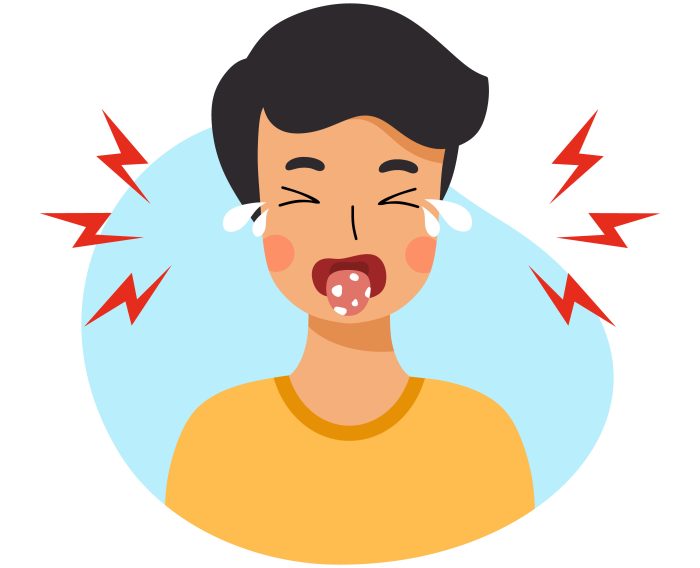
Oral thrush in babies can appear as white plaques on the tongue, the inside of the cheeks, the palate and the gums. It is more common because a baby's oral balance and immune system are still developing.
The white areas usually do not wipe away easily. The baby may be unsettled while feeding and may let go of the breast or bottle. In some babies feeding is not affected and the lesions are noticed during a look inside the mouth.
If you suspect thrush, do not try to scrape off the white areas. Scraping can make the delicate tissue underneath bleed and leave the baby uncomfortable. A pediatrician's assessment is needed for a diagnosis.
Thrush in the Mouth, on the Tongue and in the Throat
Thrush in the mouth does not only form on the tongue. The inner surface of the cheeks, the palate, the gums, the tonsils and the corners of the mouth can be affected. Burning or a change in taste can occur along with plaques on the tongue.
When the white layer is wiped, a red and tender surface may be left underneath. Sometimes there is slight bleeding. In some people, widespread redness and burning are more prominent than white plaques.
Thrush that extends to the throat can cause pain when swallowing. If food feels as if it is sticking in the throat, involvement of the food pipe can be investigated. These symptoms are especially important in people whose immune system is suppressed.
White mouth lesions appearing for the first time in healthy adults need to be examined. This is because a coated tongue, irritation and other oral conditions can be confused with thrush.
What Are the Symptoms of Oral Thrush?
The severity of symptoms varies from person to person. Thrush sometimes causes only a visible change, and sometimes soreness that makes eating difficult.
- Cream-colored white plaques on the tongue, inside the cheeks, on the palate or on the gums
- Plaques that do not wipe away easily
- Redness, burning or pain inside the mouth
- Reduced sense of taste or a bad taste in the mouth
- Cracking and redness at the corners of the mouth
- Discomfort while eating or swallowing
- Redness and soreness under a denture
In babies, these findings may come with crying during feeds, letting go of the breast or restlessness. A stubborn diaper rash can also occur. However, a diaper rash on its own does not show that there is thrush in the mouth.
What Causes Oral Thrush?
Thrush develops when the natural balance that limits the growth of Candida yeasts is upset. In recurrent infections, it is necessary to assess not only the lesions but also the factors that affect this balance.
- Recent or long-term use of antibiotics
- Diseases or treatments that suppress the immune system
- Diabetes that is not under control
- Dry mouth and a reduced amount of saliva
- Dentures that are not cleaned properly or are not taken out at night
- Not rinsing the mouth after using a steroid inhaler
- Smoking and inadequate oral care
- Periods when the oral tissues are more delicate, such as infancy and older age
Prescribed antibiotics or inhaler treatment should not be stopped without clinical advice. You can ask the relevant clinician about the technique for using the medicine and about oral care.
Thrush Symptoms in Babies and How They Differ From Milk Residue
In babies, whiteness only on the tongue may be milk residue, especially after a feed. Thrush, on the other hand, can spread to other surfaces such as the inside of the cheeks and the palate. It is not always possible to make a diagnosis from the appearance.
| Feature | Oral Thrush | Milk Residue |
|---|---|---|
| Location | Can be seen on the tongue, inside the cheeks, on the palate and on the gums | Mostly found on the surface of the tongue |
| Wiping away | Does not wipe away easily and the area underneath can stay red | Can usually be cleaned away gently |
| Feeding | Can cause soreness and restlessness during sucking | Usually does not affect feeding |
| Accompanying Findings | Redness in the mouth or a stubborn diaper rash may come with it | No other symptom is expected |
This comparison is for general information only. If the white areas in a baby's mouth do not wipe away, or if feeding is affected, you should see a pediatrician.
Why Do Babies Get Oral Thrush?
A baby's oral flora and immune system are still developing. This can make it easier for Candida yeasts to multiply. Antibiotics used by the baby or by a breastfeeding mother can also change the natural balance.
During breastfeeding, a fungal infection can pass back and forth between baby and mother. The mother may have burning, itching or cracking of the nipple, or pain during feeds. In this case, mother and baby should be assessed together.
Pacifiers, bottle teats and toys that touch the mouth and are not cleaned well can contribute to reinfection. Regular cleaning does not replace treatment, but it helps to reduce the risk of recurrence.
How Does Oral Thrush Clear Up in Babies?

Treatment of thrush in babies is planned after an examination by a pediatrician. First it must be established whether mild-looking whiteness really is thrush. If needed, an antifungal medicine is used with a prescription.
Do not scrape the plaques in a baby's mouth with a cloth, gauze or a hard object. The evidence for baking soda, vinegar, lemon and herbal mixtures in treatment is limited. These substances can irritate the delicate tissues of the mouth.
If the breastfeeding mother also has symptoms, assessing both at the same time can help to prevent reinfection. Breastfeeding can be continued in most cases. If there is pain or a feeding problem, support should be sought from a health professional.
Pacifiers, bottle teats and the removable parts of a breast pump should be cleaned according to the manufacturer's instructions. Hands should be washed especially before feeding and before changing a diaper. Towels and items that touch the mouth should not be shared.
How Are Thrush Medicines and Drops Used?
Antifungal medicines can be used with a prescription to treat thrush. The medicine may come as a liquid, gel, lozenge or tablet. The right form is chosen according to the person's age and ability to swallow.
Thrush Medicine in Babies
Not all of the products commonly called "thrush drops" are really drops. The product to be used in a baby and the way it is applied should be decided by a pediatrician. Products made for adults should not be given to a baby.
The amount, frequency and duration of the medicine should follow the prescription. Stopping treatment early when the symptoms ease can contribute to the infection coming back. A double amount should not be used for a missed application.
If the medicine is to be applied directly to the baby, the correct method should be learned from a health professional. Putting too much product into the mouth at once is not appropriate. If coughing or difficulty swallowing develops during use, the application should be stopped.
The Price of Thrush Drops
The price of thrush medicines can vary with the pharmaceutical form, the packaging, the prescription and reimbursement status. Choosing a medicine on the basis of brand or price is not safe. Current price information should be obtained from the pharmacy after a prescription is issued.
Products bought without a prescription, already opened or prepared for someone else should not be used. Medicine safety in babies depends on age and health status. The dose and duration should be advised only by a clinician.
How Are Thrush Diagnosis and Treatment Planned?
The diagnosis is usually made with an oral examination and the medical history. The clinician assesses recent medicine use, dentures, dry mouth and any accompanying conditions.
If the appearance is not typical, if there is no response to treatment or if thrush recurs often, a sample may be taken. If needed, further investigation can be requested for diabetes or conditions related to the immune system.
In oral examinations it is common to find that not every white layer is thrush. Coatings found only on the tongue in particular can have different causes. For this reason, using medicine without an examination is not correct.
For limited lesions, topical antifungal treatment may be preferred. Widespread or recurrent cases, or those causing difficulty swallowing, may need different treatments. All medicines should be used with a prescription.
What Should You Watch For During Home Care?
- Clean the teeth and tongue gently with a soft brush.
- Do not share a toothbrush, and keep it clean during the infection.
- Take dentures out at night and clean them as your dentist recommends.
- Rinse your mouth with water after using a steroid inhaler.
- If you have dry mouth, ask a clinician about fluid intake and about assessing the cause.
- Do not smoke and avoid products that irritate the oral tissues.
- Do not stop or change prescribed medicines without asking a clinician.
Evidence that home remedies such as baking soda, garlic and vinegar clear thrush is limited. Irritating applications can increase pain in the mouth and delay proper treatment.
Does Oral Thrush Clear Up on Its Own?
Mild thrush may settle in some healthy people. However, it is hard to decide at home whether the appearance really is thrush. An examination is recommended for babies, for adults with symptoms for the first time and for people in risk groups.
Symptoms that continue, spread or recur may suggest an underlying factor. If there is no improvement despite the prescribed treatment, a new clinical assessment is needed.
When Should You See a Clinician?
See a pediatrician if your baby cannot feed properly or if the white plaques in the mouth do not wipe away easily. Oral lesions appearing for the first time in adults with no known cause should also be assessed.
- A baby refusing to suck or a clear drop in the number of wet diapers
- Fever, marked sleepiness or a worsening general condition
- Severe mouth pain or an inability to drink fluids
- Painful swallowing or food sticking in the throat
- A disease or treatment that affects the immune system
- Thrush that continues despite treatment or recurs often
If difficulty breathing develops, emergency help should be sought. Although thrush can be managed in most people, serious symptoms may point to another health problem.
How Can Recurrent Thrush Be Prevented?
Regular oral care, denture cleaning and completing the prescribed treatment help to reduce the risk of recurrence. People who use inhalers should rinse their mouth after every use.
In frequently recurring thrush, diabetes, dry mouth, denture fit and the medicines used should be assessed. In babies, attention should be paid to cleaning pacifiers and bottles, and the breastfeeding mother should be checked for symptoms.
Frequently Asked Questions
What is oral thrush?
Oral thrush is a fungal infection caused by the overgrowth of Candida yeasts in the mouth. It can cause white plaques on the tongue, inside the cheeks, on the palate and on the gums.
How is oral thrush recognized in babies?
White plaques that do not wipe away easily may be seen on the baby's tongue, palate or the inside of the cheeks. Restlessness during sucking and refusal to feed can come with it.
Is the whiteness on a baby's tongue milk or thrush?
Milk residue is mostly only on the tongue and can be cleaned away gently. Thrush can spread to other oral surfaces and does not wipe away easily; a pediatrician's assessment is needed for a diagnosis.
Does oral thrush in babies clear up on its own?
Some mild cases may settle, but the real cause of the whiteness cannot always be told apart at home. If feeding is affected or the plaques persist, you should see a pediatrician.
Does oral thrush hurt babies?
Thrush can cause soreness and burning in the mouth. A baby may show this by crying during feeds, letting go of the breast or being restless.
How are thrush drops used?
The form, amount and duration of the medicine should be decided by a pediatrician according to the baby's age. An amount different from the prescription should not be used, and the medicine should not be stopped early.
Can a baby's thrush pass to a breastfeeding mother?
During breastfeeding, Candida can pass back and forth between mother and baby. If the mother has nipple pain, burning or cracking, mother and baby should be assessed together.
Is thrush in the throat dangerous?
If there is pain when swallowing or a feeling of food sticking, it should be investigated whether the infection extends further down. In people whose immune system is suppressed, assessment should not be delayed.