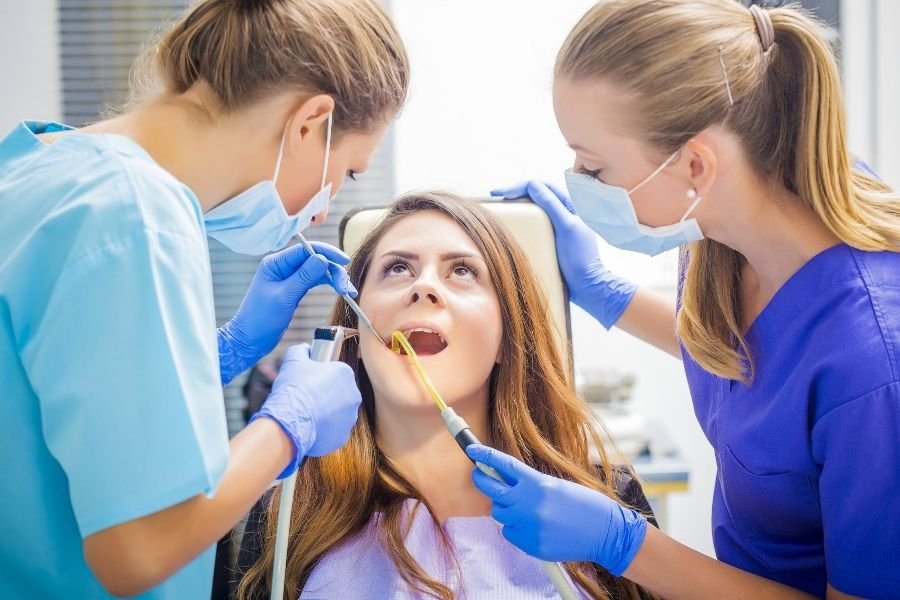
Swollen lips means tissue swelling that makes one or both lips look larger than normal. It can develop from an allergy, trauma, irritation, infection or a tooth abscess. To identify the cause, the time it started and the accompanying symptoms are assessed.
If swelling that starts suddenly comes with swelling of the tongue or throat, shortness of breath, difficulty swallowing or dizziness, call 112, the emergency number in Turkey. For mild, limited swelling, the measures that can help depend on the underlying cause.
Swollen lips are not the same thing as lipedema. Lipedema is a different condition in which abnormal fat tissue builds up, mostly in the legs and sometimes in the arms.
What Causes Swollen Lips?
To understand why lips swell, it helps to look at whether the swelling came on suddenly or slowly. Symptoms such as itching, a rash, toothache, a sore, blistering and fever also matter.
| Possible cause | Symptoms that may accompany it | First approach |
|---|---|---|
| Allergy or angioedema | Sudden swelling, itching, hives, swollen eyelids | Get away from the trigger; call 112 if there are breathing symptoms |
| Trauma or irritation | Pain, bruising, a cut, a heat burn or a bite mark | Apply a cold compress wrapped in cloth; get a deep wound examined |
| Tooth or gum infection | Toothache, bad taste, swollen gum, fever, facial swelling | Get a dentist assessment without delay |
| Lip inflammation and contact reaction | Dryness, cracking, burning, redness and crusting | Stop the new product; see a health professional if it does not settle |
| Cold sores or other infections | Tingling, a painful blister, tenderness or discharge | Do not touch the lesion; get it assessed for a diagnosis |
| Mucocele | A soft, fluid-filled swelling, usually inside the lower lip | Do not burst it; show a persistent or recurring lesion to a dentist |
| Recurring or persistent conditions | Long-lasting swelling, firmness, a sore that will not heal or frequent attacks | Have a medical and oral examination |
Allergic Reaction and Angioedema
Foods, insect stings, some groups of medicines, cosmetics and oral care products can trigger allergic swelling. The swelling can appear within minutes or hours.
Angioedema is swelling that develops in the deeper layers of the skin. The lips, eyelids and tongue are commonly affected areas. Not all angioedema is caused by an allergy.
Some groups of medicines, such as certain blood pressure drugs, can cause non-allergic angioedema. Do not stop a prescribed medicine on your own. Speak to the doctor who prescribed it without delay.
Trauma, Burns and Irritation
Biting your lip, taking a knock, eating very hot food or being out in the sun without protection can cause swelling. Stretching of the lip during dental treatment, or biting it while numb, can also cause temporary swelling.
Some ingredients in toothpaste, lipstick, lip balm and cosmetics can cause a contact reaction. In that case, swelling can come with dryness, burning, itching or cracks.
What Does Lip Inflammation Mean?
The term cheilitis, used for lip inflammation, does not describe a single disease. Irritation, allergic contact, sun damage, infection and some systemic conditions can cause similar symptoms.
Cheilitis can involve redness, tenderness, dryness, flaking and cracking. Because appearance alone does not show the cause, persistent cases need an examination.
What Is Sudden Lip Swelling and Why Does It Happen?
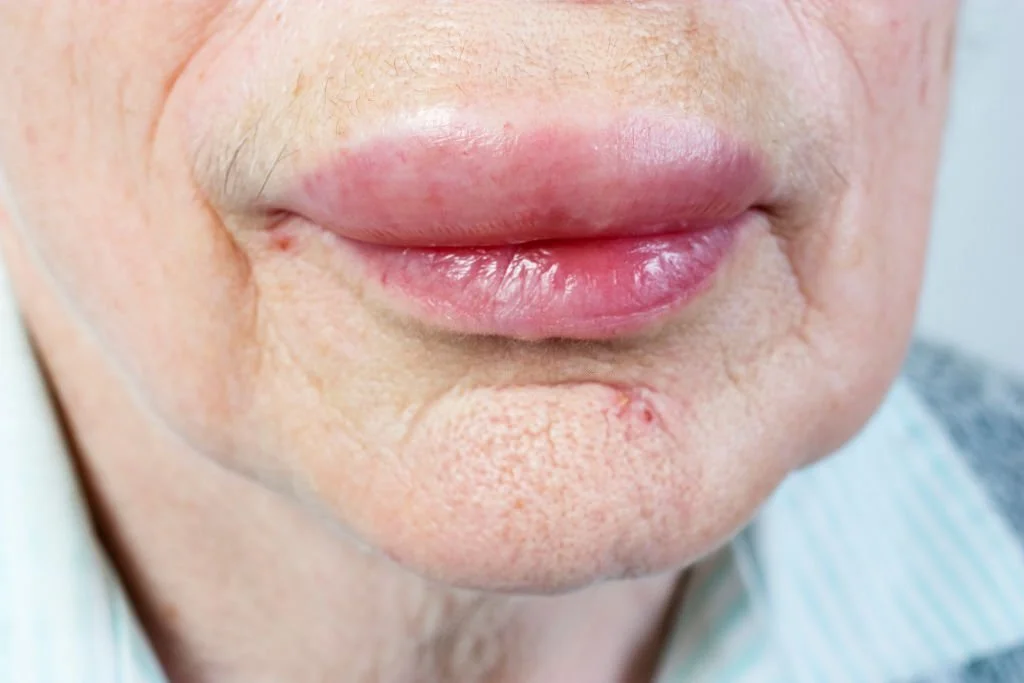
Sudden lip swelling means the lip becomes noticeably larger within minutes or hours. An allergic reaction, angioedema, an insect sting, trauma and some groups of medicines are possible causes.
Not every case of sudden lip swelling means anaphylaxis. However, swelling spreading to the mouth, tongue or throat can affect the airway. For that reason, the accompanying symptoms should be watched closely.
- Difficulty breathing or speaking
- Tightness in the throat or difficulty swallowing
- Rapidly increasing swelling of the tongue or inside the mouth
- Wheezing or a hoarse voice
- Dizziness along with widespread hives
- Paleness, a bluish color, confusion or fainting
If any of these symptoms is present, do not wait at home for the swelling to go down. Call 112 and do not let the person drive themselves.
Can Stress Cause Swollen Lips?
Stress is not a diagnosis that explains every case of swollen lips on its own. However, in some people with recurring hives or angioedema, it can make attacks more likely or symptoms worse.
Putting swelling down to stress alone can mean causes such as allergy, a drug reaction or infection are missed. Recurring attacks need a doctor's assessment.
Is There a Difference Between Upper and Lower Lip Swelling?

Whether the swelling is in the upper or lower lip does not on its own identify the cause. Allergy, trauma, contact reactions, infection and problems inside the mouth can affect both areas.
Why Does the Upper Lip Swell?
When upper lip swelling comes on suddenly, allergy or angioedema is considered. A knock, hot food, a cosmetic product, an insect sting and infections around the lip are also possible.
Tooth or gum infections in the upper jaw can cause swelling that spreads around the lip and face. If there is toothache, tenderness or a bad taste, do not delay a dental examination.
Why Does the Lower Lip Swell?
Lower lip swelling is often linked to lip biting and other trauma. A round, soft swelling on the inner surface of the lower lip may be a mucocele.
A mucocele is a fluid-filled lesion that can form when a small salivary gland duct is damaged. Piercing it at home can increase the risk of infection and tissue damage.
What Do Swollen and Numb Lips Mean?
Numbness can be linked to pressure from the swelling on the tissues, to trauma, or to local anesthesia given recently. How long the symptom lasts and how far it spreads should be assessed.
See a dentist or doctor if numbness is increasing, lasting a long time or coming with marked pain. Call 112 if there is weakness in the face, difficulty speaking, or symptoms in the arms or legs.
Can Swollen Lips Come From a Dental Infection?
A tooth abscess is an infection that causes pus to collect around a tooth or gum. As the infection progresses, swelling can appear in the mouth, jaw, cheek or around the lip.
A dental cause should be considered if lip swelling comes with the following symptoms:
- Throbbing toothache or tenderness in the gum
- Marked sensitivity to hot and cold
- Redness, a lump or discharge in the gum
- A bad taste or bad smell in the mouth
- Swelling in the cheek, jaw or face
- Fever, fatigue or swollen glands in the neck
- Difficulty opening your mouth or chewing
A tooth abscess should not be assumed to have healed on its own. Even if the pain eases, the source of infection can remain. Drainage, root canal treatment or, where necessary, tooth extraction can be considered.
An important distinction we see often at our clinic is whether the swelling comes from the lip tissue or from a tooth and gum. An oral examination and any necessary imaging support this distinction.
What Helps Swollen Lips?
What helps depends on the cause of the swelling. For swelling with an unknown cause or a sudden onset, home measures alone should not be relied on.
Where there are no breathing symptoms and the swelling is linked to mild trauma or irritation, the following can help:
- Apply a cold compress wrapped in cloth to the outside of the lip at short intervals.
- Do not let ice touch the skin directly.
- Temporarily stop using any new lipstick, cream or oral care product.
- Avoid biting or licking the lip and picking at crusts.
- Limit very hot, spicy or irritating foods.
- Drink enough fluids and protect the surface of the lip from irritation.
- Keep up your oral care with gentle movements.
Allergy medicines, painkillers and other treatments may not be suitable for everyone. Any medication should be planned with guidance from a doctor or pharmacist.
Which Home Remedies Should Be Avoided?
There is limited evidence that honey, vegetable oil, aloe vera, tea bags or similar products relieve lip swelling. These substances can cause a contact reaction or irritation.
- Do not squeeze, cut or pierce the swelling with a needle.
- Do not apply ice directly or use a very hot compress on the lip.
- Do not use creams and herbal mixtures of unknown content.
- Do not use leftover antibiotics at home.
- Do not stop a prescribed medicine without a doctor's advice.
How Are Swollen Lips Treated?
Treatment is planned according to the cause identified at the examination. Two swellings that look the same can need different treatment.
- Allergy or angioedema: The trigger is investigated. If the doctor considers it necessary, an antihistamine or other medical treatment can be planned.
- Dental infection: The priority is controlling the source of infection with dental treatment. Antibiotics are used only when needed and on prescription.
- Trauma: The depth of the wound, bleeding and tissue loss are assessed. Large cuts may need professional wound care.
- Contact reaction: The suspected product is stopped. Persistent cases may need a dermatology or allergy assessment.
- Infectious cheilitis: Viral, bacterial and fungal causes are told apart. Treatment is decided by a health professional according to the cause.
- Mucocele or persistent lesion: Monitoring, a surgical procedure or tissue examination can be considered based on the clinical findings.
Not every toothache and swelling needs antibiotics. In dental infections, the underlying problem is usually brought under control with the right dental treatment.
When Should You See a Doctor or Dentist for Swollen Lips?
Symptoms That Need Emergency Care
Call 112 if there is swelling of the tongue or throat, shortness of breath, difficulty swallowing, a bluish color, fainting or rapidly progressing swelling in the mouth.
Situations That Need Same-Day Assessment
- Swelling along with toothache or a gum abscess
- Fever, fatigue or swelling spreading to the face and jaw
- Difficulty opening your mouth, speaking or chewing
- Bleeding that will not stop or a deep cut after trauma
- Swelling that grows quickly or causes marked pain
Situations That Need a Booked Examination
Get examined if the swelling is not settling within a few days, keeps coming back or has no clear cause. A firm lump, a color change or a sore that will not heal should also be assessed.
How Can Swollen Lips Be Prevented?
It is not possible to prevent every case of lip swelling. Avoiding known triggers and looking after your oral health can reduce the risk of some causes.
- Avoid foods, cosmetics or oral care products known to cause you an allergy.
- Cut down on lip biting and picking.
- Protect your lips from the sun and extreme cold when outdoors.
- Brush your teeth regularly and clean between them.
- Do not put off treating toothache, decay or a swollen gum.
- Note when recurring swellings start and what might trigger them.
The appearance of a swollen lip does not on its own give a diagnosis. Professional assessment matters especially for swelling that is sudden, recurring or accompanied by toothache.
Frequently Asked Questions
What causes swollen lips?
Swollen lips can develop from allergy, angioedema, trauma, irritation, infection, a mucocele or a tooth abscess. When it started and the accompanying symptoms help tell the causes apart.
How does sudden lip swelling clear up?
If there is shortness of breath or swelling of the tongue and throat, call 112. For mild trauma, a cold compress wrapped in cloth can help, but sudden swelling with an unknown cause should be assessed.
Why does the upper lip swell?
The upper lip can swell from allergy, angioedema, trauma, an insect sting, a contact reaction or infection. Tooth infections in the upper jaw can also cause swelling around the lip.
Why does the lower lip swell?
Lower lip swelling is often linked to biting, knocks and irritation. A soft, fluid-filled swelling on the inner side of the lip may be a mucocele.
What do swollen and numb lips mean?
Numbness can be linked to pressure from the swelling on the tissues, to trauma or to local anesthesia given recently. Numbness that is persistent, increasing or comes with other neurological symptoms should be assessed.
Can stress cause swollen lips?
Stress is not the direct cause of every case of lip swelling. However, in some people with recurring hives or angioedema, it can make attacks more likely.
How long does lip swelling take to go down?
The time depends on the cause. Swelling from mild trauma can ease quickly, while infection, a contact reaction or recurring angioedema may need professional assessment.
When should you see a dentist for swollen lips?
If the swelling comes with toothache, a lump on the gum, a bad taste, facial swelling, fever or difficulty opening your mouth, see a dentist without delay.